Overview
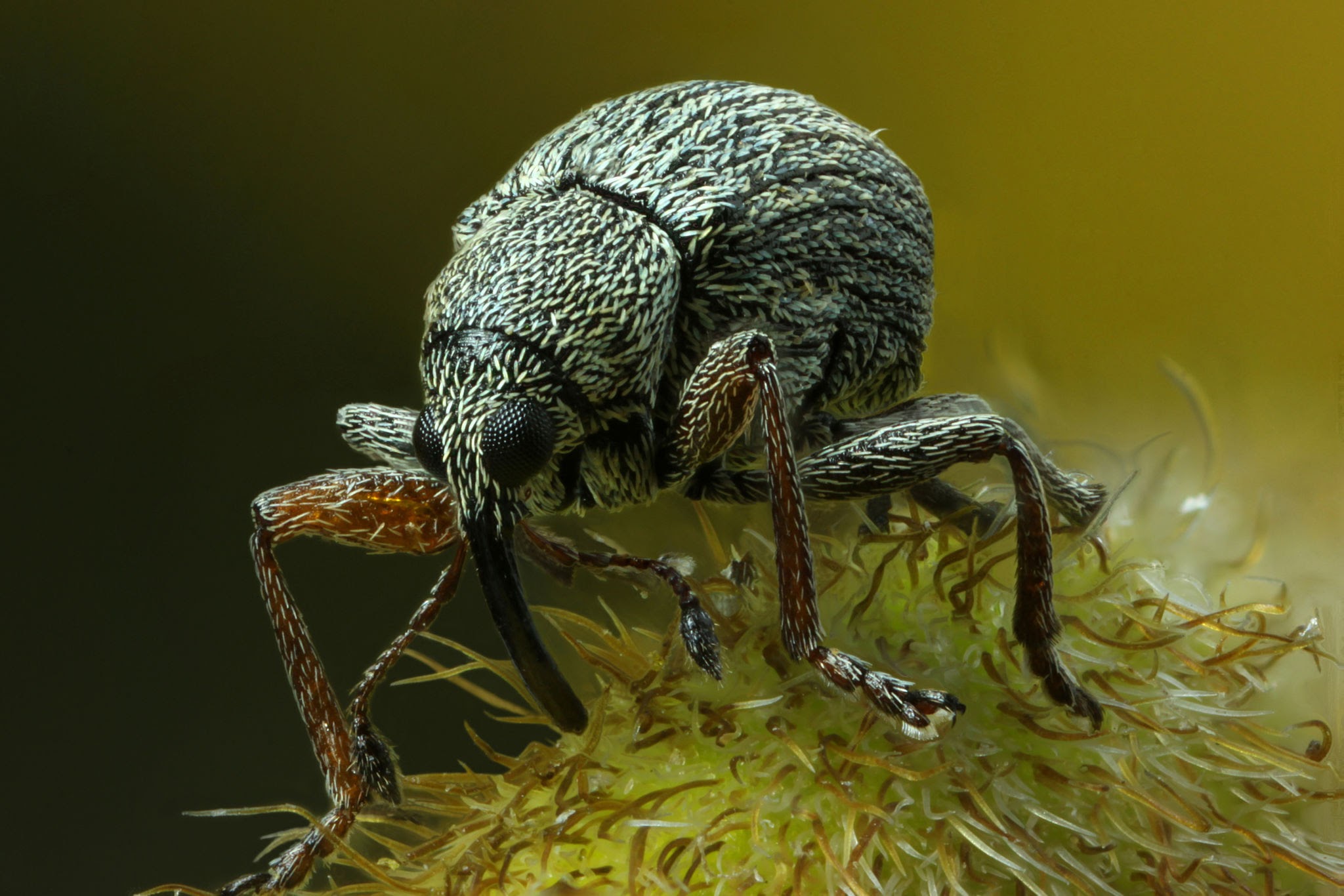
Ulex Weevils (Exapion fuscirostre) are tiny seed-feeding beetles that specialize in attacking plants within the Ulex genus, particularly Common Gorse (Ulex europaeus). Unlike most insects featured on Pestipedia, Ulex Weevils are generally considered beneficial insects rather than pests. Their importance comes from their use as a biological control agent against gorse, a highly invasive shrub that causes significant ecological and economic problems in several parts of the world.
Native to Western Europe, Ulex Weevils have been intentionally introduced into countries such as New Zealand, Hawaii, Australia, and other regions where gorse has become a noxious weed. The larvae develop inside gorse seed pods and consume developing seeds, reducing the plant’s ability to reproduce and spread.
Although Ulex Weevils do not completely eliminate gorse infestations, they can significantly reduce seed production and are often used as part of larger integrated weed management programs. Their highly specialized feeding habits make them one of the most studied examples of successful biological weed control.
Because they target an invasive plant rather than crops, trees, or ornamental plants, Ulex Weevils are generally viewed as beneficial insects that help restore ecological balance in areas affected by gorse invasions.
Taxonomy and Classification
- Kingdom: Animalia
- Phylum: Arthropoda
- Class: Insecta
- Order: Coleoptera
- Family: Brentidae (formerly Apionidae)
- Genus: Exapion
- Species: Exapion fuscirostre
Ulex Weevils belong to a group commonly known as seed weevils. Members of this group are characterized by their elongated snouts and highly specialized relationships with particular host plants.
Before introduction into new environments, extensive research was conducted to verify that Ulex Weevils would feed almost exclusively on gorse and would not threaten native vegetation or agricultural crops.
Physical Description
Adult Ulex Weevils are very small insects, typically measuring only 2 to 3 millimeters in length. Their small size often makes them difficult to observe without close inspection.
- Adult Appearance: Small, black, pear-shaped beetle.
- Rostrum: Long, curved snout typical of weevils.
- Coloration: Dark black to dark brown.
- Legs: Six short legs adapted for climbing and feeding on host plants.
- Wings: Functional wings that allow dispersal between gorse plants.
The larvae are legless, cream-colored grubs that develop entirely within the seed pods of gorse plants. Since they remain concealed inside pods, they are rarely seen by casual observers.
Distribution and Habitat
Ulex Weevils are native to Western Europe, where they evolved alongside gorse. Their natural distribution includes the United Kingdom, France, Spain, Portugal, and neighboring regions.
Due to their effectiveness as biological control agents, they have been intentionally introduced into several regions where gorse has become invasive, including:
- New Zealand
- Hawaii
- Australia
- Parts of North America
- Various island ecosystems
Ulex Weevils are closely associated with gorse plants and are rarely found far from suitable host populations. Their habitat consists primarily of gorse stands, shrublands, roadsides, abandoned fields, grazing lands, and disturbed habitats where gorse has become established.
Life Cycle
Ulex Weevils undergo complete metamorphosis consisting of four stages:
- Egg
- Larva
- Pupa
- Adult
Female weevils lay eggs directly into developing gorse seed pods. Once the eggs hatch, larvae begin feeding on the immature seeds inside the pod.
The protected environment of the seed pod provides both food and shelter for developing larvae. As they consume seeds, the reproductive capacity of the plant is reduced.
After completing development, larvae pupate within the pod before emerging as adults. The timing of development is closely synchronized with the flowering and seed production cycle of gorse plants.
Behavior and Ecological Role
Unlike many beetles that feed on leaves, stems, or roots, Ulex Weevils specifically target the reproductive structures of their host plant. Their life cycle is tightly linked to the availability of developing gorse seeds.
This specialization provides several advantages:
- Reduced competition with other insects.
- Efficient use of a predictable food source.
- High host specificity.
- Minimal risk to non-target plant species.
Because larvae consume seeds before they mature, each developing weevil directly reduces the number of viable seeds produced by the plant.
Impact on Gorse
Gorse is considered one of the world’s most problematic invasive shrubs in many regions. Dense infestations can:
- Displace native vegetation.
- Reduce biodiversity.
- Interfere with grazing operations.
- Increase wildfire risk.
- Create dense, impenetrable thickets.
Ulex Weevils help suppress these impacts by reducing seed production. Studies have shown that significant percentages of gorse seeds may be destroyed annually by weevil populations.
However, complete control is rarely achieved because gorse produces enormous numbers of seeds, and many seeds remain dormant in soil for decades before germinating.
Management and Conservation
In areas where Ulex Weevils have been established as biological control agents, management efforts focus on protecting and encouraging their populations.
Protection Measures
- Avoid broad-spectrum insecticide applications near gorse infestations.
- Preserve established weevil populations.
- Monitor biological control sites regularly.
- Promote integrated weed management practices.
Augmentation Programs
In some regions, Ulex Weevils are collected from established populations and redistributed to new gorse-infested locations. This process helps accelerate biological control efforts and expand the insect’s beneficial impact.
Research and Biological Control Studies
Ulex Weevils are frequently studied by entomologists, ecologists, and weed management specialists. Research focuses on measuring long-term reductions in seed production, understanding climate influences on population growth, and evaluating interactions with other biological control agents.
Scientists also examine how Ulex Weevils perform under different environmental conditions and whether additional biological control species can complement their effects.
Their high host specificity continues to make them a model organism for biological control programs worldwide.
Conclusion
Ulex Weevils are tiny seed-feeding beetles that play an important role in controlling invasive gorse populations. By targeting developing seeds, they reduce the reproductive success of one of the world’s most troublesome invasive shrubs.
Although they do not eliminate gorse entirely, they contribute significantly to long-term management efforts and help reduce the ecological and economic impacts of gorse infestations. Their specialized relationship with the plant, combined with extensive safety testing, has made them one of the most successful examples of biological weed control.
For land managers, conservation organizations, and researchers, Ulex Weevils represent an environmentally friendly alternative to repeated chemical control and an important tool in restoring ecosystems affected by invasive plants.