h2>Overview
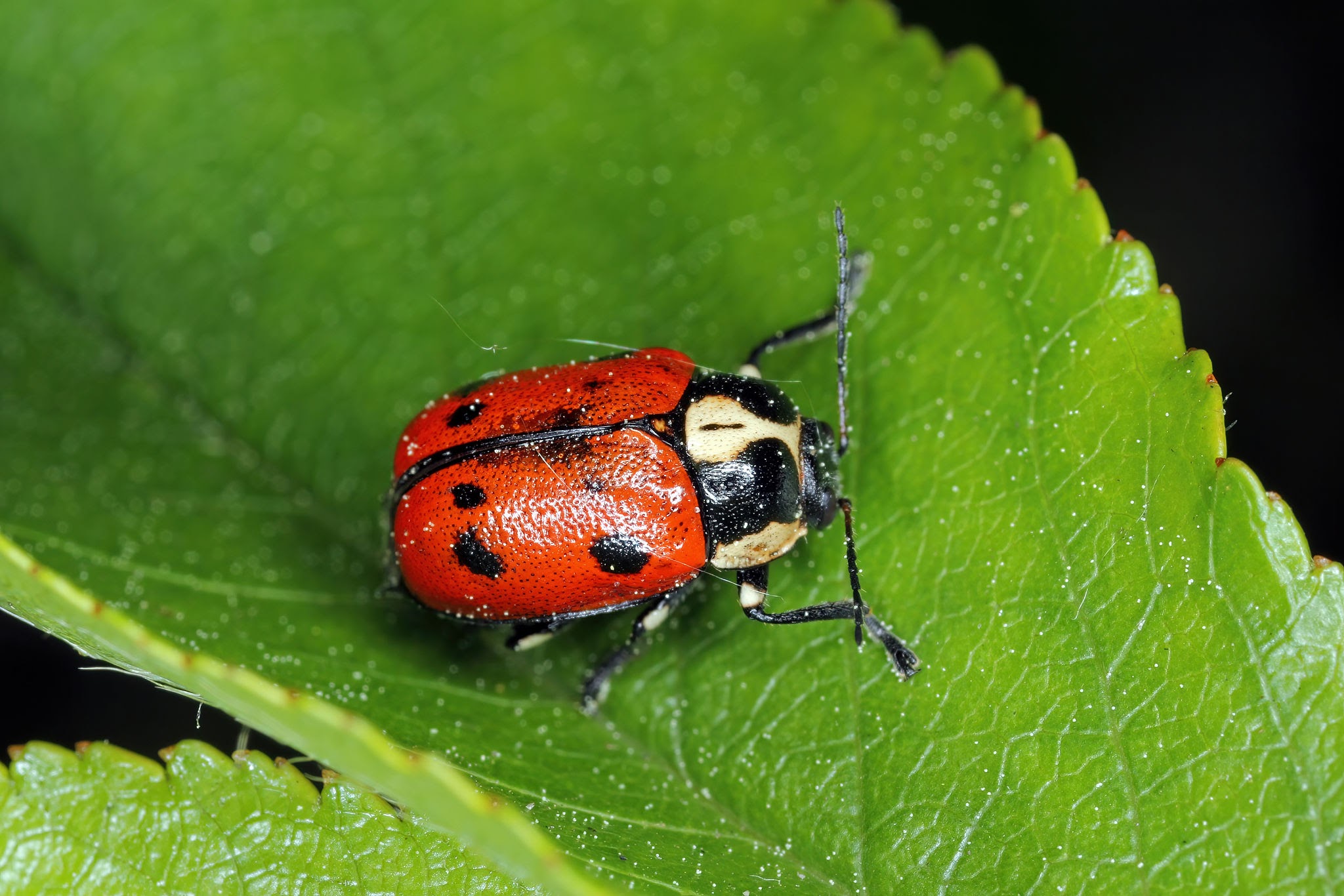
Ugandan Leaf Beetles is a general term used to describe various species of leaf-feeding beetles in the family Chrysomelidae that occur throughout Uganda and other parts of East Africa. These beetles are among the most common agricultural pests affecting vegetables, fruits, legumes, and other economically important crops. Both adults and larvae feed on plant tissues, making them capable of causing significant crop losses when populations become high.
Several species of leaf beetles attack agricultural crops in Uganda, including pests of eggplant, tomato, potato, beans, peppers, and leafy vegetables. While the exact species vary by region and crop type, the damage they cause is often similar. Adults chew holes in leaves, while larvae may feed on foliage, mine within leaves, attack roots, bore into stems, or damage fruits depending on the species involved.
Because Uganda has a tropical climate with favorable temperatures throughout much of the year, many leaf beetle species are capable of producing multiple generations annually. This continuous reproduction allows populations to increase rapidly, especially in areas where susceptible crops are grown year-round.
Leaf beetles are considered important agricultural pests because they directly reduce plant vigor, lower yields, decrease crop quality, and make fruits and vegetables less marketable. Effective management often requires a combination of monitoring, cultural practices, biological control, and targeted treatments.
Taxonomy and Classification
- Kingdom: Animalia
- Phylum: Arthropoda
- Class: Insecta
- Order: Coleoptera
- Family: Chrysomelidae
The family Chrysomelidae, commonly known as leaf beetles, contains more than 35,000 species worldwide. It is one of the largest beetle families and includes numerous economically important agricultural pests.
Many Ugandan leaf beetles are highly specialized feeders, while others are polyphagous and capable of feeding on a wide variety of crops. Their host preferences often determine which crops experience the greatest damage.
Physical Description
Adult leaf beetles are generally small to medium-sized insects ranging from approximately 3 to 10 millimeters in length. Their appearance varies considerably depending on species.
- Adult Appearance: Oval, rounded, or elongated body shape.
- Coloration: Green, yellow, brown, black, metallic blue, metallic green, or patterned.
- Mouthparts: Strong chewing mouthparts adapted for feeding on plant tissues.
- Wings: Hardened wing covers that protect the abdomen.
Larvae are often soft-bodied and grub-like. Some species develop externally on leaves, while others live within stems, roots, fruits, or leaf tissues. Depending on the species, larvae may be cream-colored, yellow, brown, or green.
Distribution and Habitat
Leaf beetles are widespread throughout Uganda and neighboring East African countries including Kenya, Tanzania, Rwanda, Burundi, and South Sudan.
Common habitats include:
- Vegetable farms
- Commercial agricultural fields
- Smallholder farms
- Home gardens
- Fruit orchards
- Greenhouses
- Roadside vegetation
- Weedy field margins
Many species thrive in warm, humid environments where host plants are continuously available. Agricultural regions with intensive vegetable production often experience the highest levels of infestation.
Life Cycle
Ugandan leaf beetles undergo complete metamorphosis consisting of four stages:
- Egg
- Larva
- Pupa
- Adult
Adult females deposit eggs on leaves, stems, flowers, or near host plants. After hatching, larvae begin feeding immediately on available plant tissues.
The larval stage is often the most damaging period of development because larvae consume large quantities of plant material as they grow. After completing development, larvae pupate either in the soil, within plant tissues, or on plant surfaces depending on the species.
Adult beetles emerge and continue feeding, mating, and laying eggs. In Uganda’s favorable climate, multiple generations may occur each year, allowing populations to increase rapidly.
Host Plants
Many leaf beetles found in Uganda attack economically important food crops.
Common host plants include:
- Eggplant
- Tomato
- Potato
- Pepper
- Beans
- Cowpeas
- Sweet potato
- Pumpkin
- Cucumber
- Leafy vegetables
- Various fruit crops
Some species attack only a limited number of crops, while others feed on dozens of different plant species.
Damage and Identification
Leaf beetle damage is usually easy to recognize because both adults and larvae consume plant tissues directly.
Common symptoms include:
- Shot-Hole Damage: Numerous small holes chewed through leaves.
- Skeletonized Leaves: Leaf tissue removed while veins remain.
- Defoliation: Extensive leaf loss during heavy infestations.
- Stem Damage: Tunneling or boring into stems.
- Fruit Injury: Feeding scars, holes, and reduced market quality.
- Reduced Plant Growth: Stunted development due to foliage loss.
Young plants are particularly vulnerable because even moderate feeding can significantly reduce growth and establishment.
Behavior and Agricultural Impact
The primary conflict associated with Ugandan leaf beetles is their direct consumption of economically valuable plant material.
Rapid Population Growth
Tropical temperatures allow many species to reproduce continuously. Multiple overlapping generations can quickly result in severe infestations if populations are not monitored.
Yield Reduction
Leaf damage reduces the plant’s ability to photosynthesize, while fruit feeding directly lowers marketable yields. In commercial production systems, even minor cosmetic damage may reduce the value of harvested crops.
Economic Losses
Farmers may experience losses through:
- Reduced crop yields
- Lower market prices
- Increased pest management costs
- Delayed crop development
- Poor-quality produce
Management and Prevention
Successful management relies on Integrated Pest Management (IPM) principles that combine multiple control methods.
Cultural Control
- Practice crop rotation.
- Remove crop residues after harvest.
- Control weeds that may serve as alternative hosts.
- Use trap crops where appropriate.
- Maintain proper field sanitation.
- Hand-pick beetles on small farms and gardens.
Biological Control
Numerous natural enemies help suppress leaf beetle populations, including:
- Predatory beetles
- Spiders
- Parasitic wasps
- Birds
- Entomopathogenic fungi
Conserving these beneficial organisms can reduce the need for chemical interventions.
Chemical Control
When populations exceed economic thresholds, targeted insecticide applications may be necessary. Treatments are often directed toward vulnerable crop stages such as seedling establishment, flowering, or fruit development.
Selective products should be chosen whenever possible to minimize impacts on beneficial insects and pollinators.
Research and Future Management
Researchers throughout East Africa are working to develop sustainable management solutions for leaf beetle pests. Current areas of study include biological control, host-plant resistance, pest monitoring systems, and environmentally friendly botanical pesticides.
Locally available plant-based insecticides derived from neem and other native plants are receiving considerable attention as affordable alternatives for smallholder farmers.
Scientists are also developing improved crop varieties that exhibit greater resistance to feeding damage and support long-term pest management strategies.
Conclusion
Ugandan Leaf Beetles represent a diverse group of plant-feeding beetles that can significantly affect vegetable and fruit production throughout Uganda and East Africa. Their ability to damage leaves, stems, and fruits makes them important agricultural pests, particularly in intensive crop production systems.
Early detection, regular monitoring, cultural controls, conservation of natural enemies, and targeted treatments remain the most effective strategies for reducing economic losses. By combining multiple management approaches through Integrated Pest Management programs, farmers can protect crop yields while minimizing environmental impacts.