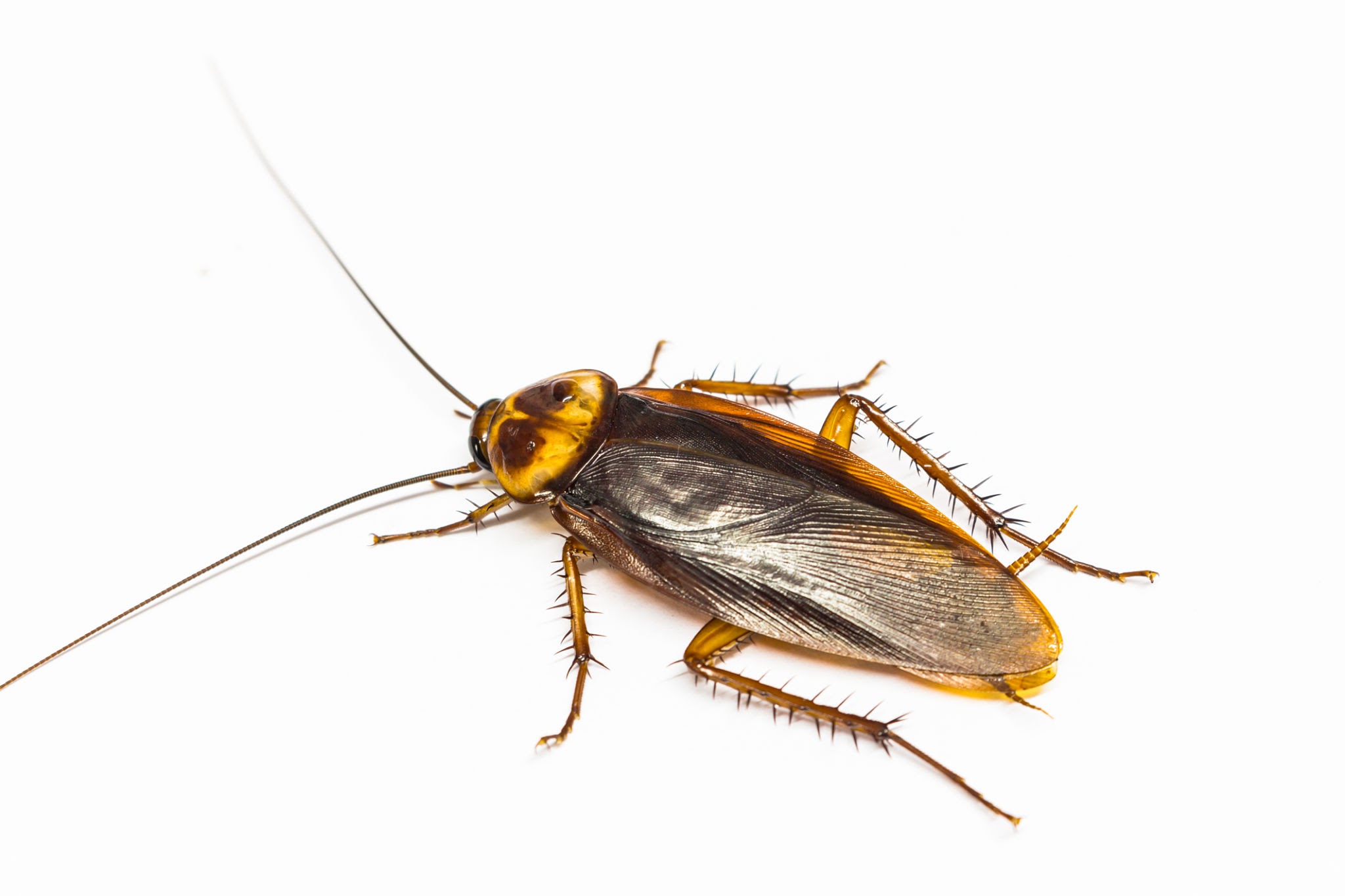
Overview
Turkish Cockroaches (Shelfordella lateralis), commonly known as Red Runner Cockroaches, are fast-moving cockroaches native to parts of the Middle East and Central Asia. Over the past several decades, they have spread into warmer regions around the world and are now established in parts of the southwestern United States. Unlike the highly invasive German Cockroach, Turkish cockroaches are primarily outdoor insects that thrive in landscaped areas, mulch beds, compost piles, and other sheltered environments.
These cockroaches have gained popularity in the reptile and amphibian pet trade because they reproduce rapidly, are highly nutritious as feeder insects, and are unable to climb smooth surfaces. Unfortunately, escaped populations from breeding facilities have contributed to their establishment in urban environments. Once established outdoors, they can reach extremely high numbers and become a persistent nuisance around homes and businesses.
The primary concern associated with Turkish cockroaches is their tendency to migrate indoors from outdoor breeding sites. Males are attracted to lights and frequently enter structures through open doors, windows, and gaps around foundations. Although they rarely become serious indoor infestations like German cockroaches, large outdoor populations can create ongoing nuisance problems and may contribute to contamination concerns around food preparation areas.
Quick Facts
- Common Name: Turkish Cockroach
- Other Names: Red Runner Cockroach, Rusty Red Cockroach
- Scientific Name: Shelfordella lateralis
- Order: Blattodea
- Size: 1/2 to 1 inch long
- Primary Habitat: Outdoor landscapes and mulch beds
- Activity: Nocturnal
- Status: Invasive nuisance pest
Taxonomy and Classification
Turkish cockroaches belong to the insect order Blattodea, the same group that contains all cockroaches and termites. They are closely related to several outdoor cockroach species commonly found throughout arid and semi-arid regions.
- Kingdom: Animalia
- Phylum: Arthropoda
- Class: Insecta
- Order: Blattodea
- Family: Blattidae
- Genus: Shelfordella
- Species: Shelfordella lateralis
The species has become increasingly important in urban pest management due to its expanding range and ability to establish dense outdoor populations.
Identification
Turkish cockroaches are relatively easy to distinguish from many other cockroach species due to the significant differences between males and females.
Adult Males
- Light reddish-brown coloration
- Fully developed wings
- Capable of short flights
- Slender body shape
- Approximately 1 inch long
Males are highly active and are often attracted to porch lights, security lights, and illuminated windows after dark.
Adult Females
- Darker brown to black coloration
- Wingless or with reduced wing pads
- Broader body shape
- Fast-running behavior
- Remain close to breeding sites
The dramatic difference between males and females often causes homeowners to mistake them for different species.
Nymphs
Immature Turkish cockroaches are wingless and reddish-brown. They resemble miniature versions of the adult female and are commonly found hiding beneath debris, mulch, and landscape materials.
Distribution and Habitat
Originally native to regions of the Middle East and Central Asia, Turkish cockroaches have spread throughout many warm climates worldwide.
In the United States, they are particularly common in:
- Arizona
- Nevada
- New Mexico
- Southern California
- Texas
- Other warm southwestern regions
Preferred habitats include:
- Mulch beds
- Landscape rock
- Compost piles
- Wood piles
- Irrigated gardens
- Water meter boxes
- Utility vaults
- Leaf litter
Unlike German cockroaches, Turkish cockroaches generally prefer outdoor environments and rarely establish permanent indoor infestations.
Life Cycle
Turkish cockroaches undergo incomplete metamorphosis consisting of three stages:
- Egg
- Nymph
- Adult
Egg Stage
Females produce egg capsules known as oothecae. These capsules contain multiple developing embryos and are deposited in protected locations near food and moisture sources.
Nymph Stage
Nymphs emerge from the egg case and pass through multiple molts before reaching adulthood. During this period, they remain hidden beneath debris and organic matter.
Adult Stage
Adults are highly active and capable of reproducing rapidly under favorable environmental conditions. In warm climates, multiple generations may occur annually.
Behavior and Ecology
Turkish cockroaches are primarily nocturnal and spend daylight hours hiding in sheltered locations.
Important behavioral characteristics include:
- Rapid running speed
- Strong attraction to lights
- Preference for outdoor habitats
- High reproductive potential
- Dependence on moisture
Male Turkish cockroaches frequently fly toward illuminated structures at night. This behavior is one of the primary reasons homeowners encounter the species indoors.
Damage and Impact
Nuisance Problems
The primary issue associated with Turkish cockroaches is nuisance activity around homes and commercial properties.
Large populations can result in:
- Frequent indoor invasions
- Cockroaches around entryways
- Increased sightings near outdoor lighting
- Accumulations around patios and landscaping
Potential Contamination
Like other cockroach species, Turkish cockroaches may carry bacteria and other microorganisms acquired from their environment.
Although they are generally less problematic than German cockroaches, they may contaminate surfaces and food if they enter structures.
Pet Trade Escapes
The widespread use of Turkish cockroaches as feeder insects has contributed to accidental releases and establishment of outdoor populations in some regions.
Signs of Infestation
- Large numbers of cockroaches around outdoor lights
- Cockroaches emerging from mulch beds at night
- Winged males flying near windows and doors
- Nymphs hiding beneath landscape debris
- Egg cases in sheltered outdoor locations
Nighttime inspections with a flashlight often reveal substantial populations hidden within landscaping materials.
Prevention and Control
Exclusion
Preventing entry into structures is one of the most effective management strategies.
- Seal foundation cracks
- Repair door sweeps
- Install weather stripping
- Screen vents and openings
- Seal utility penetrations
Lighting Management
Because males are attracted to lights, reducing attractive lighting can significantly decrease indoor invasions.
- Use yellow bug lights
- Reduce unnecessary outdoor lighting
- Position lights away from entry doors
- Close curtains at night
Habitat Reduction
Eliminating outdoor breeding sites helps reduce populations.
- Remove excess mulch
- Reduce leaf litter
- Store firewood away from structures
- Improve drainage
- Reduce excessive irrigation
Professional Treatment
Heavy infestations may require professional pest management services utilizing:
- Perimeter insecticide applications
- Granular treatments
- Targeted baiting programs
- Crack-and-crevice treatments
Interesting Facts
- Turkish cockroaches are commonly sold as feeder insects for reptiles.
- They are often called Red Runner Cockroaches.
- Males can fly while females are largely flightless.
- They are poor climbers on smooth surfaces.
- Outdoor populations can number in the thousands.
- They are more common in desert and semi-arid environments.
Conservation and Research
Turkish cockroaches are primarily studied as invasive urban pests and as commercially important feeder insects. Research continues to examine their spread throughout the southwestern United States, their interactions with native cockroach species, and strategies for managing large outdoor populations.
Although less problematic than German cockroaches, Turkish cockroaches remain an important nuisance pest in warm climates where outdoor infestations place constant pressure on nearby homes and businesses.
Related Pestipedia Articles
“`