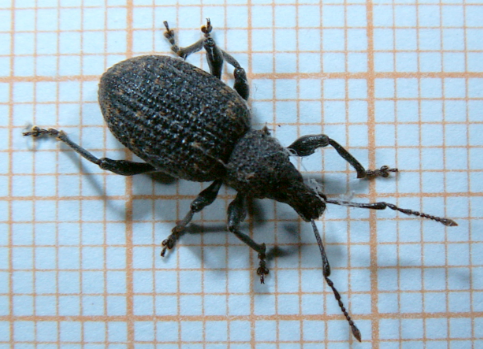
Trumpet Vine Weevils are small snout beetles that attack trumpet vines (Campsis radicans) and related ornamental plants. Several species of weevils may be associated with trumpet vines, but all share a similar feeding strategy that can significantly reduce the plant’s ornamental value. Adult females lay eggs in flower buds, developing shoots, or seed pods, where the larvae hatch and feed internally. This hidden feeding causes flower buds to drop prematurely, young shoots to wilt, and seed pods to become damaged or hollow. While infestations rarely threaten the overall health of an established vine, they can dramatically reduce flowering and diminish the visual appeal of one of North America’s most popular ornamental climbers.
Taxonomy and Classification
Trumpet Vine Weevils belong to the order Coleoptera, the largest order of insects, and the family Curculionidae, commonly known as the true weevils or snout beetles. Members of this family are characterized by their elongated snouts, known as rostrums, which are used for feeding and egg-laying.
Like all beetles, Trumpet Vine Weevils undergo complete metamorphosis, progressing through four life stages:
- Egg
- Larva
- Pupa
- Adult
The larval stage is responsible for nearly all plant damage. Because larvae develop inside plant tissues, they remain protected from predators and many control measures.
Identification
Adult Trumpet Vine Weevils are relatively small and often overlooked due to their dark coloration and secretive behavior.
- Adult Appearance (Key Identification Feature): Small, dark brown to black beetles measuring approximately 1/8 to 1/4 inch long. Adults possess the characteristic elongated snout typical of weevils.
- Larval Appearance: Creamy white, legless grubs with curved, C-shaped bodies and brown head capsules.
- Pupal Appearance: Found within plant tissues or protected chambers where larvae complete development.
- Behavior: Adults are often active during spring and early summer when flower buds and tender shoots are developing.
Signs of Infestation
Plant damage is often more noticeable than the insects themselves. Homeowners frequently discover infestations only after symptoms appear on the vine.
- Wilted Flower Buds: Buds shrivel, discolor, and drop before opening.
- Tiny Entry Holes: Small punctures may be visible where eggs were deposited.
- Flagging Shoots: New vine tips suddenly wilt and die back despite adequate moisture.
- Damaged Seed Pods: Mature seed pods contain hollowed seeds or feeding tunnels.
- Premature Bud Drop: Large numbers of buds may fall to the ground before blooming.
- Reduced Flower Production: Heavy infestations can noticeably reduce seasonal flowering.
Distribution and Habitat
Trumpet Vine Weevils occur primarily throughout eastern and southeastern North America, corresponding closely with the natural range of trumpet vine. Some species may also occur in cultivated landscapes outside the vine’s native range.
These insects are commonly found in:
- Residential landscapes
- Botanical gardens
- Parks
- Roadside plantings
- Natural woodland edges
- Fences and trellises supporting trumpet vines
They spend most of their lives directly on or within their host plants, where food and shelter are readily available.
Life Cycle
The life cycle of Trumpet Vine Weevils revolves around the growth stages of their host plant.
- Egg Stage: Females use their elongated snouts to create small cavities in flower buds, shoots, or seed pods before depositing eggs.
- Larval Stage: Newly hatched larvae tunnel into plant tissues and begin feeding internally.
- Pupal Stage: After completing development, larvae pupate within protected chambers.
- Adult Stage: Adults emerge and feed on foliage, buds, or other plant tissues before reproducing.
Depending on the species and climate, one or more generations may occur each year.
Damage and Economic Importance
The primary concern associated with Trumpet Vine Weevils is the reduction of ornamental value rather than severe plant injury.
Common forms of damage include:
- Flower Loss: Infested buds fail to open and often fall prematurely.
- Shoot Dieback: Larval tunneling can cause developing stems to wilt and die.
- Reduced Seed Production: Feeding inside seed pods destroys developing seeds.
- Aesthetic Decline: Sparse flowering significantly reduces landscape appeal.
- Growth Disruption: Repeated damage can interfere with normal vine development.
Although mature trumpet vines are generally vigorous enough to tolerate moderate infestations, severe populations can noticeably reduce blooming throughout the growing season.
Behavior and Conflict
The most challenging aspect of Trumpet Vine Weevil management is the concealed nature of the larval stage.
- Protected Feeding: Larvae remain hidden inside buds, shoots, and seed pods where they are shielded from many insecticides.
- Difficult Detection: Damage often becomes visible only after larvae are already established.
- Targeting Flower Structures: Because trumpet vines are grown primarily for their flowers, even small infestations can have a disproportionate impact on appearance.
- Seasonal Activity: Adult emergence often coincides with bud formation, making monitoring especially important during spring and early summer.
Management and Prevention
An Integrated Pest Management (IPM) approach provides the most effective long-term control of Trumpet Vine Weevils.
Pruning and Sanitation
- Remove Infested Buds: Collect and destroy wilted or damaged flower buds.
- Dispose of Seed Pods: Remove infested seed pods before adults emerge.
- Prune Damaged Shoots: Eliminate wilted stem tips showing signs of tunneling.
- Clean Plant Debris: Reduce potential overwintering sites around the vine.
Monitoring
- Inspect flower buds regularly during spring.
- Watch for premature bud drop.
- Look for pin-sized holes near bud bases.
- Observe new growth for signs of flagging or dieback.
Cultural Controls
- Maintain proper irrigation during dry periods.
- Fertilize appropriately to encourage vigorous growth.
- Avoid unnecessary plant stress.
- Prune vines regularly to promote healthy development.
Chemical Control
Because larvae are protected within plant tissues, chemical management is most effective when directed at adults before eggs are laid.
- Apply labeled insecticides during bud development if monitoring indicates adult activity.
- Proper timing is critical for success.
- Follow all label instructions carefully, especially around flowering plants that may attract pollinators.
Natural Enemies
Various predators and parasitoids may help suppress weevil populations naturally, including:
- Predatory beetles
- Parasitic wasps
- Spiders
- Birds
- Generalist predatory insects
Maintaining landscape diversity can encourage these beneficial organisms and contribute to long-term pest suppression.
Conservation and Research
Trumpet Vine Weevils are generally regarded as specialized ornamental pests rather than significant agricultural threats. Current research focuses on understanding host plant relationships, improving monitoring methods, and evaluating systemic and biological control options that can target concealed larvae more effectively.
Researchers are also studying how environmental conditions influence weevil populations and exploring strategies that reduce reliance on conventional insecticides while preserving the ornamental beauty of trumpet vines.