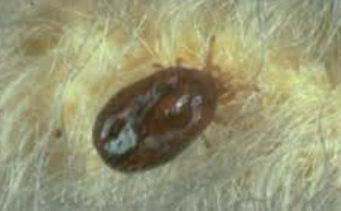
Tropical Rat Mites (Ornithonyssus bacoti) are blood-feeding ectoparasites primarily associated with rats, mice, and other rodents. Although these mites normally depend on rodents as their preferred hosts, they become serious nuisance pests when rodent populations decline or are eliminated from a structure. In such situations, hungry mites actively search for alternative hosts and frequently bite humans, dogs, cats, and other animals. Their bites can cause intense itching, dermatitis, skin irritation, and considerable psychological stress. Because they are capable of mechanically transmitting certain rodent-associated pathogens, Tropical Rat Mites are considered important public health pests in both residential and commercial environments.
Taxonomy and Classification
Tropical Rat Mites belong to the class Arachnida, which also includes spiders, ticks, and scorpions. They are members of the subclass Acari, the group that contains mites and ticks.
Unlike insects, mites possess eight legs during their nymphal and adult stages and lack wings and antennae. Tropical Rat Mites are unique among many pest mites because they are highly mobile and do not spend their entire lives on their hosts. Instead, they feed on rodents and then retreat to nearby cracks, crevices, nesting materials, and structural voids where they hide, digest blood meals, and reproduce.
These mites undergo the following life stages:
- Egg
- Larva
- Protonymph
- Deutonymph
- Adult
Under favorable conditions, development can occur rapidly, allowing populations to expand quickly around rodent nesting sites.
Identification
Adult Tropical Rat Mites are extremely small but can still be seen without magnification under favorable lighting conditions.
- Size: Less than 1 millimeter long.
- Appearance (Key Identification Feature): Pear-shaped body that appears dark red, reddish-brown, or nearly black after feeding. Unfed mites are often gray or pale brown.
- Movement: Fast-moving compared to many other household mites.
- Visibility: Often observed as tiny crawling specks on walls, ceilings, bedding, furniture, or light fixtures.
- Mouthparts: Specialized piercing structures designed to penetrate skin and feed on blood.
Signs of Infestation
Most homeowners first notice Tropical Rat Mites because of unexplained bites rather than seeing the mites themselves.
- Persistent Itching: Intense irritation following mite bites.
- Red Skin Lesions: Small red bumps resembling flea or bed bug bites.
- Nighttime Biting Activity: Many victims report increased irritation during sleeping hours.
- Visible Mites: Tiny moving specks appearing on bedding, walls, desks, countertops, or ceilings.
- Recent Rodent Removal: Symptoms often appear shortly after rats or mice have been trapped, poisoned, or excluded.
- Mite Migration: Large numbers may emerge from wall voids, attics, crawl spaces, and ceilings in search of new hosts.
Distribution and Habitat
Tropical Rat Mites have a worldwide distribution and are particularly common in urban environments where rodent populations are abundant. They are frequently encountered in apartment buildings, homes, warehouses, restaurants, poultry facilities, and commercial structures.
Common habitats include:
- Rodent nests
- Attics
- Crawl spaces
- Wall voids
- Ceiling cavities
- Storage rooms
- Basements
- Utility chases
Because they spend much of their lives away from the host, infestations often persist even after rodents have disappeared.
Life Cycle
The life cycle of Tropical Rat Mites is closely tied to rodent nesting areas.
- Egg Stage: Eggs are deposited in cracks, nesting materials, and protected crevices near rodent activity.
- Larval Stage: Newly hatched larvae do not feed and quickly molt into the next stage.
- Nymphal Stages: Developing nymphs require blood meals from rodents or alternative hosts.
- Adult Stage: Adults continue feeding and reproducing throughout their lives.
Under warm conditions, the complete life cycle may be completed in as little as one to two weeks, contributing to rapid population growth.
Behavior and Conflict
The most significant problems associated with Tropical Rat Mites occur when their primary rodent hosts become unavailable.
- Post-Control Infestations: Following rodent elimination, thousands of mites may disperse throughout a structure seeking new blood meals.
- Aggressive Host Seeking: Unlike many mites, Tropical Rat Mites actively travel considerable distances in search of hosts.
- Human Biting: Humans are frequently attacked when rodent populations decline.
- Pet Infestation: Dogs, cats, rabbits, and other animals may also be bitten.
- Psychological Impact: Persistent itching and the presence of crawling mites often cause significant stress and anxiety.
Medical and Public Health Importance
Tropical Rat Mites are among the most medically important mite pests associated with rodents.
- Dermatitis: Bites commonly produce red, itchy skin lesions.
- Secondary Infections: Excessive scratching may lead to bacterial infections.
- Allergic Reactions: Sensitive individuals may develop more severe skin responses.
- Pathogen Transmission: Research suggests these mites can mechanically transmit certain rodent-borne pathogens under specific circumstances.
- Public Health Concern: Large infestations can significantly impact quality of life in residential and commercial settings.
Management and Prevention
Successful control requires addressing both the mites and their rodent hosts.
Rodent Elimination
- Identify Rodent Activity: Locate nests, entry points, and feeding areas.
- Remove Hosts: Professionally eliminate rat and mouse populations.
- Seal Entry Points: Prevent future rodent infestations through exclusion measures.
Environmental Cleanup
- Nest Removal: Remove all rodent nests and contaminated materials.
- Sanitation: Clean rodent droppings and debris using appropriate safety procedures.
- Vacuuming: Thoroughly vacuum infested areas to remove mites and eggs.
Chemical Control
- Residual Insecticides: Treat cracks, crevices, and rodent harborages.
- Dust Formulations: Apply approved products to wall voids, attics, and inaccessible areas.
- Professional Treatment: Severe infestations generally require licensed pest management services.
Monitoring
- Continue inspecting for rodent activity.
- Monitor potential nesting areas.
- Watch for recurring mite activity after treatment.
- Respond quickly to any new rodent infestations.
Prevention
- Maintain effective rodent exclusion programs.
- Store food in sealed containers.
- Repair structural gaps and openings.
- Reduce clutter that provides rodent harborage.
- Inspect attics and crawl spaces regularly.
- Address rodent infestations before they become established.
Conservation and Research
Tropical Rat Mites are managed as high-priority structural and public health pests. Ongoing research focuses on their role in disease transmission, host-seeking behavior, pesticide resistance, and improved management strategies. Scientists continue to investigate environmentally responsible control methods that effectively suppress mite populations while reducing risks to people, pets, and non-target organisms.