Overview
Tropical Bed Bugs (Cimex hemipterus) are parasitic insects closely related to the Common Bed Bug (Cimex lectularius). They are among the most troublesome household pests in tropical and subtropical regions worldwide. Like their temperate relatives, Tropical Bed Bugs survive exclusively on blood meals and rely primarily on humans as their preferred host.
These insects are notorious for infesting homes, apartments, hotels, dormitories, hospitals, cruise ships, and public transportation. Their bites can cause intense itching, allergic reactions, skin irritation, and significant psychological stress. Although they are not known to transmit diseases efficiently to humans, their presence can severely impact quality of life through anxiety, sleep disruption, and persistent infestations.
Tropical Bed Bugs have become increasingly important in pest management due to their rapid reproductive rate, ability to hide in extremely small spaces, and growing resistance to many traditional insecticides. Their ability to spread through travel and commerce has allowed infestations to become a global concern.
Quick Facts
- Common Name: Tropical Bed Bug
- Scientific Name: Cimex hemipterus
- Order: Hemiptera
- Family: Cimicidae
- Size: Approximately 1/4 inch long
- Diet: Blood of humans and other warm-blooded animals
- Activity: Primarily nocturnal
- Status: Major structural and public health pest
Taxonomy and Classification
Tropical Bed Bugs belong to the family Cimicidae, a group of specialized blood-feeding insects that parasitize mammals and birds.
- Kingdom: Animalia
- Phylum: Arthropoda
- Class: Insecta
- Order: Hemiptera
- Family: Cimicidae
- Genus: Cimex
- Species: Cimex hemipterus
Unlike many household insects, Tropical Bed Bugs cannot survive on food crumbs, fabrics, or organic debris. They require blood meals to develop, reproduce, and survive.
Identification
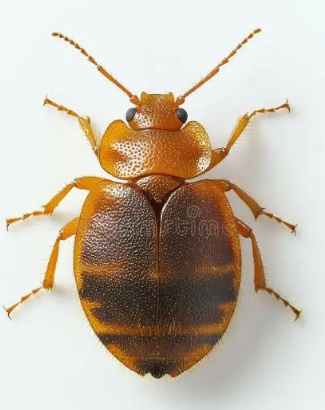
Adult Tropical Bed Bugs are small, flattened insects with a distinctive oval shape.
- Color: Reddish-brown to mahogany brown.
- Size: Approximately 4–7 mm long.
- Body Shape: Broad, flattened, and oval.
- Wings: Absent; incapable of flight.
- Antennae: Four segmented antennae.
- Movement: Fast-moving crawlers that hide during daylight hours.
After feeding, the body becomes swollen, elongated, and darker red due to the ingested blood.
While Tropical Bed Bugs closely resemble Common Bed Bugs, accurate identification often requires professional examination under magnification.
Life Cycle
Tropical Bed Bugs undergo incomplete metamorphosis consisting of three stages:
- Egg
- Nymph
- Adult
Egg Stage
Females lay tiny white eggs in cracks, mattress seams, furniture joints, and other protected locations. A single female may produce hundreds of eggs during her lifetime.
Nymph Stage
Nymphs resemble miniature adults and must obtain a blood meal before molting into the next developmental stage. There are five nymphal stages before adulthood.
Adult Stage
Adults may live several months under favorable conditions and can survive extended periods without feeding.
Warm temperatures common in tropical regions accelerate development, allowing infestations to grow rapidly.
Distribution and Habitat
Tropical Bed Bugs are common throughout tropical and subtropical regions of:
- Asia
- Africa
- South America
- Central America
- Caribbean nations
- Pacific islands
- Southern portions of some temperate countries
Their preferred habitats include:
- Mattresses
- Box springs
- Bed frames
- Headboards
- Furniture seams
- Electrical outlets
- Wall voids
- Luggage
- Public transportation seating
They remain hidden during the day and emerge at night when hosts are asleep.
Behavior and Feeding
Tropical Bed Bugs are nocturnal parasites that locate hosts through body heat, carbon dioxide, and human scent.
During feeding they:
- Pierce the skin using specialized mouthparts.
- Inject saliva containing anticoagulants.
- Feed for several minutes.
- Return to hiding places after feeding.
Because the saliva contains anesthetic compounds, many people do not feel the bite immediately.
They spend most of their lives concealed in protected cracks and crevices, making infestations difficult to detect during their early stages.
Signs of Infestation
- Bite Marks: Red, itchy welts often appearing in clusters or lines.
- Fecal Spots: Small black or dark brown stains on bedding, mattresses, and furniture.
- Shed Skins: Yellowish exoskeletons left behind during molting.
- Eggs: Tiny white eggs hidden in cracks and seams.
- Blood Spots: Small reddish stains on sheets and pillowcases.
- Live Bugs: Visible adults or nymphs in mattress seams and furniture joints.
Health Effects
Tropical Bed Bugs are not known to be major disease vectors, but their bites can cause significant health and quality-of-life issues.
Skin Reactions
- Intense itching
- Red bumps
- Localized swelling
- Allergic reactions
Psychological Effects
- Anxiety
- Sleep deprivation
- Stress
- Embarrassment
- Reduced quality of life
Severe infestations may lead to chronic sleep disruption and significant emotional distress.
Management and Control
Successful control requires a comprehensive Integrated Pest Management (IPM) approach.
Heat Treatment
Professional heat treatment is considered one of the most effective control methods.
- Entire rooms are heated above 120°F (49°C).
- All life stages are eliminated.
- No chemical residues remain.
Inspection and Monitoring
- Inspect mattresses and bed frames regularly.
- Use interceptor traps beneath bed legs.
- Monitor travel-related introductions.
Sanitation
- Reduce clutter.
- Vacuum hiding areas thoroughly.
- Launder bedding at high temperatures.
- Dry clothing on high heat settings.
Chemical Control
Professional applications may include:
- Residual insecticides
- Desiccant dusts
- Crack-and-crevice treatments
- Non-repellent formulations
Due to widespread resistance, chemical treatments alone are rarely sufficient.
Prevention
- Inspect hotel rooms before unpacking.
- Keep luggage off beds and floors.
- Examine used furniture carefully.
- Wash travel clothing immediately after returning home.
- Use protective mattress encasements.
- Regularly inspect sleeping areas.
Conservation and Research
Tropical Bed Bugs are managed exclusively as public health and structural pests. Current research focuses on understanding insecticide resistance, developing improved monitoring technologies, evaluating biological control options, and creating safer, more effective treatment methods.
Scientists continue to study the genetic mechanisms that allow bed bugs to survive chemical treatments and spread globally through modern travel networks.
Conclusion
Tropical Bed Bugs are highly adaptable blood-feeding insects that have become significant pests throughout tropical and subtropical regions of the world. Their ability to hide effectively, reproduce rapidly, and resist many common insecticides makes them challenging to eliminate. Early detection, professional treatment, heat remediation, and vigilant prevention remain the most effective strategies for controlling these persistent household pests.