Overview
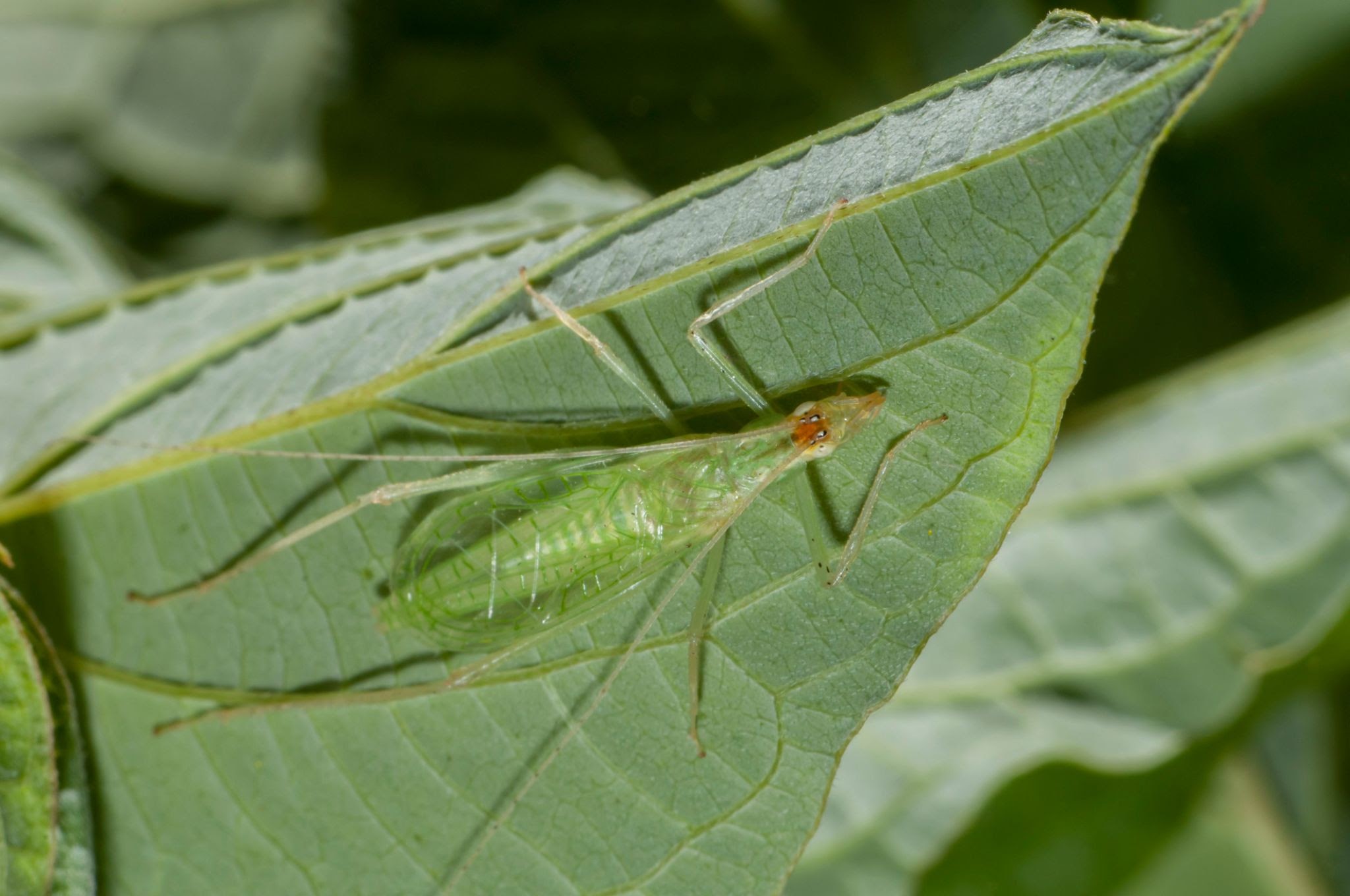
Tree Crickets (Oecanthus spp.) are slender, pale-colored insects belonging to the cricket family. Unlike the dark-colored field crickets commonly found on the ground, Tree Crickets spend most of their lives in shrubs, vines, fruit canes, and small trees. They are best known for their pleasant, musical chirping, which fills summer evenings and early autumn nights throughout much of North America.
Although generally considered beneficial or harmless insects, Tree Crickets can occasionally become minor plant pests. The primary damage occurs when females use their specialized ovipositors to drill rows of small holes into twigs, stems, and canes to deposit eggs. This process can weaken branches and cause a condition known as flagging, where the portion of the stem beyond the egg-laying site wilts, dies, or breaks off.
Damage is most commonly observed on raspberries, blackberries, grapes, roses, and ornamental shrubs. Despite this injury, Tree Crickets rarely cause significant economic losses and are generally considered minor pests compared to other plant-feeding insects.
Interestingly, Tree Crickets have played an important role in scientific research. The chirping rate of the Snowy Tree Cricket is directly linked to temperature, leading to the development of Dolbear’s Law, one of the most famous examples of insect behavior being used to estimate environmental conditions.
Quick Facts
- Common Name: Tree Crickets
- Scientific Name: Oecanthus spp.
- Order: Orthoptera
- Family: Gryllidae
- Size: 1/2–1 inch
- Color: Pale green, yellow-green, or whitish
- Diet: Plant material and small insects
- Primary Damage: Egg-laying injury to twigs and canes
- Activity Period: Summer through fall
Taxonomy and Classification
Tree Crickets belong to the order Orthoptera, which includes grasshoppers, katydids, and crickets. Within this order, they are members of the family Gryllidae.
- Kingdom: Animalia
- Phylum: Arthropoda
- Class: Insecta
- Order: Orthoptera
- Family: Gryllidae
- Genus: Oecanthus
More than 60 species of Tree Crickets have been identified worldwide. Common North American species include the Snowy Tree Cricket (Oecanthus fultoni), Narrow-winged Tree Cricket (Oecanthus niveus), and Black-horned Tree Cricket (Oecanthus nigricornis).
Unlike true pest crickets that inhabit lawns and structures, Tree Crickets spend their lives almost exclusively in vegetation.
Identification
Tree Crickets are delicate insects with a distinctly different appearance from common house or field crickets.
- Slender, elongated body
- Pale green, yellow-green, or ivory coloration
- Long, thread-like antennae
- Transparent wings
- Large hind legs adapted for jumping
- Small, delicate appearance
Males possess specialized wing structures used to create their characteristic songs through a process known as stridulation.
Females can be identified by their long, needle-like ovipositor extending from the rear of the abdomen. This structure is used to drill holes into stems and canes for egg deposition.
Distribution and Habitat
Tree Crickets are found throughout North America, Europe, Asia, and many temperate regions worldwide.
They commonly inhabit:
- Gardens
- Orchards
- Vineyards
- Shrub borders
- Woodland edges
- Meadows
- Hedgerows
- Agricultural fields
Unlike ground-dwelling crickets, Tree Crickets spend most of their lives climbing among leaves and stems. They are especially abundant in dense vegetation that provides protection from predators and suitable locations for egg laying.
Life Cycle
Tree Crickets undergo incomplete metamorphosis.
Egg Stage
Females deposit eggs inside stems, twigs, and canes during late summer and fall. The eggs remain protected within plant tissue throughout the winter.
Nymph Stage
Eggs hatch in spring, producing wingless nymphs that resemble miniature adults.
Nymphs molt several times as they grow, gradually developing wings and reproductive structures.
Adult Stage
Adults emerge during summer and remain active through early autumn. Mating and egg laying occur before the arrival of cold weather.
Most species complete one generation per year.
Behavior and Ecology
Tree Crickets are primarily nocturnal insects.
During the day they remain hidden among leaves and stems. At night, males produce their distinctive songs to attract females.
One of the most remarkable characteristics of Tree Crickets is the relationship between their chirping rate and temperature.
The Snowy Tree Cricket is famous for Dolbear’s Law, which states that air temperature can be estimated by counting chirps over a specific period.
Tree Crickets are also partially predatory and may feed on:
- Aphids
- Scale insects
- Mite populations
- Small caterpillars
- Plant sap
- Pollen
This mixed feeding behavior makes them somewhat beneficial in many garden ecosystems.
Damage and Economic Importance
The primary damage caused by Tree Crickets results from egg-laying activity rather than feeding.
Common symptoms include:
- Rows of small puncture holes in stems
- Split or weakened canes
- Wilting branch tips
- Flagging of twigs
- Reduced vigor in young plants
Host plants commonly affected include:
- Raspberries
- Blackberries
- Grapes
- Roses
- Fruit trees
- Ornamental shrubs
In most situations, the damage is cosmetic and does not threaten plant survival. However, repeated infestations may reduce yields in small fruit plantings or affect the appearance of ornamental landscapes.
Management and Prevention
Integrated Pest Management (IPM) techniques are generally sufficient for controlling Tree Cricket damage.
Monitoring
- Inspect canes and twigs in late summer.
- Look for rows of oviposition punctures.
- Monitor branch tips for flagging symptoms.
Pruning
The most effective management technique is removing egg-infested branches.
- Prune affected twigs during winter.
- Destroy removed plant material.
- Prevent eggs from hatching in spring.
Cultural Controls
- Maintain healthy plant growth.
- Reduce excessive weed growth.
- Improve air circulation.
- Encourage natural predators.
Chemical Control
Insecticides are rarely recommended because Tree Cricket damage is usually minor and treatments may harm beneficial insects.
Beneficial Role
Despite occasional plant damage, Tree Crickets provide several ecological benefits.
- Consume pest insects
- Serve as food for birds and wildlife
- Contribute to ecosystem diversity
- Provide valuable scientific research opportunities
Their role as predators of aphids and other soft-bodied pests often outweighs the minor damage caused by their egg-laying activities.
Conservation and Research
Tree Crickets are not considered conservation concerns, but they are widely studied due to their unique acoustic behavior. Researchers continue investigating how environmental conditions influence chirping rates, mating success, and communication.
Studies involving the Snowy Tree Cricket have become classic examples of insect bioacoustics and temperature-dependent behavior.
Conclusion
Tree Crickets are delicate, musical insects that contribute to the sounds of summer and fall landscapes. While females may occasionally damage twigs and canes through egg-laying activity, they are generally considered minor pests and even provide some beneficial predatory behavior. Proper pruning and routine plant maintenance are usually all that is required to manage their occasional impacts on gardens, vineyards, and ornamental plantings.