Overview
Tiger Mosquitoes are a group of highly invasive and medically important mosquitoes that include the Asian Tiger Mosquito (Aedes albopictus) and the closely related Yellow Fever Mosquito (Aedes aegypti). These mosquitoes are among the most dangerous insect pests in the world because they serve as efficient vectors of numerous viral diseases, including Dengue Fever, Zika Virus, Chikungunya, and Yellow Fever. In addition to their role in disease transmission, they are notorious for their aggressive daytime biting behavior and ability to thrive in urban and suburban environments.
Unlike many native mosquito species that are most active during the evening, Tiger Mosquitoes actively seek hosts throughout the day. Their close association with human habitation, combined with their ability to breed in tiny amounts of standing water, has allowed them to spread rapidly across much of the globe. Today, they are considered one of the most significant public health pests worldwide.
Their success as invasive species stems from their adaptability, rapid reproduction, and durable eggs, which can survive drying conditions for months before hatching when water becomes available again.
Quick Facts
- Common Name: Tiger Mosquito
- Scientific Names: Aedes albopictus, Aedes aegypti
- Order: Diptera
- Family: Culicidae
- Diet: Blood (females), nectar (males)
- Primary Threat: Disease transmission
- Active Period: Daytime and twilight
- Distribution: Worldwide
Taxonomy and Classification
Tiger Mosquitoes belong to the family Culicidae, which contains more than 3,500 mosquito species worldwide. The most important species within this group are the Asian Tiger Mosquito and the Yellow Fever Mosquito.
- Kingdom: Animalia
- Phylum: Arthropoda
- Class: Insecta
- Order: Diptera
- Family: Culicidae
- Genus: Aedes
These mosquitoes undergo complete metamorphosis consisting of egg, larva, pupa, and adult stages. Unlike many mosquito species that prefer marshes and wetlands, Aedes mosquitoes specialize in breeding within small artificial containers near human dwellings.
Identification
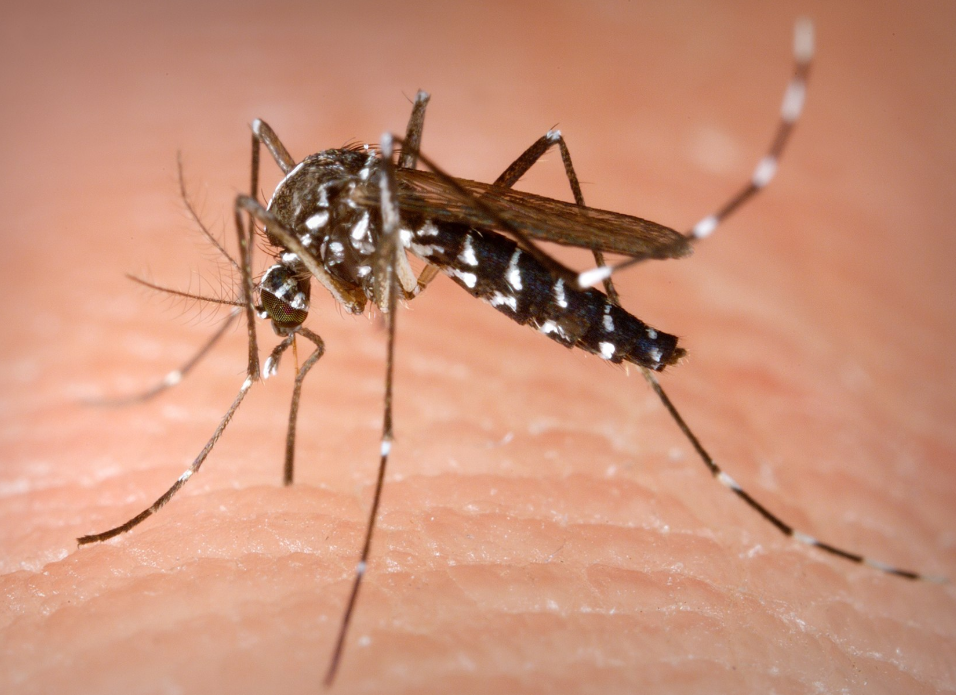
Tiger Mosquitoes are relatively small insects, typically measuring between 1/8 and 1/4 inch long.
Asian Tiger Mosquito
- Glossy black body
- Distinctive white stripe running down the center of the thorax
- Black-and-white banded legs
- Silvery markings on the head and body
Yellow Fever Mosquito
- Dark brown to black body
- White lyre-shaped markings on the thorax
- Banded legs with white scales
- Slightly smaller than many native mosquitoes
Both species are aggressive daytime biters and are often observed flying low to the ground around homes, gardens, and outdoor recreational areas.
Distribution and Habitat
Tiger Mosquitoes originated in tropical and subtropical regions but have expanded dramatically through global trade and transportation.
The Asian Tiger Mosquito is now found throughout:
- North America
- South America
- Europe
- Africa
- Asia
- Australia
Their preferred habitat is closely associated with human activity. Common breeding locations include:
- Flower pots
- Bird baths
- Pet water dishes
- Buckets
- Rain barrels
- Discarded tires
- Clogged gutters
- Plant saucers
- Tarps and containers holding rainwater
Because they require only a few ounces of water to reproduce, even small amounts of standing water can support large populations.
Life Cycle
Tiger Mosquitoes complete their development through four stages:
- Egg
- Larva
- Pupa
- Adult
Egg Stage
Females lay eggs just above the water line rather than directly on water. These eggs are highly resistant to drying and can remain viable for many months.
Larval Stage
When water levels rise, eggs hatch into aquatic larvae that feed on microorganisms and organic debris.
Pupal Stage
The pupal stage is aquatic and typically lasts only a few days before adult emergence.
Adult Stage
Adults emerge from the water and quickly begin seeking food and mates. Females require blood meals to produce eggs.
Under favorable conditions, the entire life cycle may be completed in less than two weeks.
Behavior and Disease Transmission
The primary concern associated with Tiger Mosquitoes is their ability to transmit serious diseases.
Major diseases include:
- Dengue Fever
- Zika Virus
- Chikungunya
- Yellow Fever
- Mayaro Virus
- Various encephalitis viruses
Unlike many mosquitoes that feed primarily at dusk, Tiger Mosquitoes actively bite throughout daylight hours, increasing opportunities for disease transmission.
They are considered opportunistic feeders and readily bite:
- Humans
- Dogs
- Cats
- Birds
- Wild mammals
Their tendency to feed on multiple hosts during a single egg-laying cycle makes them especially efficient disease vectors.
Damage and Public Health Impact
Tiger Mosquitoes create significant public health and economic challenges.
- Transmission of dangerous viral diseases
- Reduced outdoor recreational activity
- Medical treatment costs
- Tourism impacts during outbreaks
- Quality-of-life reductions due to biting pressure
Even in areas where disease transmission is uncommon, their aggressive biting behavior makes them one of the most troublesome mosquito species encountered by homeowners.
Management and Prevention
Effective control focuses on eliminating breeding sites and preventing bites.
Source Reduction
- Empty standing water weekly.
- Clean clogged gutters.
- Remove discarded containers.
- Store buckets and equipment upside down.
- Cover rain barrels tightly.
This is the single most important control measure.
Larval Control
- Use Bacillus thuringiensis israelensis (Bti) products.
- Treat water sources that cannot be drained.
- Maintain ornamental ponds properly.
Personal Protection
- Wear long sleeves and pants.
- Use repellents containing DEET or Picaridin.
- Install and maintain window screens.
- Avoid outdoor exposure during peak mosquito activity.
Professional Control
Municipal mosquito control programs may utilize surveillance traps, larviciding programs, and targeted adult mosquito treatments during disease outbreaks.
Conservation and Research
Tiger Mosquitoes are managed as high-priority public health pests rather than species of conservation concern. Current research focuses on innovative methods for population suppression, including sterile insect releases, Wolbachia-based biological control programs, genetic modification technologies, and improved surveillance systems.
Scientists are also developing better predictive models to identify areas at risk of mosquito-borne disease outbreaks and improve response efforts before epidemics occur.
Conclusion
Tiger Mosquitoes are among the most dangerous and invasive mosquito species in the world. Their aggressive daytime biting habits, ability to breed in tiny water sources, and capacity to transmit serious viral diseases make them major public health pests. Consistent source reduction, personal protection measures, and community-wide mosquito management programs remain the most effective strategies for reducing populations and protecting human health.