Overview
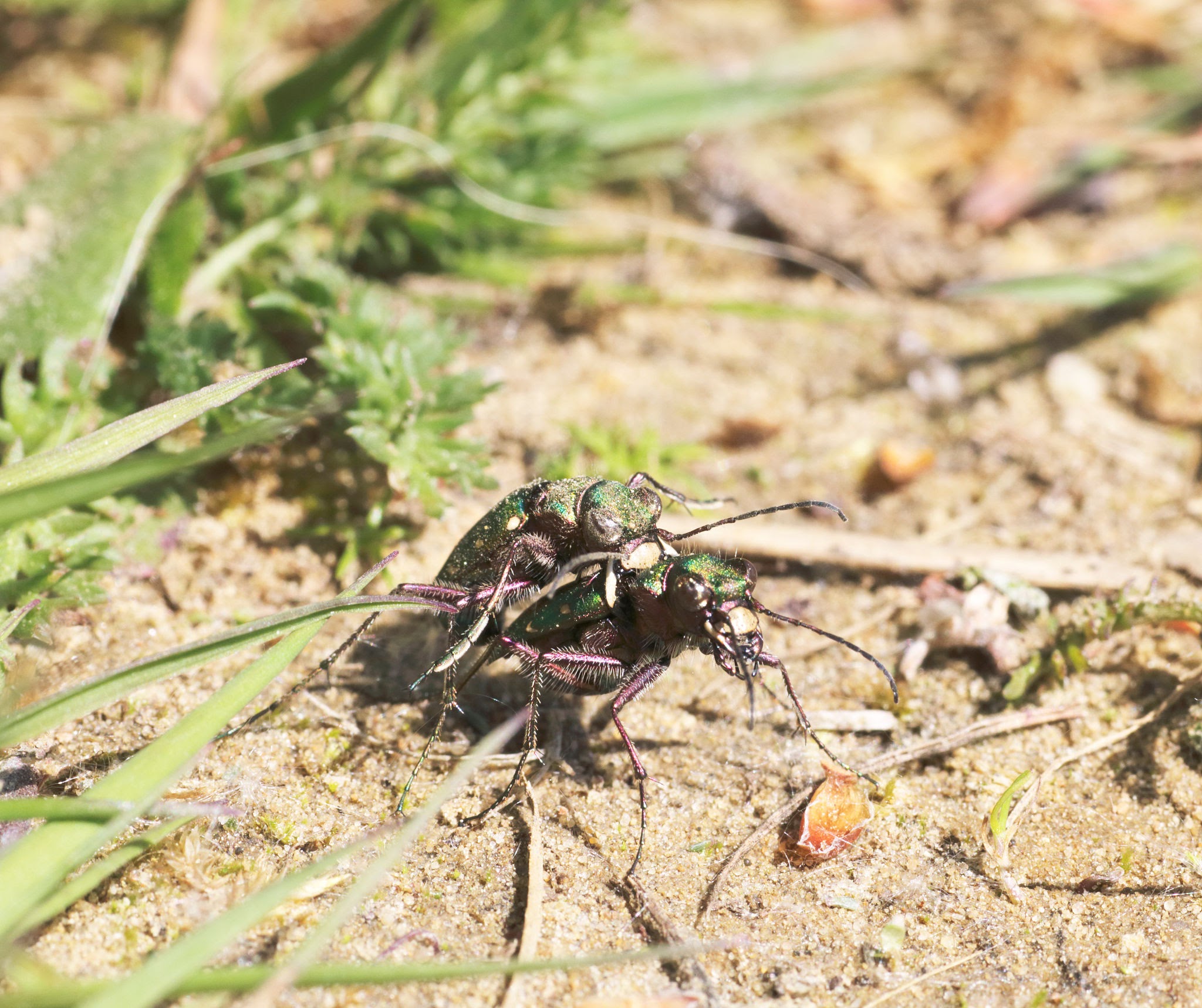
Tiger Beetles are among the most fascinating and visually striking predatory beetles found throughout the world. Belonging to the family Cicindelidae, these insects are famous for their brilliant metallic coloration, exceptional speed, large compound eyes, and powerful jaws. Unlike many insects commonly featured on pest management websites, Tiger Beetles are not pests. Instead, they serve as highly beneficial predators that help regulate populations of flies, ants, caterpillars, spiders, and numerous other small invertebrates.
The name “Tiger Beetle” comes from their aggressive hunting behavior. Like their mammalian namesake, they actively pursue prey with remarkable speed and precision. Their combination of excellent vision, rapid movement, and powerful mandibles makes them one of the most effective insect predators in terrestrial ecosystems.
Both adults and larvae are predatory. Adult Tiger Beetles patrol open ground searching for prey, while larvae wait in concealed burrows, ambushing unsuspecting insects that pass nearby. Their unique lifestyle, brilliant appearance, and ecological importance have made them favorites among entomologists, photographers, and nature enthusiasts.
Quick Facts
- Common Name: Tiger Beetle
- Scientific Family: Cicindelidae
- Order: Coleoptera
- Size: 1/2 to 1 inch long
- Diet: Predatory on insects and spiders
- Habitat: Sandy soils, riverbanks, trails, fields, dunes
- Activity: Primarily daytime hunters
- Status: Highly beneficial predator
Taxonomy and Classification
Tiger Beetles belong to the order Coleoptera, which includes all beetles. Although traditionally classified as their own family, some modern classifications place them within the ground beetle family Carabidae as a specialized subfamily.
- Kingdom: Animalia
- Phylum: Arthropoda
- Class: Insecta
- Order: Coleoptera
- Family: Cicindelidae
There are more than 2,500 species of Tiger Beetles worldwide, with dozens occurring throughout North America. Each species is adapted to specific habitats and environmental conditions.
Identification
Tiger Beetles are easily recognized by their distinctive appearance and behavior.
- Coloration: Metallic green, blue, bronze, copper, purple, or iridescent shades.
- Eyes: Large, bulging compound eyes that provide excellent vision.
- Mandibles: Large, curved jaws used for capturing prey.
- Legs: Long, slender legs designed for rapid running.
- Body Shape: Streamlined and athletic compared to many other beetles.
- Wings: Well-developed wings allow strong flight.
Many species feature distinctive white or cream-colored markings on their wing covers, creating unique patterns useful for identification.
Life Cycle
Tiger Beetles undergo complete metamorphosis consisting of four stages:
- Egg
- Larva
- Pupa
- Adult
Females deposit eggs in suitable soil habitats. After hatching, larvae construct vertical burrows where they remain for much of their development.
The larval stage may last one to several years depending on species, climate, and food availability.
Once fully developed, the larva pupates underground before emerging as an adult predator.
Larval Behavior
The larval stage of Tiger Beetles is one of the most remarkable among insects.
Larvae construct vertical burrows that may extend several inches into the soil. They position themselves at the entrance and wait motionlessly for prey.
When an insect approaches, the larva rapidly lunges from the burrow and grabs the victim with its powerful jaws.
A specialized hook located on the back of the larva helps anchor it within the tunnel during struggles with prey.
This ambush strategy allows the larva to capture insects significantly larger than itself.
Distribution and Habitat
Tiger Beetles occur on every continent except Antarctica.
They are most commonly found in open, sunny habitats where they can easily spot prey and move rapidly across the ground.
Preferred habitats include:
- Sandy riverbanks
- Lake shores
- Coastal dunes
- Open trails
- Grasslands
- Desert flats
- Forest clearings
- Agricultural field margins
Many species have highly specialized habitat requirements and may only occur in specific soil types or ecosystems.
Behavior and Hunting Strategy
Tiger Beetles are among the fastest-running insects in the world relative to their body size.
Adults actively patrol the ground searching for prey. Their hunting strategy typically follows a predictable pattern:
- Run rapidly toward prey.
- Pause briefly to visually relocate the target.
- Sprint again.
- Capture prey with large mandibles.
Scientists have discovered that some Tiger Beetles move so quickly that their vision briefly becomes overwhelmed, forcing them to stop periodically to refocus before continuing the chase.
Diet
Tiger Beetles are strict predators.
Common prey includes:
- Ants
- Flies
- Small caterpillars
- Leafhoppers
- Aphids
- Spiders
- Small beetles
- Other soft-bodied insects
Their predatory behavior makes them valuable contributors to natural pest suppression in many ecosystems.
Benefits to Agriculture and Gardens
Tiger Beetles provide several ecological benefits.
- Natural Pest Control: Consume many pest insects.
- Reduced Chemical Dependence: Support biological control programs.
- Ecosystem Health: Help maintain balanced insect populations.
- Biodiversity Indicators: Presence often reflects healthy habitats.
Because they attack numerous pest species, Tiger Beetles are generally welcomed by gardeners and land managers.
Interaction with Humans
Tiger Beetles are harmless to humans.
Although their large jaws may appear intimidating, they rarely bite people and pose no significant threat. When approached, most individuals quickly run or fly away.
Their colorful appearance often makes them popular subjects for wildlife photography and insect observation.
Conservation Importance
Several Tiger Beetle species are considered indicators of environmental quality.
Because many species require specialized habitats, changes in their populations may signal broader ecological problems.
Threats include:
- Habitat destruction
- Urban development
- Off-road vehicle activity
- Pollution
- Pesticide exposure
- Climate change
Some rare species receive conservation protection due to declining populations.
Management and Protection
No control measures are needed for Tiger Beetles.
Instead, conservation efforts focus on protecting their habitat and minimizing unnecessary pesticide applications.
- Preserve natural sandy areas.
- Reduce broad-spectrum insecticide use.
- Maintain habitat diversity.
- Protect riverbanks and dune systems.
- Encourage native vegetation.
These actions benefit both Tiger Beetles and numerous other beneficial insects.
Scientific Research
Tiger Beetles have attracted significant scientific interest because of their remarkable adaptations.
Researchers study:
- Running speed and biomechanics
- Predatory behavior
- Visual processing systems
- Habitat specialization
- Population genetics
- Conservation biology
Their unique combination of speed, vision, and predatory efficiency continues to provide insights into insect evolution and ecology.
Conclusion
Tiger Beetles are among the most impressive predatory insects in the world. Their metallic colors, lightning-fast movements, and aggressive hunting behavior make them both fascinating and ecologically valuable. Far from being pests, they provide important natural pest control services and serve as indicators of healthy ecosystems. Protecting Tiger Beetle populations helps maintain biodiversity and supports the natural balance of insect communities.