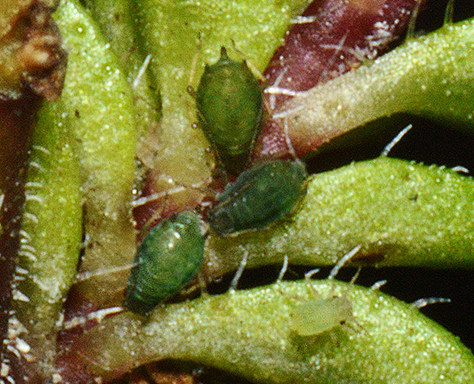
Thyme Aphids (referring to various species, typically Aphis or Myzus species that colonize thyme, mint, oregano, and other culinary herbs) are small, soft-bodied, sap-sucking insects that commonly infest herb gardens. These pests gather on tender new growth where they feed by piercing plant tissues and extracting phloem sap. While infestations rarely kill healthy plants, they can cause stunted growth, distorted foliage, yellowing leaves, and contamination from sticky honeydew. The resulting growth of black sooty mold can significantly reduce the appearance, quality, and marketability of culinary herbs.
Taxonomy and Classification
Thyme Aphids belong to the order Hemiptera, commonly known as the true bugs. They are members of the superfamily Aphidoidea, which contains thousands of aphid species worldwide. Aphids undergo simple metamorphosis, progressing through egg, nymph, and adult stages without a pupal phase.
One of the reasons aphids become problematic so quickly is their ability to reproduce through parthenogenesis, where females produce live offspring without mating. Under favorable conditions, populations can multiply rapidly within just a few days.
Identification
Adult Thyme Aphids are extremely small, typically measuring between 1 and 3 millimeters in length. Despite their size, large colonies are often easy to spot on herb plants.
- Appearance (Key Identification Feature): Pear-shaped bodies that may be green, black, yellow, brown, or reddish depending on the species and host plant. Distinctive cornicles, often called “tailpipes,” protrude from the rear of the abdomen.
- Behavior (Key Identification Feature): Dense colonies form on tender stem tips, flower buds, and the undersides of leaves where sap flow is highest.
- Damage Signs:
- Sooty Mold: Black fungal growth developing on sticky honeydew deposits.
- Leaf Distortion: Twisted, curled, puckered, or stunted new growth.
- Honeydew: Sticky residue coating leaves and stems.
- Shed Skins: White, papery exoskeletons left behind as aphids molt.
- Visible Colonies: Clusters of numerous aphids gathered on young plant tissue.
- Primary Conflict: Plant stunting, reduced herb quality, and contamination from honeydew and mold.
Distribution and Habitat
Thyme Aphids have a nearly worldwide distribution and can be found anywhere herbs are cultivated. They thrive in gardens, greenhouses, raised beds, container plantings, and commercial herb production systems.
Common host plants include:
- Thyme
- Mint
- Oregano
- Marjoram
- Basil
- Sage
- Lavender
- Various ornamental and vegetable plants
Warm temperatures and lush new growth encourage aphid populations to expand rapidly. Greenhouses and protected growing environments often experience persistent infestations throughout the growing season.
Life Cycle
The life cycle of Thyme Aphids is remarkably fast. Females can produce multiple offspring each day, allowing colonies to grow exponentially.
The life cycle generally follows these stages:
- Egg Stage: Some species overwinter as eggs on host plants.
- Nymph Stage: Young aphids resemble smaller versions of adults and begin feeding immediately.
- Adult Stage: Reproductive adults continue feeding and producing offspring.
Several generations may occur within a single growing season, especially during mild weather conditions.
Damage and Economic Importance
The primary damage caused by Thyme Aphids results from their feeding activity and honeydew production. Aphids insert specialized mouthparts into plant tissues and continuously remove nutrient-rich sap.
- Reduced Plant Vigor: Heavy infestations weaken plants and slow growth.
- Distorted Growth: New shoots become curled and malformed.
- Yellowing Foliage: Nutrient loss can cause discoloration.
- Honeydew Contamination: Sticky residue covers leaves and stems.
- Sooty Mold Growth: Black fungal coatings reduce aesthetic value and photosynthesis.
- Reduced Marketability: Culinary herbs contaminated by aphids or mold may become unsuitable for sale.
For home gardeners, aesthetic damage is often the primary concern. Commercial herb growers may experience reduced crop quality and increased labor costs associated with cleaning and sorting harvested herbs.
Management and Prevention
Integrated Pest Management (IPM) is the preferred approach for controlling Thyme Aphids. Because herbs are consumed directly, non-chemical control methods are often the safest and most practical option.
Physical Control
- Water Spray: Use a strong stream of water to dislodge aphids from plants. Repeated applications are often highly effective.
- Hand Removal: Wipe, crush, or prune heavily infested stems and leaves.
- Regular Inspection: Monitor new growth frequently to catch infestations early.
Biological Control
- Lady Beetles: Both adults and larvae consume large numbers of aphids.
- Lacewings: Lacewing larvae are highly effective aphid predators.
- Parasitic Wasps: Tiny beneficial wasps help suppress aphid populations naturally.
- Hover Fly Larvae: Important natural enemies in herb gardens.
Organic Treatments
- Insecticidal Soap: Effective when sprayed directly on aphids.
- Horticultural Oils: Suffocate aphids and their eggs.
- Neem Oil: Provides suppression while remaining suitable for many organic gardening programs.
Always test sprays on a small section of the plant first, as some herbs may be sensitive to oils and soaps during hot weather.
Prevention
- Avoid excessive nitrogen fertilization, which promotes tender growth favored by aphids.
- Encourage beneficial insects through diverse plantings.
- Provide adequate plant spacing for improved air circulation.
- Inspect new plants before introducing them into herb gardens.
- Remove heavily infested plant material promptly.
Conservation and Research
Thyme Aphids are considered minor pests in most situations, but they remain important in specialty herb production and organic agriculture. Current research focuses on understanding host plant preferences, improving biological control strategies, and evaluating plant-derived compounds such as neem extracts and essential oils for aphid management.
As consumer demand for pesticide-free herbs continues to grow, researchers are increasingly studying environmentally friendly approaches that effectively suppress aphid populations while maintaining the safety and quality of edible crops.