Overview
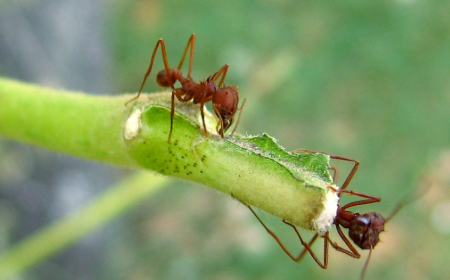
Texas Leafcutting Ants (Atta texana) are among the most fascinating and destructive ant species found in North America. Unlike most ants, which feed directly on seeds, insects, or sugary substances, Texas Leafcutting Ants harvest fresh vegetation to cultivate a specialized fungus that serves as their primary food source. This unique agricultural system has earned them recognition as one of the few non-human organisms that practice true farming.
Although their social organization and fungus-growing behavior are remarkable from a scientific perspective, these ants can be serious agricultural and landscape pests. Large colonies are capable of stripping leaves from trees, shrubs, crops, flowers, and ornamental plants in a matter of hours. Their feeding activity can significantly weaken plants, reduce crop yields, and create substantial economic losses for homeowners, ranchers, foresters, and farmers.
Texas Leafcutting Ants are native to the southern United States and northern Mexico. They are especially common in Texas, where their large colonies and visible foraging trails make them one of the most recognizable ant species in the region.
Quick Facts
- Common Name: Texas Leafcutting Ant
- Scientific Name: Atta texana
- Family: Formicidae
- Order: Hymenoptera
- Diet: Fungus cultivated from collected vegetation
- Colony Size: Thousands to millions of ants
- Nest Depth: Up to 20 feet deep
- Status: Major agricultural and landscape pest
Taxonomy and Classification
Texas Leafcutting Ants belong to a highly specialized group of fungus-growing ants.
- Kingdom: Animalia
- Phylum: Arthropoda
- Class: Insecta
- Order: Hymenoptera
- Family: Formicidae
- Genus: Atta
- Species: Atta texana
They are the only species of Atta found naturally in the United States and represent the northernmost range of the leafcutting ant group.
Identification
Texas Leafcutting Ant workers vary considerably in size because colonies contain different castes specialized for specific tasks.
- Color ranges from reddish-brown to dark brown.
- Workers measure from 1/16 inch to over 1/2 inch long.
- Large workers possess oversized heads and powerful mandibles.
- Thorax contains multiple prominent spines.
- Long legs and segmented antennae.
The most recognizable sign of infestation is the sight of long columns of ants carrying freshly cut leaf fragments overhead while marching toward the nest.
These moving trails often resemble streams of floating green vegetation traveling across the landscape.
Nest Structure
Texas Leafcutting Ant colonies construct some of the largest and most complex nests of any insect in North America.
Colonies may contain:
- Hundreds of interconnected chambers
- Extensive underground tunnels
- Multiple nest entrances
- Large fungus gardens
- Several million individual ants
Nests often appear as large mounds of loose soil with numerous crater-like openings ranging from 6 to 12 inches in diameter.
Some colonies occupy more than 2,000 square feet of surface area and may remain active for decades.
Distribution and Habitat
Texas Leafcutting Ants occur primarily in:
- Texas
- Louisiana
- Eastern Mexico
They prefer well-drained sandy or loamy soils and are commonly found in:
- Pastures
- Woodland edges
- Agricultural fields
- Citrus groves
- Landscaped properties
- Forest plantations
Colonies are most abundant in warm climates where vegetation is available throughout much of the year.
Life Cycle
Texas Leafcutting Ants undergo complete metamorphosis.
- Egg
- Larva
- Pupa
- Adult
New colonies begin when a fertilized queen leaves her parent colony during a mating flight. After landing, she excavates a small chamber underground and starts a fungus garden using a pellet of fungal material carried from her original colony.
Once the first workers emerge, they assume responsibility for foraging, nest maintenance, and fungus cultivation while the queen focuses exclusively on egg production.
Fungus Farming Behavior
The defining characteristic of Texas Leafcutting Ants is their sophisticated agricultural system.
Workers harvest:
- Leaves
- Flowers
- Needles
- Tender stems
- Plant fragments
Contrary to popular belief, the ants do not consume these plant materials directly.
Instead, workers chew the vegetation into a pulp and use it as a growing medium for a specialized fungus. The colony then feeds exclusively on fungal structures produced within the garden.
This mutualistic relationship has evolved over millions of years and is essential for colony survival.
Damage and Economic Importance
Texas Leafcutting Ants are among the most destructive insect pests in their range.
Defoliation
Colonies can remove enormous amounts of foliage in a single night.
- Young trees may be completely stripped.
- Shrubs may lose all leaves.
- Landscape plants can be severely weakened.
Agricultural Damage
Important crops attacked include:
- Citrus
- Vegetables
- Fruit trees
- Forestry seedlings
- Ornamental nursery stock
Heavy feeding can reduce growth, yield, and plant survival.
Forest Impacts
Young pine plantations and reforestation projects may suffer substantial losses due to repeated defoliation.
Signs of Infestation
Several clues indicate the presence of Texas Leafcutting Ants.
- Long trails of ants carrying leaf fragments.
- Large soil mounds with multiple entrances.
- Rapid overnight defoliation.
- Freshly cut semicircular sections removed from leaves.
- Continuous worker activity around nest entrances.
Few other insects produce such distinctive and obvious signs.
Management and Prevention
Control can be extremely difficult due to the colony’s size and depth.
Specialized Baits
The most effective treatment involves baits specifically designed for leafcutting ants.
- Workers carry bait into the colony.
- The active ingredient contaminates the fungus garden.
- Loss of the fungus eventually kills the colony.
Conventional sugar or protein ant baits are generally ineffective.
Physical Protection
- Install barriers around valuable young trees.
- Use smooth plastic collars where practical.
- Monitor vulnerable plants frequently.
Professional Treatment
Large established colonies often require professional pest management services.
Specialized dusts, granules, and colony-targeting treatments may be necessary for complete suppression.
Natural Enemies
Despite their success, Texas Leafcutting Ants face pressure from:
- Parasitic phorid flies
- Predatory beetles
- Birds
- Armadillos
- Pathogenic fungi
However, their enormous colony sizes often allow them to withstand natural predation.
Conservation and Research
Although they are significant pests, Texas Leafcutting Ants remain important subjects of scientific research. Their fungus-farming behavior, caste system, communication methods, and colony organization provide valuable insights into social evolution and insect agriculture.
Researchers continue to study their mutualistic fungus, disease management strategies, and foraging efficiency to better understand one of nature’s most sophisticated insect societies.
Conclusion
Texas Leafcutting Ants are among the most remarkable insects in North America. Their ability to cultivate fungus, maintain enormous underground colonies, and harvest vast quantities of vegetation makes them ecological engineers as well as major agricultural pests. While their complex societies fascinate scientists, their capacity for rapid defoliation means that effective monitoring and specialized management are essential wherever these ants threaten crops, forests, or landscapes.