Overview
Sugarcane Borers (Diatraea saccharalis and related species) are among the most destructive agricultural pests affecting sugarcane production throughout tropical and subtropical regions of the world. These stem-boring caterpillars attack sugarcane, corn, sorghum, rice, and several other grasses by tunneling deep into plant stalks, where they feed protected from predators and most pesticide applications.
The economic impact of sugarcane borers is substantial. Their feeding reduces plant vigor, lowers sugar content, weakens stalks, increases susceptibility to disease, and can result in severe yield losses. In major sugar-producing regions, they are considered one of the most important insect pests requiring continuous monitoring and management.
Taxonomy and Classification
Sugarcane borers belong to the order Lepidoptera and the family Crambidae.
- Kingdom: Animalia
- Phylum: Arthropoda
- Class: Insecta
- Order: Lepidoptera
- Family: Crambidae
- Genus: Diatraea
- Species: Diatraea saccharalis
Several related stem-boring moth species occur worldwide, but Diatraea saccharalis, commonly known as the Sugarcane Borer, is among the most economically important throughout North and South America.
Physical Description
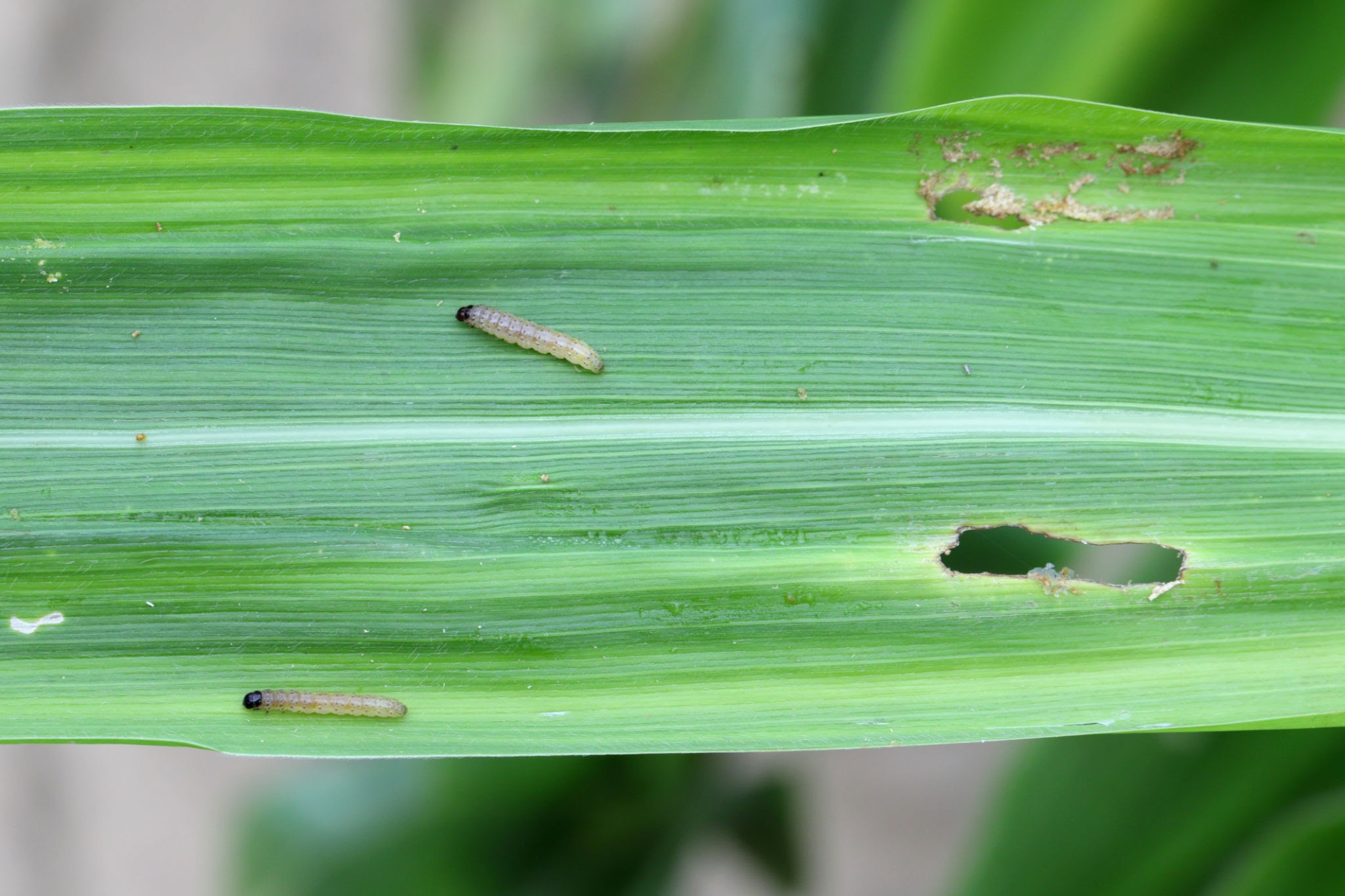
The damaging stage is the larva, which may reach ¾ to 1¼ inches (20–30 mm) in length.
- Larva (Key ID): Creamy white to pale yellow caterpillar with a brown head capsule and rows of dark spots along the body.
- Pupa: Brown and found within tunnels inside the stalk.
- Adult Moth: Straw-colored moth with narrow wings and subtle V-shaped markings. Wingspan ranges from 20–40 mm.
- Eggs: Laid in overlapping masses on the undersides of leaves, resembling fish scales.
- Conflict: Internal stalk tunneling, crop losses, disease transmission, and lodging.
Distribution and Habitat
Sugarcane borers occur throughout many sugar-producing regions of the world.
In the United States, they are most common in:
- Louisiana
- Texas
- Florida
- Mississippi
- Southern Alabama
- Puerto Rico
- Other Gulf Coast regions
They are also important pests in Central America, South America, the Caribbean, and other tropical agricultural regions.
Their preferred habitat is the interior of sugarcane stalks and related grass crops where larvae can feed while remaining protected.
Life Cycle
Sugarcane borers undergo complete metamorphosis consisting of four stages:
- Egg
- Larva
- Pupa
- Adult
Egg Stage
Females lay clusters of eggs on host plant leaves. Eggs typically hatch within several days under favorable conditions.
Larval Stage
Newly hatched larvae initially feed on leaf surfaces before boring into stems. Once inside the stalk, they create tunnels and galleries where they continue feeding and developing.
This stage causes nearly all economic damage.
Pupal Stage
Pupation occurs inside the stalk tunnel. Adults emerge through exit holes chewed through the plant tissue.
Adult Stage
Adult moths are nocturnal and live only long enough to mate and reproduce.
Depending on climate, multiple generations may occur annually.
Damage and Symptoms
Sugarcane borers cause damage throughout the growing season.
Deadheart Formation
Young plants often develop “dead hearts,” where the central growing shoot dies while outer leaves remain green.
Stem Tunneling
Larvae excavate extensive tunnels inside stalks, disrupting the movement of water and nutrients.
Reduced Sugar Production
Infested sugarcane plants produce less sucrose, reducing both yield and processing efficiency.
Lodging
Weakened stalks frequently break or collapse during storms and high winds.
Disease Entry
Borer tunnels create entry points for fungal and bacterial pathogens that further reduce crop quality.
Economic Importance
Sugarcane borers rank among the most economically damaging pests of sugarcane production worldwide.
- Reduced sugar yields
- Lower crop quality
- Increased harvesting difficulties
- Higher production costs
- Secondary disease losses
- Significant lodging damage
In severe infestations, losses may affect a substantial percentage of harvestable crop production.
Behavior and Conflict
The primary challenge of sugarcane borer management is that larvae spend most of their lives hidden within plant stalks.
- Protected Feeding: Internal tunnels shield larvae from predators and pesticides.
- Rapid Reproduction: Multiple generations can occur each year.
- Wide Host Range: Sugarcane, corn, sorghum, rice, and wild grasses can all serve as hosts.
- Disease Association: Tunneling promotes fungal infections and stalk rots.
- Hidden Damage: Significant injury often occurs before symptoms become visible.
Management and Control (IPM)
Successful management relies on integrated pest management strategies focused on prevention, monitoring, and biological control.
Resistant Varieties
- Plant borer-resistant cultivars whenever available.
- Select varieties with tougher stalk tissues and improved tolerance.
Biological Control
- Encourage parasitoid wasps such as Cotesia flavipes.
- Protect beneficial insects through selective pesticide use.
- Support natural enemy populations with habitat diversity.
Monitoring
- Inspect plants for leaf feeding and dead hearts.
- Monitor adult moth populations using pheromone traps.
- Sample stalks regularly for larvae.
Cultural Control
- Destroy crop residues after harvest.
- Rotate crops when practical.
- Manage volunteer host plants and grasses.
- Promote field sanitation.
Chemical Control
Insecticides are most effective against newly hatched larvae before they enter the stalk. Once tunneling begins, control becomes significantly more difficult.
Research and Conservation
Current research focuses on developing resistant crop varieties, improving biological control programs, refining pheromone-based monitoring systems, and understanding the genetic mechanisms behind host resistance.
Scientists are also exploring sustainable approaches that reduce pesticide dependence while maintaining profitable sugarcane production.
Conclusion
Sugarcane Borers are among the most serious pests of sugarcane and other grass crops. Their ability to tunnel within plant stalks makes them difficult to detect and control. By reducing sugar production, weakening stems, and increasing disease susceptibility, they cause significant agricultural losses worldwide. Effective management depends on integrated pest management programs that combine resistant varieties, biological control, monitoring, sanitation, and carefully timed treatments.