Overview
Sugar Beet Root Maggots (Tetanops myopaeformis) are among the most destructive underground pests of sugar beet production in North America. The larvae feed directly on the roots of developing sugar beet plants, causing stand loss, reduced root size, lower sugar content, and increased susceptibility to secondary diseases. Because the damaging stage occurs entirely below ground, infestations often go unnoticed until plants begin to wilt or die.
This pest is particularly important in commercial sugar beet-growing regions where severe infestations can result in substantial economic losses. Young seedlings are especially vulnerable, although older plants may also suffer significant reductions in root quality and sugar yield.
Taxonomy and Classification
Sugar Beet Root Maggots belong to the order Diptera (true flies) and the family Ulidiidae, commonly known as picture-winged flies.
- Kingdom: Animalia
- Phylum: Arthropoda
- Class: Insecta
- Order: Diptera
- Family: Ulidiidae
- Genus: Tetanops
- Species: Tetanops myopaeformis
Despite their small size, these insects are considered one of the most economically significant pests of sugar beet crops in North America.
Physical Description
The larval stage is responsible for all significant crop damage.
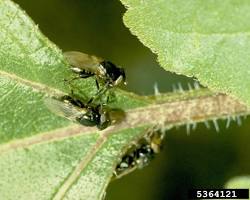
- Adult Fly (Key ID): Small black fly measuring approximately 5–7 mm long with smoky-gray patterned wings and a shiny dark body.
- Egg (Key ID): Tiny white elongated eggs deposited in soil cracks near sugar beet seedlings.
- Larva (Key ID): Cream-colored, legless maggot reaching up to 12 mm in length with a tapered head end.
- Pupa: Brown, capsule-like structure located several inches below the soil surface.
- Conflict: Root destruction, plant death, reduced sugar production, and disease susceptibility.
Distribution and Habitat
Sugar Beet Root Maggots are primarily found in North America, particularly in major sugar beet-producing regions.
Significant populations occur in:
- Minnesota
- North Dakota
- Montana
- Idaho
- Wyoming
- Washington
- Oregon
- Colorado
The larvae live entirely underground and remain closely associated with sugar beet root systems throughout development.
Host Plants
The primary host is sugar beet, although larvae occasionally develop on related plants within the goosefoot family.
- Sugar beet
- Table beet
- Swiss chard
- Wild lambsquarters
- Related Chenopodium species
Weedy hosts may help maintain local populations between growing seasons.
Life Cycle
Sugar Beet Root Maggots complete one generation per year in most regions.
Adult Emergence
Adult flies emerge from overwintering pupae during late spring and early summer. Emergence timing is strongly influenced by soil temperature.
Egg Stage
Females lay clusters of eggs in cracks and crevices near the base of sugar beet plants.
Eggs typically hatch within one week.
Larval Stage
Newly hatched maggots move directly toward the root system and begin feeding.
Larval development lasts several weeks as the insects tunnel and rasp root tissue.
Pupal Stage
Mature larvae move deeper into the soil and form pupae where they remain until the following season.
Damage and Symptoms
Damage varies depending on plant age and infestation levels.
Seedling Death
Young larvae often attack the taproot of newly emerged seedlings.
- Plants wilt suddenly.
- Leaves collapse during hot weather.
- Entire seedlings may die.
- Stand gaps develop across the field.
Root Scarring
Older plants develop extensive feeding scars on roots.
- Dark lesions appear on root surfaces.
- Roots become rough and distorted.
- Storage quality declines.
Secondary Diseases
Feeding wounds provide entry points for soilborne pathogens.
- Rhizoctonia root rot
- Fusarium infections
- Bacterial decay organisms
Reduced Sugar Content
Damaged roots store less sucrose, reducing processing efficiency and profitability.
Behavior and Conflict
The concealed nature of Sugar Beet Root Maggots makes them particularly difficult to manage.
- Underground Feeding: Damage occurs below the soil surface where infestations are difficult to detect.
- Early Season Vulnerability: Young plants are highly susceptible to attack.
- Single Generation: One generation can still cause severe losses because larval feeding coincides with critical crop development stages.
- Disease Enhancement: Feeding wounds dramatically increase susceptibility to root diseases.
Economic Importance
Sugar Beet Root Maggots are considered one of the most important insect pests of sugar beet production.
Economic impacts include:
- Reduced plant stands
- Lower root yields
- Reduced sugar extraction
- Increased disease losses
- Higher management costs
- Processing penalties due to root damage
Severe infestations can result in significant yield reductions and substantial financial losses for growers.
Management and Control (IPM)
Integrated Pest Management focuses on prevention, monitoring, and early intervention.
Monitoring
Adult fly populations should be monitored throughout spring.
- Sticky stake traps
- Field scouting
- Degree-day models
- Emergence forecasting systems
Crop Rotation
Rotating away from sugar beets can reduce local populations by interrupting the pest’s life cycle.
Longer rotations generally provide better suppression.
Field Sanitation
- Control volunteer beets.
- Manage lambsquarters and related weeds.
- Remove alternate host plants.
Biological Control
Several natural enemies attack eggs, larvae, and pupae.
- Ground beetles
- Rove beetles
- Parasitic wasps
- Predatory soil insects
Although helpful, biological control alone rarely provides complete suppression.
Cultural Control
- Optimize planting dates.
- Maintain vigorous crop growth.
- Improve soil health.
- Reduce plant stress.
Chemical Control
Preventative soil insecticides and seed treatments are often used in regions with chronic infestations.
Applications are most effective when timed to coincide with adult flight and egg hatch periods.
Prevention
- Rotate crops regularly.
- Monitor adult fly activity.
- Use resistant or tolerant varieties when available.
- Control host weeds.
- Maintain healthy soils.
- Apply preventative treatments when necessary.
Research and Conservation
Current research focuses on improved monitoring systems, biological control agents, resistant sugar beet varieties, and precision management strategies. Scientists continue developing predictive models that help growers accurately target management efforts while reducing pesticide use.
Conclusion
Sugar Beet Root Maggots are serious underground pests capable of causing extensive root damage, plant death, and substantial economic losses in sugar beet production. Because larvae remain hidden beneath the soil surface, early detection and preventative management are essential. Through crop rotation, monitoring, biological control, and integrated pest management strategies, growers can reduce infestations and protect crop yields.