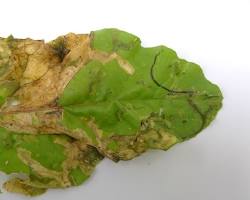
Overview
Spinach Leaf Miners (Pegomya hyoscyami, Pegomya betae, and related species) are destructive leaf-mining flies that attack spinach, Swiss chard, beets, and other leafy vegetables. The larvae tunnel between the upper and lower leaf surfaces, feeding on internal plant tissues and creating distinctive translucent blotches known as mines. Although the insects rarely kill established plants, their feeding can significantly reduce photosynthesis, stunt growth, and render leafy vegetables unmarketable or unfit for consumption.
Spinach Leaf Miners are among the most frustrating garden pests because the larvae remain protected inside the leaf, making them difficult to control once feeding begins.
Taxonomy and Classification
- Kingdom: Animalia
- Phylum: Arthropoda
- Class: Insecta
- Order: Diptera
- Family: Anthomyiidae
- Genus: Pegomya
Spinach Leaf Miners belong to a group of flies whose larvae feed internally within leaves. Several species attack crops in the beet family, but all produce similar mining damage and require similar management approaches.
Physical Description
The damaging stage is the larva, a small maggot that lives entirely within plant leaves.
- Egg (Key ID): Tiny white elongated eggs laid in neat rows on the underside of leaves.
- Larva (Key ID): Pale yellow, cream-colored, or translucent maggot lacking visible legs.
- Adult Fly: Small gray fly measuring approximately 1/4 inch long and resembling a miniature housefly.
- Damage Sign (Key ID): Large translucent blotch mines that expand as larvae grow.
- Conflict: Leaf contamination, reduced photosynthesis, and crop quality loss.
Distribution and Habitat
Spinach Leaf Miners are found throughout North America, Europe, and many other temperate agricultural regions. They thrive wherever leafy greens are cultivated.
Common habitats include:
- Vegetable gardens
- Commercial spinach fields
- Swiss chard plantings
- Beet crops
- Community gardens
- Greenhouses
Wild host plants and common weeds can also support populations between crop cycles.
Host Plants
Spinach Leaf Miners primarily attack members of the Amaranthaceae family.
Preferred hosts include:
- Spinach
- Swiss chard
- Beets
- Sugar beets
- Table beets
- Lambsquarters
- Pigweed
- Other related weeds
Infestations often begin on nearby weeds before spreading into cultivated crops.
Life Cycle
Spinach Leaf Miners undergo complete metamorphosis.
Egg Stage
Adult females lay clusters of eggs on the undersides of leaves, often arranged in parallel rows.
Larval Stage
After hatching, larvae immediately tunnel into the leaf and begin feeding between the leaf surfaces.
During feeding they:
- Consume chlorophyll-rich tissue
- Create expanding blotch mines
- Deposit dark frass inside the mine
- Reduce the leaf’s photosynthetic capacity
Pupal Stage
Mature larvae exit the leaf and pupate in the soil beneath host plants.
Adult Stage
Adult flies emerge from the soil, mate, and begin searching for suitable host plants for egg laying.
Several generations may occur annually, especially during cool spring and fall growing seasons.
Damage and Symptoms
Damage is caused entirely by larval feeding within leaves.
Early Symptoms
- Small translucent spots
- Tiny feeding tunnels
- Visible eggs on leaf undersides
Advanced Damage
- Large irregular blotch mines
- Paper-like leaf appearance
- Leaf yellowing
- Reduced plant vigor
- Premature leaf death
Heavily infested leaves may become thin, brittle, and unsuitable for harvest.
Crop Quality Loss
Because the larvae and their waste remain inside the leaves, even minor infestations can make produce unacceptable for fresh-market sales.
Behavior and Conflict
The hidden feeding behavior of Spinach Leaf Miners makes them particularly difficult to manage.
- Protected Feeding: Larvae remain inside leaves throughout development.
- Rapid Development: Life cycles can be completed within a few weeks.
- Leaf Contamination: Mines contain both larvae and frass.
- Multiple Generations: Populations can increase rapidly under favorable conditions.
- Weed Reservoirs: Nearby weeds often serve as breeding sites.
Economic Importance
Spinach Leaf Miners are serious pests of leafy vegetable production.
- Reduced marketability
- Lower crop yields
- Harvest rejection
- Increased labor costs
- Reduced consumer acceptance
Commercial growers often have very low tolerance for leaf miner damage because even cosmetic injury affects product value.
Management and Control (IPM)
Integrated Pest Management (IPM) focuses on prevention and early intervention.
Monitoring
- Inspect leaf undersides for eggs.
- Look for newly forming mines.
- Monitor susceptible crops weekly.
- Scout nearby weed hosts.
Physical Control
- Remove Infested Leaves: Pick and destroy mined leaves immediately.
- Crush Larvae: Pinch visible mines to kill larvae inside.
- Dispose Properly: Remove infested foliage from the garden rather than composting.
Exclusion
Floating row covers provide one of the most effective controls.
- Install immediately after planting.
- Prevent adult flies from laying eggs.
- Allow light and water penetration.
Cultural Control
- Remove weed hosts.
- Rotate crops annually.
- Till soil after harvest to expose pupae.
- Maintain healthy plant growth.
Biological Control
Several beneficial insects naturally attack leaf miner larvae.
- Parasitic wasps
- Predatory beetles
- Generalist predators
Avoid broad-spectrum insecticides that may harm these beneficial species.
Chemical Control
Traditional contact insecticides often provide limited control because larvae are protected within leaves.
- Spinosad products can provide effective suppression.
- Treat early before mines become extensive.
- Follow all label directions and harvest intervals.
Prevention
- Use row covers early in the season.
- Control nearby weeds.
- Inspect transplants before planting.
- Remove infested leaves immediately.
- Rotate leafy green crops annually.
Research and Conservation
Current research focuses on improving biological control programs, developing resistant crop varieties, and refining exclusion techniques. Scientists are also investigating the role of beneficial parasitoid wasps in suppressing leaf miner populations in commercial vegetable production.
Conclusion
Spinach Leaf Miners are specialized pests that feed within the leaves of spinach, beets, and Swiss chard. Their distinctive blotch mines reduce crop quality and marketability while protecting the larvae from many traditional control methods. Early detection, row covers, sanitation, and integrated pest management practices provide the most effective defense against these damaging leaf-mining insects.