Overview
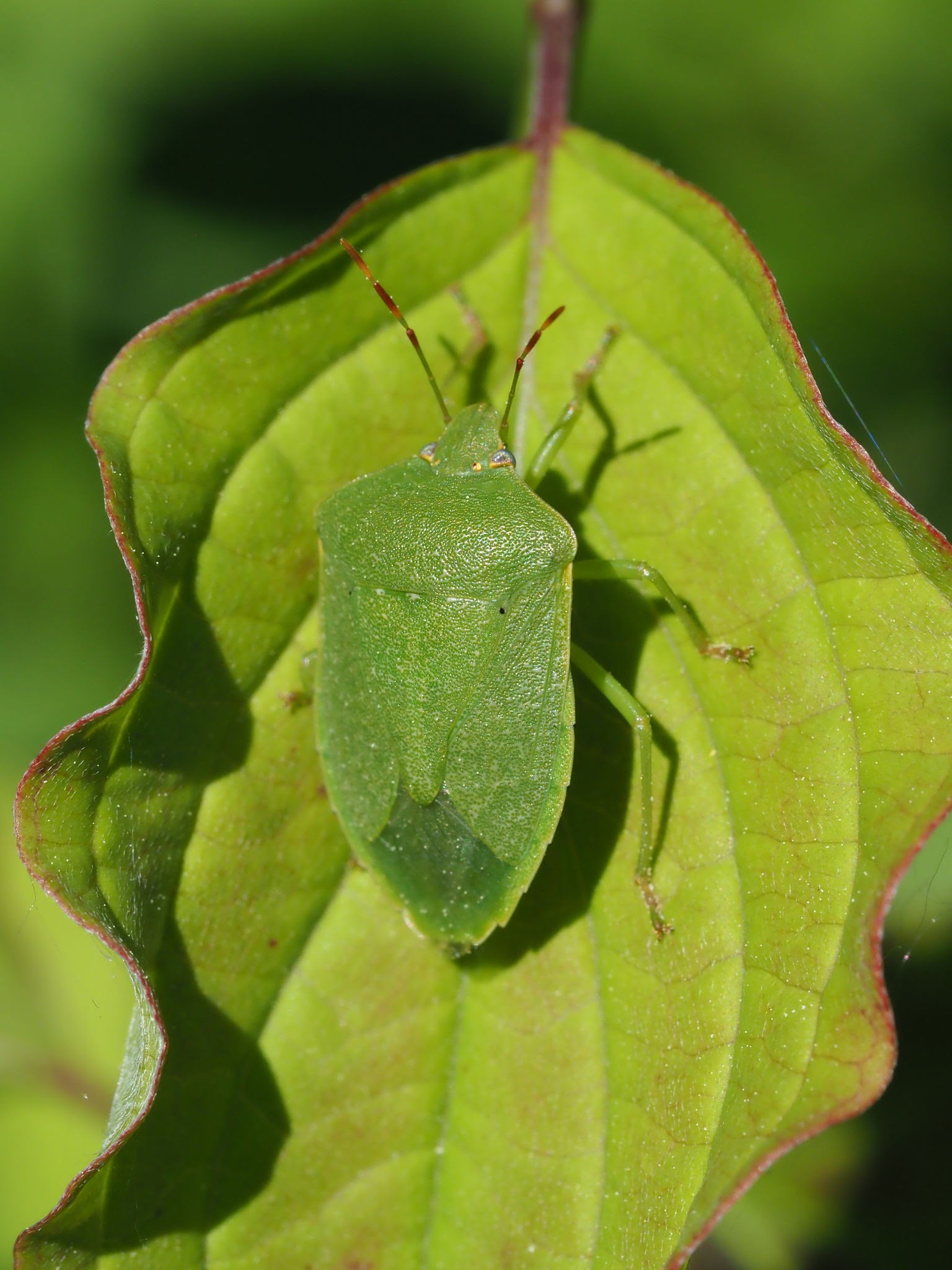
Southern Green Stink Bugs (Nezara viridula) are among the most widespread and economically important sap-feeding pests affecting agricultural crops worldwide. Despite occasionally being referred to as “stinkless bugs,” they are true stink bugs belonging to the family Pentatomidae and possess defensive scent glands. These insects attack a wide variety of crops, including tomatoes, peppers, soybeans, cotton, beans, pecans, and numerous fruit and vegetable plants.
Their piercing-sucking feeding habit causes direct crop damage, fruit deformities, reduced yields, and transmission of plant pathogens. Because they feed on developing fruits, seeds, and pods, Southern Green Stink Bugs are considered major pests in both commercial agriculture and home gardens.
Taxonomy and Classification
- Kingdom: Animalia
- Phylum: Arthropoda
- Class: Insecta
- Order: Hemiptera
- Family: Pentatomidae
- Genus: Nezara
- Species: Nezara viridula
Southern Green Stink Bugs belong to the shield bug family Pentatomidae. They are closely related to other agricultural stink bug species and are known for their broad host range and ability to reproduce rapidly in warm climates.
Physical Description
Adult Southern Green Stink Bugs measure approximately 12–15 mm long.
- Adult Appearance (Key ID): Bright green, shield-shaped body with a smooth, uniform coloration.
- Diagnostic Feature: Three small pale spots located near the front edge of the scutellum.
- Antennae: Long and segmented.
- Nymphs: Black with striking white, red, orange, and yellow markings during early developmental stages.
- Defense: Possess scent glands capable of producing a strong defensive odor when disturbed.
- Conflict: Fruit damage, seed loss, crop deformation, and disease transmission.
Distribution and Habitat
Southern Green Stink Bugs occur throughout tropical, subtropical, and temperate agricultural regions worldwide.
In North America they are most common in:
- Southeastern United States
- Southwestern United States
- Gulf Coast states
- California
- Mexico
They inhabit agricultural fields, orchards, gardens, weedy areas, and ornamental landscapes where host plants are abundant.
Life Cycle
Southern Green Stink Bugs undergo incomplete metamorphosis consisting of three stages:
- Egg
- Nymph
- Adult
Egg Stage
Females lay clusters of barrel-shaped eggs on the undersides of leaves. A single female may produce several hundred eggs during her lifetime.
Nymph Stage
Nymphs pass through five developmental stages (instars). Early instars often remain clustered together before dispersing as they mature.
Adult Stage
Adults become highly mobile and disperse among host plants in search of food and mating opportunities. Multiple generations may occur annually in warm regions.
Damage and Symptoms
Southern Green Stink Bugs feed using piercing-sucking mouthparts that penetrate plant tissues and extract fluids.
Fruit Damage
- Cloudy spots beneath fruit skin
- Corky internal tissue
- Sunken feeding scars
- Fruit deformities
- Premature fruit drop
Vegetable Crops
Tomatoes, peppers, beans, and other vegetables often develop:
- Cat-facing deformities
- Discoloration
- Reduced quality
- Lower market value
Field Crops
In soybeans and other seed crops, feeding can cause:
- Shriveled seeds
- Reduced seed weight
- Pod damage
- Yield reduction
Tree Crops
Pecans and other nut crops may experience kernel damage, poor nut fill, and premature drop.
Signs of Infestation
- Green shield-shaped bugs on plants
- Clusters of barrel-shaped eggs
- Colorful nymphs on foliage
- Cloudy spots on fruits
- Corky tissue beneath fruit skin
- Misshapen vegetables and fruits
- Damaged pods and seeds
Economic Importance
Southern Green Stink Bugs are considered major agricultural pests because they attack numerous high-value crops.
- Reduced fruit quality
- Lower crop yields
- Market rejection of produce
- Increased production costs
- Economic losses for growers
Their broad host range allows populations to persist throughout the growing season by moving among multiple crop species.
Behavior and Conflict
The primary conflict associated with Southern Green Stink Bugs is their ability to damage crops without causing obvious external symptoms initially.
- Piercing Feeding: Internal tissue damage often develops before visible symptoms appear.
- Mobility: Adults readily move between crops and wild hosts.
- Disease Transmission: Feeding wounds can facilitate the introduction of fungal and bacterial pathogens.
- Wide Host Range: More than 100 plant species can serve as hosts.
Management and Control (IPM)
Integrated Pest Management is the most effective approach for controlling Southern Green Stink Bugs.
Monitoring
- Regular field scouting.
- Inspect developing fruits and pods.
- Use sweep nets and visual inspections.
Cultural Control
- Remove weed hosts around fields.
- Maintain field sanitation.
- Harvest crops promptly.
- Use trap crops such as sunflower or sorghum where appropriate.
Biological Control
- Encourage parasitoid flies such as Trichopoda pennipes.
- Conserve predatory insects and spiders.
- Protect egg parasitoid wasps.
Physical Control
- Hand-pick bugs from garden plants.
- Use row covers during vulnerable crop stages.
- Deploy yellow sticky traps for monitoring.
Chemical Control
- Apply labeled insecticides when populations exceed economic thresholds.
- Target nymph stages when possible.
- Avoid unnecessary applications that harm beneficial insects.
Research and Conservation
Current research focuses on biological control agents, improved monitoring systems, host plant resistance, and sustainable management strategies that reduce pesticide reliance.
Scientists continue studying parasitoids, trap crops, and behavioral attractants to improve long-term suppression of Southern Green Stink Bug populations.
Conclusion
Southern Green Stink Bugs are highly adaptable agricultural pests capable of damaging a wide variety of crops through piercing-sucking feeding. Their ability to reduce fruit quality, deform produce, and lower yields makes them a serious concern for growers worldwide. Effective management relies on monitoring, conservation of natural enemies, cultural controls, and targeted integrated pest management practices.