Overview
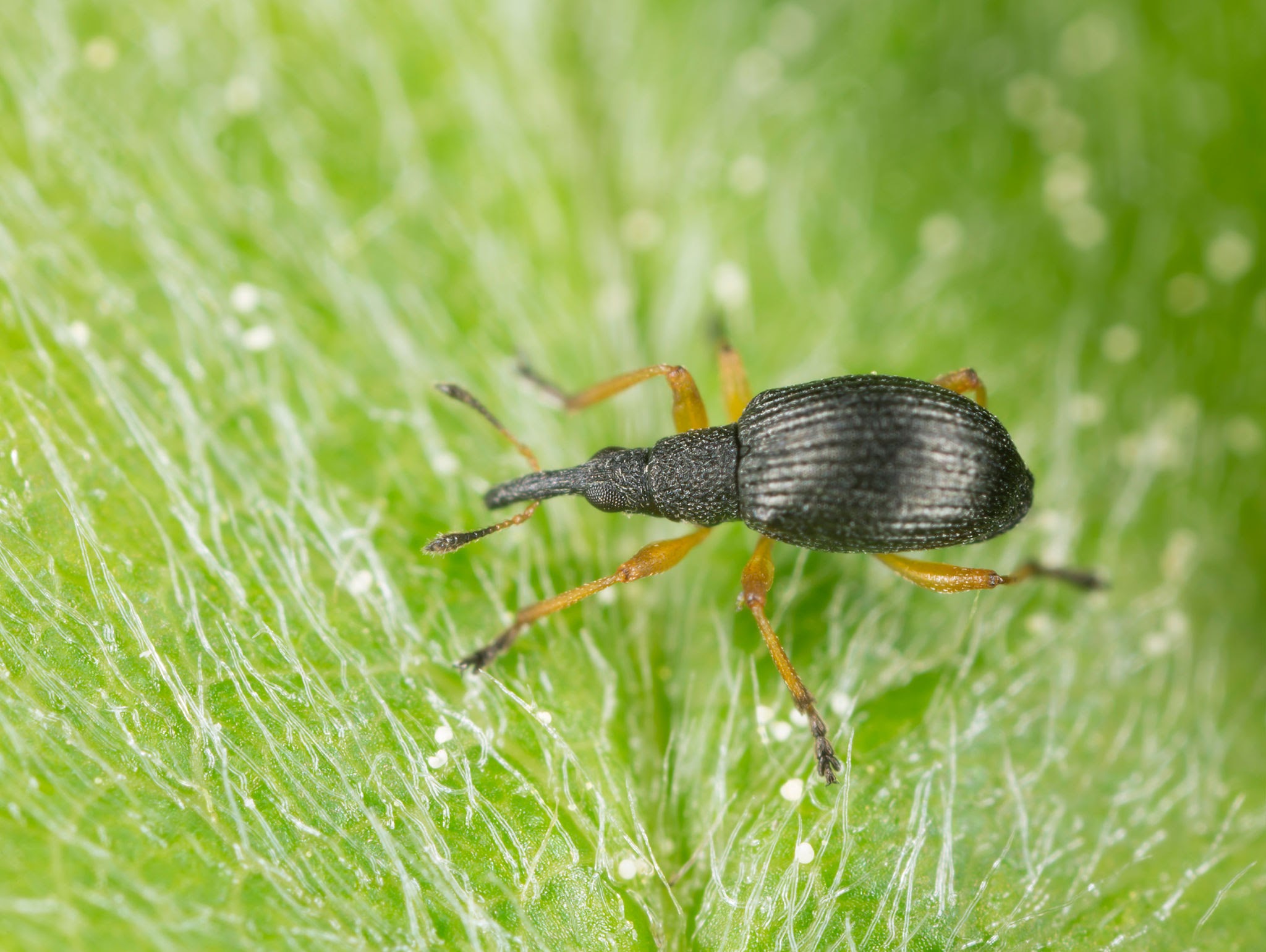
Seed Weevils (Family Curculionidae, particularly species within the genera Sitona, Bruchus, and related groups) are small, snout-nosed beetles that attack seeds, legumes, grains, and other agricultural products. They are among the most economically important pests of stored products and field-grown legumes because both adults and larvae can damage crops at different stages of development.
In agricultural systems, seed weevils reduce crop productivity by feeding on foliage, roots, nitrogen-fixing nodules, and developing seeds. In storage facilities, they can continue reproducing within harvested seed lots, causing contamination, reduced germination rates, and significant economic losses. Their hidden feeding habits often allow infestations to remain unnoticed until substantial damage has already occurred.
Taxonomy and Classification
- Kingdom: Animalia
- Phylum: Arthropoda
- Class: Insecta
- Order: Coleoptera
- Family: Curculionidae
Seed weevils belong to one of the largest beetle families in the world. Most species are recognized by their elongated snout, known as a rostrum, which contains specialized chewing mouthparts used for feeding and egg-laying.
Many seed weevil species are highly host-specific and closely associated with particular crops or plant families.
Physical Description
Adult seed weevils are typically small insects measuring between 1/8 and 1/4 inch long.
- Adult Appearance (Key ID): Cylindrical or oval beetle with a distinct elongated snout (rostrum). Colors range from gray and brown to black.
- Antennae: Elbowed antennae attached along the snout.
- Larva (Key ID): White or cream-colored, legless grub with a brown head capsule.
- Pupa: Found within seeds, pods, or soil depending on species.
- Conflict: Seed destruction, crop stress, reduced germination, and stored product contamination.
Distribution and Habitat
Seed weevils occur worldwide and are found in nearly every agricultural region where legumes, grains, and seed crops are grown.
Common habitats include:
- Alfalfa fields
- Clover fields
- Vetch plantings
- Bean crops
- Pea fields
- Stored grain facilities
- Seed warehouses
- Agricultural storage bins
Depending on the species, infestations may begin in the field and continue into storage facilities.
Life Cycle
Seed weevils undergo complete metamorphosis consisting of egg, larva, pupa, and adult stages.
Egg Stage
Females lay eggs within developing seed pods, directly into seeds, or near the root zone of host plants.
Larval Stage
Larvae are the most destructive stage.
Some species develop inside seeds, consuming the interior contents, while others feed on roots and nitrogen-fixing nodules of legume crops.
Pupal Stage
Pupation may occur inside seeds, within pods, or in the soil depending on the species.
Adult Stage
Adults emerge through small circular exit holes and begin feeding on foliage before reproducing.
Multiple generations may occur annually in warm climates.
Damage and Economic Importance
Seed weevils create economic losses through both direct feeding and contamination.
Seed Destruction
Larvae feeding inside seeds consume the embryo and nutrient reserves needed for germination.
This greatly reduces seed viability and planting quality.
Root Nodule Damage
Species such as Sitona larvae attack nitrogen-fixing root nodules on legumes.
This reduces the plant’s ability to obtain nitrogen naturally, resulting in weaker growth and reduced yields.
Stored Product Losses
Infested seed lots suffer:
- Weight loss
- Reduced germination rates
- Contamination by insect fragments
- Lower market value
- Quality deterioration
Foliar Damage
Adults commonly create distinctive notches along leaf margins while feeding.
Heavy feeding may reduce photosynthetic capacity and plant vigor.
Behavior and Conflict
The most challenging aspect of seed weevil infestations is their concealed feeding behavior.
- Hidden Development: Larvae often remain completely hidden inside seeds.
- Delayed Detection: Infestations may not become apparent until adults emerge.
- Storage Persistence: Populations can continue developing in stored products for months.
- Nitrogen Reduction: Nodule-feeding species weaken legume crops by reducing nitrogen fixation.
These characteristics make early detection essential for effective management.
Signs of Infestation
- Circular emergence holes in seeds
- Reduced seed germination
- Notched leaf edges
- Stunted legume growth
- Yellowing foliage
- Visible adult weevils in storage bins
- Hollow or lightweight seeds
- Reduced crop vigor
Management and Control (IPM)
Integrated Pest Management (IPM) combines sanitation, monitoring, cultural practices, and targeted treatments.
Storage Sanitation
The most important defense against stored seed infestations is cleanliness.
- Clean storage bins thoroughly.
- Remove residual grain and seed debris.
- Disinfect equipment before use.
- Inspect incoming seed lots.
Temperature and Moisture Management
Cool, dry storage conditions slow insect development and reproduction.
- Maintain low humidity.
- Store seeds at recommended temperatures.
- Use proper ventilation systems.
Monitoring
- Inspect stored seeds regularly.
- Use sampling programs to detect infestations.
- Monitor fields during emergence periods.
Biological Control
Several parasitic wasps naturally attack seed weevil eggs and larvae.
Conservation of beneficial insects can help reduce field populations.
Cultural Control
- Rotate crops.
- Destroy crop residues after harvest.
- Plant resistant or tolerant varieties when available.
- Maintain healthy growing conditions.
Chemical Control
When necessary, approved insecticides may be applied to control adults before egg-laying occurs.
Stored product treatments may include:
- Diatomaceous earth
- Protectant insecticides
- Fumigation in severe infestations
All treatments should follow current label instructions and local regulations.
Ecological Importance
Although considered pests in agriculture, seed weevils are natural components of many ecosystems. They help regulate plant populations and serve as food for birds, predatory insects, spiders, and other wildlife.
Integrated management programs aim to reduce economic losses while minimizing impacts on beneficial organisms.
Research and Future Management
Current research focuses on:
- Improved seed storage technologies
- Host-plant resistance
- Biological control agents
- Pheromone monitoring systems
- Sustainable pest management practices
- Enhanced grain protection methods
Advances in monitoring and storage management continue to improve long-term control strategies.
Conclusion
Seed Weevils are economically important pests that damage crops both in the field and during storage. Their larvae destroy seeds, reduce germination rates, and weaken legume crops by feeding on roots and nitrogen-fixing nodules. Because infestations are often hidden until significant damage has occurred, prevention, sanitation, monitoring, and integrated pest management are critical for protecting seed quality and agricultural productivity.