Overview
Safflower Caterpillars are a group of leaf-feeding moth larvae that attack safflower crops and related host plants. These caterpillars can cause extensive defoliation, damage developing flower heads, and reduce seed production in both commercial and small-scale safflower plantings. Although several caterpillar species may feed on safflower, the most economically important infestations are caused by noctuid and crambid moth larvae that rapidly consume foliage and reproductive structures.
In major safflower-growing regions, heavy infestations can significantly reduce oilseed yields and crop quality. Because safflower is often cultivated in semi-arid environments where plants already face environmental stress, caterpillar damage can have a disproportionate impact on productivity.
Taxonomy and Classification
Safflower Caterpillars belong primarily to the order Lepidoptera and are commonly associated with the families Noctuidae and Crambidae. These families include many important agricultural pests known for their ability to defoliate crops and damage reproductive plant structures.
- Kingdom: Animalia
- Phylum: Arthropoda
- Class: Insecta
- Order: Lepidoptera
- Families: Noctuidae, Crambidae, and related groups
Depending on region and climate, multiple caterpillar species may be collectively referred to as safflower caterpillars due to their feeding habits on safflower crops.
Physical Description
The larval stage causes all economically significant damage.
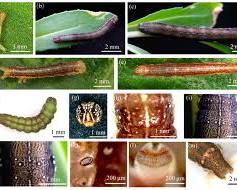
- Larva (Key ID): Smooth-bodied caterpillar ranging from bright green to brown, gray, or purplish-marbled coloration.
- Body Markings: Many species possess pale longitudinal stripes, spots, or mottled patterns that help camouflage them among leaves and flower heads.
- Adult Moth: Medium-sized nocturnal moth with brown, gray, or tan forewings and subtle markings.
- Pupa: Usually found in soil, crop debris, or sheltered areas near host plants.
- Conflict: Defoliation, flower destruction, seed loss, and reduced oil production.
Older caterpillars frequently hide during daylight hours and become active after sunset, making infestations difficult to detect until damage becomes extensive.
Distribution and Habitat
Safflower Caterpillars occur throughout many safflower-producing regions worldwide, including North America, Australia, Africa, Asia, and parts of Europe.
In the United States, infestations are most likely to occur in:
- California
- Arizona
- Montana
- Idaho
- Nevada
- Other western oilseed-producing regions
The insects thrive in agricultural landscapes where safflower, sunflowers, legumes, and other suitable host plants are abundant.
Host Plants
Although safflower is the preferred crop host, many caterpillar species are generalist feeders capable of utilizing multiple plants.
Common hosts include:
- Safflower
- Sunflowers
- Legumes
- Soybeans
- Alfalfa
- Various weeds
- Wild flowering plants
This broad host range allows populations to survive between crop cycles and migrate into safflower fields when conditions become favorable.
Life Cycle
Safflower Caterpillars undergo complete metamorphosis consisting of four stages.
Egg Stage
Female moths lay eggs individually or in clusters on leaves, stems, buds, or flower heads.
Larval Stage
Upon hatching, caterpillars begin feeding immediately.
Young larvae often:
- Feed on leaf undersides
- Create small feeding holes
- Skeletonize foliage
- Remain hidden within plant canopies
As larvae mature, feeding intensity increases dramatically.
Pupal Stage
Mature caterpillars leave host plants and pupate in soil, crop residue, or protected locations.
Adult Stage
Adult moths emerge, mate, and begin another generation. Multiple generations may occur annually depending on climate and growing conditions.
Damage and Symptoms
Safflower Caterpillars cause damage throughout the growing season, but reproductive-stage feeding is often the most economically damaging.
Leaf Damage
- Small feeding holes
- Leaf skeletonization
- Chewed margins
- Complete defoliation during severe outbreaks
Flower Head Damage
Older caterpillars frequently attack developing flower heads.
- Bore into buds and capitula
- Destroy developing seeds
- Create entry points for pathogens
- Reduce oilseed production
Frass Contamination
Feeding larvae leave large amounts of dark frass inside flower heads and between leaves.
This contamination often promotes:
- Secondary fungal infections
- Head rot
- Reduced harvest quality
“Blind Head” Formation
When larvae destroy developing reproductive tissues, safflower heads may fail to produce viable seed, resulting in partially developed or completely sterile flower heads.
Behavior and Conflict
The economic impact of Safflower Caterpillars is closely tied to their feeding behavior.
- Nocturnal Feeding: Most feeding occurs at night.
- Hidden Activity: Caterpillars often hide in foliage or soil during the day.
- Rapid Consumption: Large larvae can consume substantial amounts of plant tissue in a short period.
- Head Boring: Flower-head feeding causes the greatest yield losses.
- Multiple Generations: Continuous reproduction allows populations to increase rapidly.
Economic Importance
Safflower is grown primarily for its valuable oil-rich seeds. Caterpillar infestations directly reduce production by damaging both vegetative and reproductive plant structures.
Economic losses may include:
- Reduced seed yield
- Lower oil content
- Poor seed quality
- Increased management costs
- Harvest contamination
Heavy infestations during flowering and seed development stages can result in substantial financial losses for growers.
Management and Control (IPM)
Integrated Pest Management (IPM) provides the most effective long-term approach.
Monitoring
- Inspect fields regularly.
- Check leaves and flower heads for larvae.
- Monitor adult moth activity using light traps.
- Record infestation levels throughout the season.
Biological Control
Natural enemies often help suppress populations.
- Parasitic wasps
- Predatory insects
- Birds
- Beneficial pathogens
Conserving beneficial insects can significantly reduce caterpillar outbreaks.
Microbial Control
Bacillus thuringiensis (Bt) remains one of the most effective biological controls.
- Works best on young larvae.
- Must be applied before caterpillars enter flower heads.
- Compatible with many IPM programs.
Cultural Control
- Rotate crops regularly.
- Destroy crop residue after harvest.
- Manage nearby weed hosts.
- Maintain healthy plant growth.
Chemical Control
When populations exceed economic thresholds, insecticides may be necessary.
- Target small larvae whenever possible.
- Follow local extension recommendations.
- Rotate modes of action to reduce resistance development.
Prevention
- Conduct routine scouting.
- Monitor moth flights.
- Encourage beneficial insects.
- Use crop rotation.
- Remove alternative host weeds.
- Treat infestations early.
Research and Conservation
Current research focuses on improving biological control programs, identifying resistant safflower varieties, refining economic thresholds, and developing sustainable alternatives to conventional insecticides. Scientists are also studying interactions between caterpillar pests and beneficial parasitoids to improve integrated management strategies.
Conclusion
Safflower Caterpillars are significant agricultural pests capable of causing extensive defoliation, flower-head destruction, and seed loss. Their ability to damage safflower during critical reproductive stages makes them an important concern for oilseed producers. Early monitoring, biological controls, crop sanitation, and integrated pest management strategies remain the most effective tools for protecting safflower yields and maintaining profitable production.