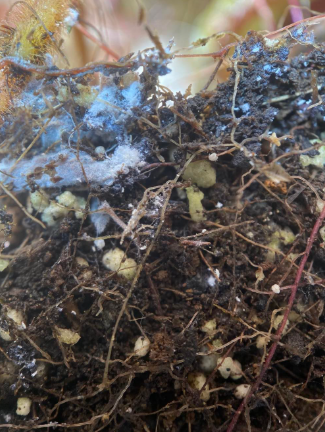
Root Mealybugs are soil-dwelling, sap-sucking insects that attack plant roots beneath the soil surface. Unlike their above-ground relatives, these pests remain hidden around root systems, making infestations difficult to detect until plants begin showing serious decline. Root mealybugs are particularly problematic in greenhouses, nurseries, succulent collections, and container-grown plants where populations can spread rapidly from pot to pot.
Taxonomy and Classification
Root mealybugs belong to the family Pseudococcidae and are closely related to scale insects and aphids.
- Order: Hemiptera
- Family: Pseudococcidae
- Common Genera: Rhizoecus, Geococcus, and Ripersiella
Numerous species are known worldwide, with many specializing in ornamental plants, succulents, greenhouse crops, and houseplants.
Physical Description
Root mealybugs are tiny insects that are usually concealed beneath a protective wax coating.
- Adult (Key ID): Small, oval-bodied insects measuring approximately 1 to 3 mm long; typically white, cream-colored, or pale pink.
- Waxy Coating: Bodies are covered with a powdery white wax that often resembles mold, cotton, or tiny patches of snow around roots.
- Egg Sacs: Females produce cottony egg masses attached to roots or hidden in soil crevices.
- Conflict: Ornamental, Greenhouse, Nursery, Houseplant.
Because they remain underground, infestations often go unnoticed until plants are removed from their containers.
Distribution and Habitat
Root mealybugs are found worldwide and are especially common in protected growing environments.
Common habitats include:
- Greenhouses
- Plant nurseries
- Container gardens
- Succulent collections
- Indoor houseplants
- Commercial propagation facilities
Warm temperatures and confined root systems create ideal conditions for rapid population growth.
Life Cycle
Root mealybugs undergo incomplete metamorphosis consisting of egg, nymph, and adult stages.
Egg Stage
Adult females lay eggs inside cottony wax sacs attached to roots, soil particles, or container surfaces.
Nymph Stage
After hatching, tiny crawler nymphs disperse through the soil in search of feeding sites. These crawlers are the primary dispersal stage and may spread through shared water trays, contaminated tools, or infested potting media.
Adult Stage
Nymphs mature into wingless adult females that remain attached to roots while feeding. Under greenhouse conditions, multiple overlapping generations may occur throughout the year.
Damage and Symptoms
Root mealybugs feed by inserting piercing mouthparts into roots and extracting plant sap.
Above-Ground Symptoms
- Yellowing foliage
- Wilting despite adequate watering
- Stunted growth
- Poor vigor
- Leaf drop
- General plant decline
Below-Ground Symptoms
- White cottony masses on roots
- Reduced feeder root development
- Root dieback
- Waxy deposits throughout the root ball
- Weak or decaying root systems
Heavy infestations may eventually kill plants, especially those growing in containers with restricted root space.
Behavior and Conflict
The hidden nature of root mealybugs makes them particularly difficult to manage.
- Hidden Feeding: Most feeding occurs below the soil surface where insects are protected from predators and contact insecticides.
- Rapid Spread: Infestations can spread through contaminated soil, reused containers, drainage water, or infested nursery stock.
- Ant Associations: Ants frequently protect root mealybugs and transport them to new plants in exchange for honeydew.
- Year-Round Activity: In heated greenhouses and indoor environments, populations remain active continuously.
Management and Control (IPM)
Effective management requires an integrated approach combining sanitation, monitoring, and treatment.
Inspection and Monitoring
- Regularly inspect root systems during repotting.
- Watch for unexplained yellowing, wilting, or poor growth.
- Examine drainage holes for white waxy deposits or ants.
Sanitation
- Discard heavily infested potting soil.
- Use sterile growing media.
- Disinfect pots and tools before reuse.
- Quarantine newly purchased plants.
Cultural Control
- Remove plants from containers and wash roots thoroughly.
- Repot using fresh, sterile soil.
- Avoid overwatering and poor drainage.
Biological Control
- Beneficial insects and predatory beetles may provide suppression in greenhouse settings.
- Entomopathogenic fungi are being investigated as biological control agents.
Chemical Control
- Systemic insecticides applied as soil drenches are often the most effective treatment.
- Repeat applications may be necessary due to overlapping generations.
Economic Importance
Root mealybugs are significant pests in greenhouse production, ornamental nurseries, and specialty plant collections. Infestations may lead to plant losses, reduced marketability, and increased production costs. Their hidden lifestyle often allows populations to spread extensively before detection, making prevention and early intervention essential.
Research and Future Management
Current research focuses on improved monitoring methods, biological control programs, and reduced-risk systemic products. Scientists are also investigating beneficial soil microorganisms that naturally suppress root mealybug populations in commercial growing systems.