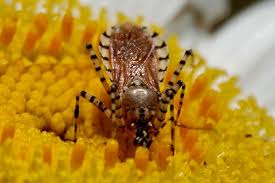
Ringed Plant Bugs
Ringed Plant Bugs (Heterocordylus malinus) are sap-feeding insects that primarily attack plants in the rose family, particularly apples, pears, and hawthorns. These insects are considered important orchard pests because their feeding activity can deform developing fruit and damage young shoots. Although populations are usually localized, heavy infestations can significantly reduce fruit quality and marketability.
Taxonomy and Classification
Ringed Plant Bugs belong to the family Miridae, commonly known as plant bugs.
- Order: Hemiptera
- Family: Miridae
- Genus: Heterocordylus
- Species: Heterocordylus malinus
Like other true bugs, they possess piercing-sucking mouthparts used to extract fluids from plant tissues.
Physical Description
Ringed Plant Bugs undergo incomplete metamorphosis, progressing through egg, nymph, and adult stages.
- Nymph (Key ID): Bright red to reddish-orange body with dark legs and antennae. Young nymphs are highly conspicuous on developing foliage.
- Adult (Key ID): Small, oval-shaped insect approximately 5-7 mm long, typically dark brown to black in coloration.
- Antennae: Adults possess a pale or whitish ring near the base of the antennae, giving the species its common name.
- Wings: Fully developed wings cover the abdomen in adults.
- Behavior: Adults are active and readily fly or drop from plants when disturbed.
- Conflict: Agricultural, Orchard, Ornamental.
Distribution and Habitat
Ringed Plant Bugs are found primarily throughout the northeastern and midwestern United States, with scattered populations in other fruit-growing regions.
Common habitats include:
- Apple orchards
- Pear orchards
- Hawthorn plantings
- Mixed fruit landscapes
- Home orchards
- Ornamental landscapes containing rosaceous plants
Wild hawthorn trees frequently serve as reservoir hosts from which bugs migrate into commercial orchards.
Life Cycle
Ringed Plant Bugs complete one generation annually.
Egg Stage
Females insert eggs into young twigs and bark crevices during late summer. Eggs overwinter within plant tissues.
Nymph Stage
Nymphs hatch during spring as buds begin to expand. Young nymphs feed extensively on blossoms, developing leaves, and fruitlets.
Adult Stage
Adults emerge in early summer and continue feeding before mating and depositing overwintering eggs.
Behavior and Feeding
Ringed Plant Bugs feed by piercing plant tissues and extracting sap.
- Fruit Feeding: Nymphs primarily attack newly developing fruit shortly after bloom.
- Shoot Feeding: Tender shoots and young foliage are commonly targeted.
- Early Season Activity: Most economically important feeding occurs from bloom through petal fall.
- Host Preference: Apples, pears, and hawthorns are preferred hosts.
Damage and Symptoms
Feeding injury often becomes more apparent as fruit develops.
Fruit Deformation
Young fruit damaged by feeding may develop deep depressions, corky scars, or irregular shapes commonly referred to as “cat-facing.”
Corky Tissue Formation
Feeding sites frequently become rough, hardened, and discolored as fruit matures.
Leaf Distortion
Terminal leaves may curl, blacken, or become distorted following nymph feeding.
Shoot Injury
Feeding on developing shoots can reduce growth and stunt new foliage.
Reduced Yield and Quality
Severe infestations may significantly lower fruit quality, resulting in reduced market value.
Signs of Infestation
- Bright red nymphs on blossoms or young foliage
- Curling and blackening of terminal leaves
- Distorted or scarred fruit
- Corky depressions on apples and pears
- Presence of adults on flowering trees during spring
Management and Control (IPM)
Successful management depends on early-season monitoring and timely intervention.
Monitoring
- Inspect trees regularly during bloom and petal fall.
- Use beating trays or white sheets to sample branches.
- Monitor wild hawthorn populations near orchards.
Cultural Control
- Remove or manage nearby wild hawthorn hosts when practical.
- Maintain tree health through proper irrigation and pruning.
- Promote good orchard sanitation.
Biological Control
Numerous predators help suppress populations, including:
- Minute pirate bugs
- Lacewings
- Spiders
- Predatory mirid bugs
- Parasitic wasps
Dormant Treatments
Delayed dormant applications of horticultural oils can reduce overwintering egg populations.
Chemical Control
Targeted insecticide applications may be necessary when populations exceed economic thresholds. Treatments are most effective against young nymphs shortly after egg hatch.
Prevention
- Scout orchards during early spring.
- Avoid planting susceptible hosts near wild hawthorn stands.
- Encourage beneficial insects.
- Use dormant oil applications when appropriate.
- Maintain overall tree vigor.
Economic Importance
Ringed Plant Bugs are primarily important in apple and pear production. While infestations are often localized, even small populations can cause cosmetic fruit damage severe enough to downgrade commercial fruit and reduce profits.
Research and Conservation
Current research focuses on improved monitoring methods, biological control strategies, and reduced-risk insecticide programs that protect pollinators and beneficial insects while maintaining effective pest suppression.