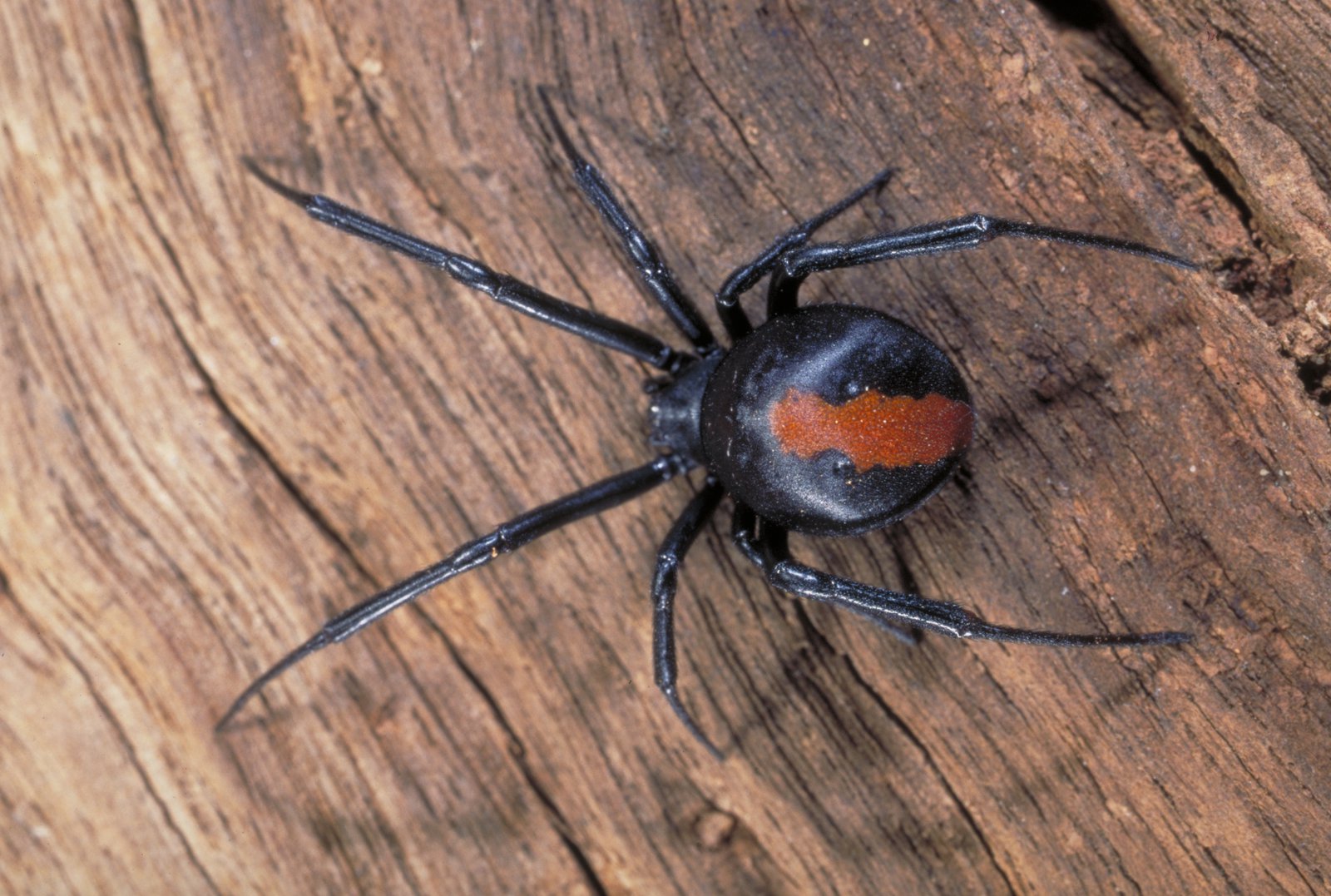
Red-backed Spiders (Latrodectus hasselti) are highly venomous spiders native to Australia and closely related to North American black widow spiders. Best known for the distinctive bright red or orange stripe running along the upper surface of the female’s abdomen, these spiders are among Australia’s most medically important arachnids. Although bites are relatively uncommon, the venom of female red-backed spiders can cause severe pain and systemic illness known as latrodectism.
Red-backed spiders commonly inhabit urban and suburban environments, often building webs around homes, gardens, sheds, and outdoor furniture. Their preference for sheltered areas frequently brings them into close contact with people, increasing the risk of accidental encounters.
Taxonomy and Classification
Red-backed spiders belong to the family Theridiidae, commonly known as cobweb or comb-footed spiders.
- Kingdom: Animalia
- Phylum: Arthropoda
- Class: Arachnida
- Order: Araneae
- Family: Theridiidae
- Genus: Latrodectus
- Species: Latrodectus hasselti
They are closely related to black widow spiders (Latrodectus spp.) found in North America and share similar venom characteristics.
Physical Description
Adult female red-backed spiders typically measure about 10 millimeters (0.4 inches) in body length, while males are much smaller, usually only 3 to 4 millimeters long.
- Adult Female (Key ID): Glossy jet-black body with a large, rounded abdomen marked by a prominent red, orange, or occasionally yellow dorsal stripe.
- Adult Male: Much smaller and lighter in color, usually brown or tan with white markings.
- Juveniles: Young spiders often display additional white, orange, and brown markings that fade with maturity.
- Web Type: Irregular, tangled cobweb containing strong vertical support threads extending to the ground.
- Conflict: Public Health, Structural Nuisance.
Females are responsible for nearly all medically significant bites because males possess insufficient venom and rarely bite humans.
Distribution and Habitat
Red-backed spiders are native to Australia and occur throughout the continent. They have also established populations in several other regions through accidental transport via international shipping and trade.
Introduced populations have been documented in:
- New Zealand
- Japan
- Southeast Asia
- Parts of the Middle East
Preferred habitats include sheltered, dry, and undisturbed locations such as:
- Garden sheds
- Garages
- Mailboxes
- Outdoor furniture
- Under rocks and logs
- Stacked firewood
- Children’s play equipment
- Meter boxes
- Under eaves
- Cluttered storage areas
Red-backed spiders thrive in human-modified environments where abundant shelter and prey are available.
Life Cycle
Red-backed spiders undergo simple development consisting of egg, spiderling, and adult stages.
Egg Stage
Females produce several silk egg sacs during their lifetime. Each sac may contain 40 to 300 eggs.
Spiderling Stage
Young spiderlings hatch after several weeks and disperse by ballooning, using silk threads to travel on air currents.
Maturation
Spiderlings pass through multiple molts before reaching adulthood. Females generally mature within several months and may live for two to three years.
Males mature more quickly but typically survive only a few months.
Behavior and Conflict
Red-backed spiders are generally shy and non-aggressive. Most bites occur when people accidentally disturb webs or trap spiders against the skin.
- Web Construction: Females build messy, irregular cobwebs close to the ground.
- Nocturnal Activity: Most hunting and web maintenance occur at night.
- Prey Capture: They feed on insects, other spiders, and occasionally small vertebrates.
- Defensive Biting: Females bite primarily when threatened or disturbed.
Because webs are frequently built around household structures, accidental encounters are relatively common.
Medical Importance
The venom of female red-backed spiders contains powerful neurotoxins capable of causing a condition known as latrodectism.
Common Symptoms
- Immediate sharp pain at the bite site
- Localized sweating
- Increasing pain radiating from the bite area
- Muscle pain and cramping
- Nausea and vomiting
- Headache
- Abdominal pain
- Restlessness and anxiety
Symptoms may persist for hours or, in some cases, several days.
Prior to the development of antivenom, severe cases occasionally resulted in fatalities. Today, deaths are extremely rare when appropriate medical care is available.
Signs of Infestation
Common indicators of red-backed spider activity include:
- Tangled, messy cobwebs in sheltered locations
- Presence of the distinctive female spider
- Egg sacs suspended within webs
- Accumulations of dead insects beneath webs
Regular inspections of outdoor storage areas can help detect infestations before populations increase.
Management and Prevention
Management primarily focuses on habitat reduction, exclusion, and safe removal of spiders and webs.
Habitat Reduction (Key Strategy)
- Remove piles of debris and clutter.
- Store firewood away from buildings.
- Eliminate unnecessary outdoor storage materials.
- Regularly clean sheds and garages.
Exclusion
- Seal cracks and crevices around buildings.
- Install door sweeps and weather stripping.
- Repair damaged screens.
- Limit access to sheltered harborages.
Chemical Control
Residual insecticides may be applied to areas where webs frequently occur.
- Treat cracks, crevices, and sheltered harborages.
- Use residual dusts or sprays labeled for spider control.
- Remove webs before treatment whenever possible.
Professional pest management services may be warranted for persistent infestations.
Safety Precautions
Because of their medical significance, precautions should always be taken when working in areas where red-backed spiders may occur.
- Wear gloves when handling stored materials.
- Shake out shoes, clothing, and gardening gloves before use.
- Exercise caution when reaching into dark spaces.
- Inspect outdoor furniture before use.
If bitten, seek prompt medical attention, especially if symptoms worsen or spread.
Conservation and Research
Research on red-backed spiders focuses heavily on venom chemistry, ecology, and invasive spread. Components of red-backed spider venom are being studied for potential pharmaceutical applications, including pain management and neurological research.
Scientists also continue monitoring introduced populations to better understand their ecological impacts and geographic expansion.
Conclusion
Red-backed Spiders are among the world’s most recognizable venomous spiders. Although they generally avoid human contact, their tendency to nest around homes and their medically significant venom make them important public health pests. Reducing clutter, practicing caution, and promptly managing infestations can greatly reduce the risk of encounters and bites.