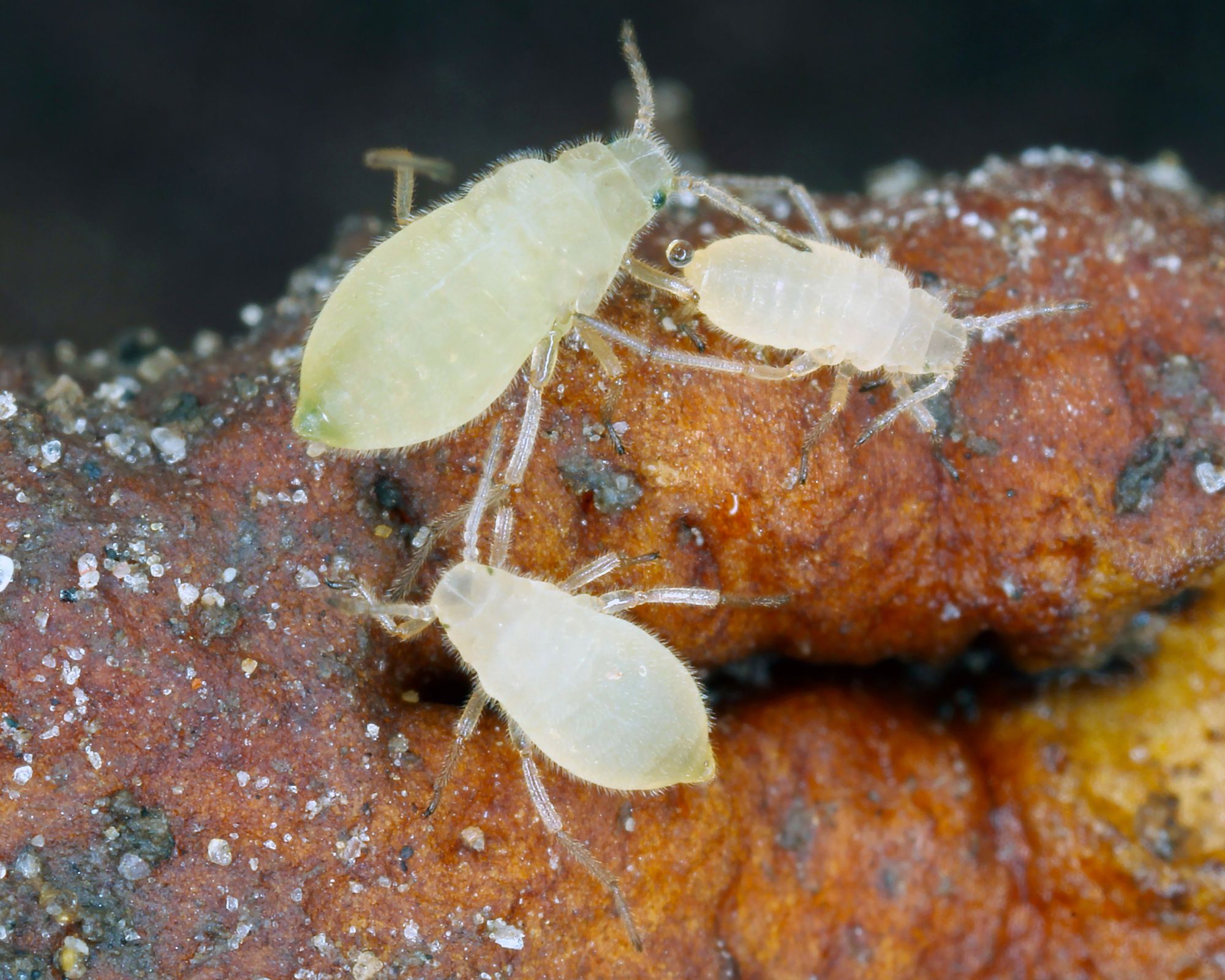
Quorn root aphids are subterranean pests that feed on plant roots, weakening plants and reducing growth. These aphids are difficult to detect because they live below the soil surface.
They are commonly found in agricultural systems and can cause significant damage if not controlled.
The Subterranean Sapper: Quorn Root Aphids
The Quorn Root Aphid (primarily Anoecia corni, also known as the Dogwood-Corn Root Aphid) is a specialized “host-alternating” insect that targets the root systems of grains and grasses, including Maize (Corn) and Sorghum. In the United States, they are considered a “noxious” agricultural pest because they attack the plant where it is least visible—underground. By the time a farmer or gardener in the Midwest or Southwest notices the stunted growth, the root system has often been severely compromised, leading to significant yield loss.
Identification: The “White-Wax” Undergrounder
Because they live in the soil, identifying Quorn Root Aphids requires digging near the base of a stunted plant. The physical markers are distinct from foliage-dwelling aphids:
- Appearance: They are small, plump, and somewhat “pear-shaped” or globose. Their color ranges from pale green to yellowish-white.
- Waxy Coating: To survive in the damp soil, they secrete a bluish-white, powdery wax that covers their bodies and the surrounding root tissue. This wax is a primary diagnostic sign when pulling up a plant.
- Symbiotic Ants: In the U.S., these aphids are almost always found in the company of Cornfield Ants (Lasius neoniger). The ants “farm” the aphids, carrying them to fresh roots and protecting them from underground predators in exchange for sugary honeydew.
- The Fall Migration: In the autumn, winged “migrants” leave the grass roots and fly to Dogwood trees (Cornus spp.) to lay overwintering eggs in the bark.
The “Invisible” Drought Stress
The damage caused by Quorn Root Aphids is often misdiagnosed as nutrient deficiency or drought. For Pestipedia.com, the “noxious” status is due to the vascular disruption at the source:
- Stunted Vigor: Affected plants are noticeably shorter than their neighbors. In a cornfield, this creates a “wavy” or uneven canopy.
- Yellowing and Wilting: Because the aphids are draining the sap from the primary roots, the plant cannot move water or nitrogen efficiently. The leaves may turn pale yellow or reddish-purple at the tips.
- Root Decay: The feeding punctures can act as entry points for soil-borne pathogens like Fusarium root rot, which can finish off a plant that the aphids have already weakened.
U.S. Agricultural and Garden Management
In the United States, managing root aphids is a challenge because they are “armored” by the soil itself. Management focus is on Breaking the Ant-Aphid Alliance:
- Tillage and Cultivation: In the U.S. Midwest, deep spring plowing or frequent cultivation of the soil disrupts the ant colonies and their “stables” of aphid eggs, exposing them to predators and desiccation.
- Crop Rotation: Since the aphids rely on the roots of grasses and corn, rotating a field to a non-host crop like Soybeans or Alfalfa for one or two seasons can starve out the local population.
- The “Ant-First” Strategy: For Pestipedia.com users, controlling the ants is often more effective than trying to kill the aphids. Using organic ant baits or barriers around the base of the plants can prevent the ants from “tending” the aphid colonies.
- Beneficial Fungi: In the U.S., biological controls like Beauveria bassiana (a soil-dwelling fungus) are increasingly used. The fungal spores attach to the aphids in the moist soil and kill them naturally, providing a chemical-free alternative for organic growers.
Identification
Small, pale aphids found on roots.
Life Cycle
Reproduce rapidly underground.
Damage
Root damage and plant decline.
Control
Soil treatments and biological controls.