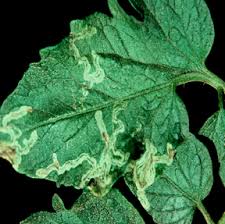
Quinoa leaf miners are small insect larvae that feed within the leaf tissue of quinoa plants, creating characteristic tunnels or blotches. These pests are increasingly important as quinoa cultivation expands globally, particularly in regions where the crop is grown intensively.
Leaf miners can reduce photosynthetic capacity and weaken plants, particularly when infestations are heavy. While often considered secondary pests, they can contribute to yield losses when combined with other stress factors.
The Andean invader: Quinoa Leaf Miners
The Quinoa Leaf Miner (primarily Scrobipalpa pulverulenta) is a specialized micro-moth that has become a significant “noxious” pest as quinoa production has expanded across the United States, particularly in the Pacific Northwest and the Rocky Mountain regions. Because quinoa is a “specialty” crop often grown organically, these miners pose a unique challenge: they live inside the leaf tissue, making them immune to most surface-level organic sprays and capable of reducing crop yields by up to 40% if left unchecked.
Identification: The “Blister” Mine
Identifying Quinoa Leaf Miners requires a close inspection of the thick, succulent leaves of the quinoa plant (Chenopodium quinoa). Unlike the winding “serpentine” mines seen on some vegetables, these miners create large, irregular pockets:
- The Mine: The damage appears as a translucent or light-tan “blister” or “blotch” on the upper surface of the leaf. As the larva grows, the mine expands until it may cover half of the leaf’s surface.
- The Larva: If you peel back the “skin” of the blister, you will find a tiny, pale green or yellowish caterpillar with a dark head capsule.
- Frass Accumulation: Inside the mine, you will see dark green or black specks of waste (frass) often concentrated in one corner of the blister, which distinguishes it from fungal diseases like Downy Mildew.
- Adult Moth: The adults are drab, greyish-brown moths with a wingspan of only 10–12mm. They are nocturnal and rarely seen during the day.
The “Photosynthetic Theft”
For growing quinoa, the “noxious” nature of this pest is cumulative. While a few mines won’t kill the plant, a heavy infestation triggers several physiological failures:
- Reduced Grain Fill: By destroying the mesophyll (the “sugar factory” of the leaf), the miner prevents the plant from sending enough energy to the developing seed heads (panicles), resulting in smaller, lighter grains.
- Leaf Abscission: Severely mined leaves turn brown, dry out, and drop prematurely. This “forced molting” stresses the plant and makes it more susceptible to drought and heat.
- Secondary Entry: The hollow mines can sometimes collect moisture, providing an entry point for bacterial pathogens that can rot the stem.
U.S. Agricultural and Organic Management
In the United States, managing Quinoa Leaf Miners is difficult because quinoa is a “minor crop,” meaning fewer pesticides are legally registered for use on it. Management focus is on Exclusion and Biological Control:
- Floating Row Covers: For small-scale growers, applying a lightweight “insect barrier” fabric immediately after planting is the only 100% effective way to prevent the moths from laying eggs on the leaves.
- Spinosad (Organic Option): Spinosad is one of the few organic-certified (OMRI) insecticides that has “translaminar” properties—meaning it can soak through the leaf surface to reach the larvae inside the mine. In the U.S., it must be applied at the first sign of mining activity.
- The “Lambsquarters” Connection: Quinoa is closely related to the common weed Lambsquarters (Chenopodium album). This weed acts as a “reservoir” for leaf miners. Removing Lambsquarters from around your garden or field perimeter can significantly lower the local moth population.
- Parasitoid Wasps: Native U.S. braconid wasps often discover quinoa mines and lay their eggs in the larvae. If you see a mine with a tiny hole and no caterpillar inside, your “local air force” has already solved the problem.
Identification
Mines appear as white or translucent trails on leaves. Larvae are small and difficult to see.
Life Cycle
Eggs are laid on leaves; larvae develop inside leaf tissue.
Damage
Reduced photosynthesis and plant vigor.
Control
Remove affected leaves and use biological controls.