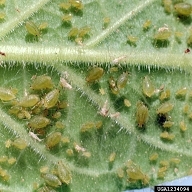
Quinoa Aphids are small, soft-bodied, sap-feeding insects that infest quinoa (Chenopodium quinoa) and related crops. The name may refer to several aphid species found on quinoa, including the Potato Aphid (Macrosiphum euphorbiae) and the Black Bean Aphid (Aphis fabae). These pests feed by inserting piercing-sucking mouthparts into plant tissue and removing phloem sap. Heavy infestations can stunt plants, curl leaves, contaminate seed heads with sticky honeydew, encourage sooty mold, and reduce seed yield and quality.
The most serious concern with Quinoa Aphids is not only direct sap removal but also their ability to transmit plant viruses. Aphids can move quickly from plant to plant, spreading disease through a crop before symptoms are obvious. In commercial fields, this combination of feeding injury, honeydew contamination, and virus transmission makes aphid monitoring an important part of quinoa production.
Taxonomy and Classification
Quinoa Aphids belong to the order Hemiptera, the true bugs, and the family Aphididae. They undergo simple metamorphosis, meaning young aphids resemble smaller versions of adults and do not pass through a pupal stage.
- Order: Hemiptera
- Family: Aphididae
- Common Pest Group: Aphids
- Important Species: Macrosiphum euphorbiae and Aphis fabae
- Primary Crop: Quinoa (Chenopodium quinoa)
Aphids are famous for rapid reproduction. Under favorable conditions, many species reproduce asexually through parthenogenesis, with females giving birth to live young without mating. This allows populations to increase explosively during mild weather and periods of tender plant growth.
Physical Description
Adult Quinoa Aphids are minute insects, usually 1 to 3 millimeters long. Their bodies are soft, pear-shaped, and easily crushed. Color varies depending on species, host plant, age, and environmental conditions.
- Size: 1–3 mm long
- Body Shape: Pear-shaped and soft-bodied
- Color: Green, yellow-green, pink, reddish, brown, or black
- Cornicles: Small tube-like structures near the rear of the abdomen
- Forms: Wingless and winged adults may both occur
The Potato Aphid is often green or pinkish and has a relatively elongated body, while the Black Bean Aphid is usually darker and may form dense black colonies on stems and new growth. Winged forms appear when colonies become crowded or host plants decline, allowing aphids to disperse to new plants.
Common signs of infestation include:
- Clusters of aphids on stems, leaves, and panicles
- Curled or distorted leaves
- Yellowing or stunted growth
- Sticky honeydew on foliage or seed heads
- Black sooty mold growing on honeydew
- Ant activity around aphid colonies
- Reduced seed size or poor panicle development
Distribution and Habitat
Aphids are found worldwide, and species that feed on quinoa occur wherever suitable host plants and growing conditions are present. Quinoa Aphids may be found in commercial fields, research plots, small farms, home gardens, and areas where related plants in the Amaranthaceae family grow nearby.
On quinoa, aphids commonly colonize:
- New leaves
- Young stems
- Leaf undersides
- Growing tips
- Developing seed heads
- Flowering panicles
Populations often increase during mild, dry weather when plant growth is tender and natural enemy activity is limited. Excessive nitrogen fertilization may also encourage lush growth that aphids prefer.
Life Cycle
Quinoa Aphids develop through egg or live birth, nymphal stages, and adult stages depending on species and climate. In many growing-season populations, females produce live nymphs without mating. These nymphs begin feeding immediately and mature quickly.
Because each female can produce many offspring and generations overlap, colonies can build quickly on young quinoa plants or developing panicles. Winged adults may appear when colonies become crowded, plants become stressed, or weather conditions change. These winged aphids spread to new plants and may introduce viruses as they feed.
Damage and Crop Impact
Quinoa Aphids damage plants in three main ways: sap removal, contamination, and virus transmission. Direct feeding removes plant nutrients and can weaken growth, especially when colonies develop early in the season.
- Sap Depletion: Feeding reduces plant vigor and can stunt growth.
- Leaf Distortion: New leaves may curl, yellow, or become misshapen.
- Panicle Contamination: Honeydew can coat seed heads and interfere with harvest quality.
- Sooty Mold: Black fungal growth may develop on honeydew-covered surfaces.
- Virus Spread: Aphids can transmit plant viruses as they move between plants.
- Yield Loss: Heavy infestations can reduce seed size, seed fill, and total yield.
Honeydew contamination is especially important near harvest. Sticky panicles may collect dust, support sooty mold, and require additional cleaning. In severe infestations, crop quality may decline even when plants survive.
Behavior and Conflict
Aphids feed with piercing-sucking mouthparts and often remain clustered in protected locations. Colonies may develop on the undersides of leaves or inside dense panicles where they are harder to reach with sprays. Ants may protect aphids from predators in exchange for honeydew, allowing colonies to increase further.
The virus risk makes aphid management more complicated. In some cases, aphids can transmit viruses quickly during brief feeding probes. This means that killing aphids after they arrive may not always prevent disease spread. Monitoring, early detection, resistant varieties, and reducing nearby virus reservoirs are important preventive tools.
Management and Prevention
Quinoa Aphid control is best handled through integrated pest management (IPM). The goal is to prevent damaging outbreaks while conserving beneficial insects that naturally suppress aphids.
| Management Strategy | Description | Purpose |
|---|---|---|
| Regular Scouting | Inspect leaves, stems, and panicles for aphid colonies. | Detects outbreaks early before populations explode. |
| Biological Control | Conserve lady beetles, lacewings, syrphid fly larvae, and parasitic wasps. | Provides natural aphid suppression. |
| Cultural Control | Avoid excessive nitrogen and maintain proper irrigation. | Reduces overly tender growth attractive to aphids. |
| Weed Management | Control nearby weed hosts that support aphids and viruses. | Reduces sources of reinfestation and disease. |
| Selective Sprays | Use insecticidal soaps, oils, or targeted insecticides when thresholds are exceeded. | Reduces aphids while limiting harm to beneficial insects. |
Broad-spectrum insecticides should be used carefully because they may kill beneficial predators and parasitoids, sometimes allowing aphids to rebound quickly. When chemical treatment is necessary, coverage of leaf undersides and panicles is important.
Biological control is often highly valuable. Lady Beetles, Lacewings, Syrphid Flies, and parasitic wasps can significantly reduce aphid populations. Parasitized aphids often appear swollen, tan, and papery; these are known as aphid “mummies.”
Conservation and Research
Quinoa Aphids are increasingly important as quinoa production expands beyond traditional growing regions. Research focuses on identifying resistant quinoa varieties, understanding which viruses are transmitted by aphids, improving economic thresholds, and optimizing the timing of biological control releases.
Additional research is examining how climate, irrigation, plant nutrition, and surrounding vegetation influence aphid outbreaks. These studies help growers reduce pesticide reliance while protecting crop yield and seed quality.
Conclusion
Quinoa Aphids are important sap-feeding pests of quinoa that can reduce yield, contaminate seed heads with honeydew, and transmit plant viruses. Species such as the Potato Aphid and Black Bean Aphid reproduce rapidly and can form dense colonies on leaves, stems, and panicles. Effective management depends on early scouting, conservation of natural enemies, proper crop nutrition, weed control, and selective treatments when needed. By combining cultural, biological, and chemical tools, growers can reduce aphid damage while protecting beneficial insects and maintaining quinoa crop quality.