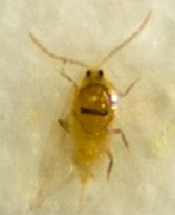
Quince scale insects are sap-feeding pests that infest quince and other fruit trees, reducing vigor and productivity.
The Bark-Blending Sap-Sucker: Quince Scale Insects
The Quince Scale (primarily the European Fruit Lecanium, Parthenolecanium corni, or the San Jose Scale, Comstockaspis perniciosa) is a “noxious” armored or soft-scale pest that targets pome fruits, particularly Quince, Pear, and Apple. In the United States, these insects are considered high-priority pests in Washington, Oregon, and the Hudson Valley. They are notorious for their “stealth” infestations; because they resemble small bumps or natural bark lenticels, populations often reach damaging levels before a homeowner or grower notices the decline in tree vigor.
Identification: The “Helmet” and the “Speck”
Identifying Quince Scale requires a magnifying glass and a keen eye for “unnatural” bumps on two-year-old wood. There are two distinct forms to look for:
- Lecanium Form (Soft Scale): These appear as glossy, dark brown, hemispherical “helmets” about 3mm to 5mm in diameter. They are often clustered on the undersides of twigs.
- San Jose Form (Armored Scale): These are much smaller, greyish-black, and circular with a raised “nipple” in the center. They look like a sprinkling of coarse pepper on the bark. If you scrape them with a fingernail, a yellow, oily liquid (the insect’s body) will be revealed.
- Red Spotting: A unique diagnostic for San Jose Scale on Quince fruit is the presence of a bright red halo or spot around each individual scale, caused by a toxin the insect injects into the fruit skin.
The “Vascular Hijack”
Quince Scale insects do not eat leaves; they insert a long, thread-like proboscis directly into the tree’s vascular system (phloem and cambium):
- Girdling Effect: A heavy “encrustation” of scale can act like a slow-motion tourniquet, eventually killing entire fruiting spurs or small branches (dieback).
- Honeydew and Sooty Mold: Soft-scale varieties (Lecanium) excrete sticky honeydew. In the U.S. Northeast, this leads to heavy black sooty mold that can smudge the fruit and reduce the tree’s ability to “breathe” through its bark.
- Fruit Unmarketability: While the scale doesn’t rot the fruit, the presence of “peppery” specks and red spots makes the Quince fruit unmarketable for fresh eating or preserves.
U.S. Orchard and Heritage Tree Management
In the United States, managing scale on Quince is a matter of Suffocation and Timing. Because the adults are protected by a waxy “armor,” standard contact sprays are useless for 90% of the year.
- The “Golden Rule” (Dormant Oil): The most effective U.S. treatment is a 2% to 3% application of Superior Horticultural Oil in the late winter (dormant stage). The oil flows under the edges of the scale’s shell and smothers the overwintering nymphs.
- The “Crawler” Window: The only time the insects move is the “crawler” stage (usually June in the U.S.). Wrapping black electrical tape (sticky side out) around a branch will catch the tiny yellow crawlers, signaling the exact 7-day window to apply a summer oil or insecticidal soap.
- Natural Predators: Tiny parasitic wasps (Encarsia spp.) and Twice-Stabbed Ladybeetles are the primary natural checks. If you see a tiny, perfect hole in the top of a scale “helmet,” a wasp has already eaten the pest from the inside out.
- Pruning: For older “heritage” Quince trees in gardens, the best management is often the aggressive pruning and burning of heavily infested “scaly” wood during the winter.
Identification
Waxy bumps on bark and leaves.
Damage
Reduced growth and branch dieback.
Control
Horticultural oils and systemic insecticides.