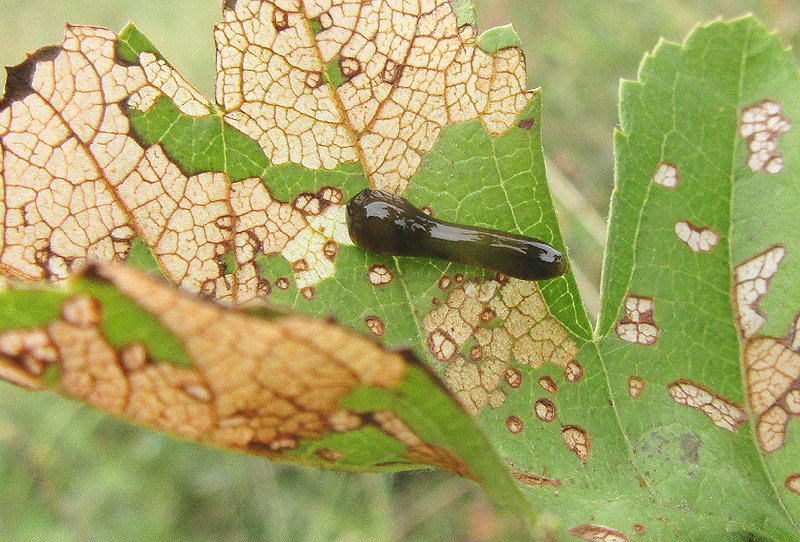
Quince Sawflies are fruit-damaging sawflies whose larvae attack quince, apple, pear, and other pome fruits. The name may refer to several related sawfly pests, including species such as Hoplocampa testudinea, which is better known as the Apple Sawfly. Although adult sawflies resemble small wasps, they do not sting people. The damaging stage is the larva, which tunnels into young fruit shortly after bloom. Infested fruit may become scarred, distorted, internally contaminated, rotten, or may drop from the tree before maturity.
The conflict with Quince Sawflies is highly time-sensitive. Adult females are active around bloom and use a saw-like egg-laying organ to insert eggs into flowers or newly forming fruit. Once larvae hatch and tunnel inside, they are protected from many external treatments. This makes monitoring during bloom and early petal fall essential for preventing serious fruit loss.
Taxonomy and Classification
Sawflies belong to the order Hymenoptera, the same order that includes wasps, bees, and ants. Unlike most familiar wasps, sawflies belong to the suborder Symphyta and have larvae that often resemble caterpillars.
- Order: Hymenoptera
- Suborder: Symphyta
- Common Group: Fruit Sawflies
- Example Species: Hoplocampa testudinea
- Primary Hosts: Quince, apple, pear, and related pome fruits
Quince Sawflies undergo complete metamorphosis with egg, larval, pupal, and adult stages. The adult female uses a serrated ovipositor to cut into flower tissue or young fruit and place an egg. This action may leave a small scar that becomes more visible as the fruit grows.
Physical Description
Adult sawflies are small, dark, wasp-like insects that may be seen around quince trees during bloom. They are usually inconspicuous and can be difficult to identify without traps or close inspection.
- Adult Appearance: Small, dark, wasp-like insect
- Adult Activity: Most noticeable during bloom
- Larva: Cream-colored, smooth, caterpillar-like body with a brown head
- Larval Size: About 1/2 to 3/4 inch when mature
- Key Larval Feature: Fleshy abdominal prolegs, unlike legless weevil grubs
The larvae are often confused with caterpillars or fruit worms, but they are sawfly larvae rather than moth larvae. They may feed just beneath the fruit skin at first, then tunnel deeper into the fruit as they grow.
Important damage signs include:
- Winding ribbon-like scars on young fruit
- Small entry holes near the calyx
- Dark frass near feeding wounds
- Internal tunnels beneath the skin or toward the core
- Premature fruit drop shortly after bloom
- Rotten or contaminated fruit flesh
- Heavily scarred fruit unsuitable for market
Distribution and Habitat
Quince Sawflies and related pome fruit sawflies occur in fruit-growing regions of Europe, North America, and other temperate areas where suitable host trees are cultivated. They are most often associated with orchards, home fruit plantings, hedgerows, and neglected host trees.
Typical habitats include:
- Quince trees
- Apple orchards
- Pear orchards
- Mixed pome fruit plantings
- Home gardens
- Abandoned or unmanaged fruit trees
- Soil beneath host trees, where larvae pupate and overwinter
The pest is closely tied to the bloom period. Adults emerge when flowers are available for egg laying, and larvae develop inside the newly formed fruitlets.
Life Cycle
Quince Sawflies typically overwinter in the soil as mature larvae inside protective cocoons. In spring, they pupate and emerge as adults around the flowering period of host trees. Females locate blossoms or newly setting fruit and lay eggs in plant tissue.
After hatching, the larva begins feeding just beneath the skin of the young fruit. This early feeding may later appear as a winding ribbon scar as the fruit expands. Older larvae may tunnel deeper into the fruit, feeding near the core and contaminating the flesh with frass.
Damaged fruit often drops early. The mature larva exits the fallen fruit and enters the soil, where it forms a cocoon and remains until the next spring. Many species have one generation per year, making spring monitoring especially important.
Damage and Crop Impact
Quince Sawflies can cause both cosmetic and internal damage. Surface feeding may create scars that make fruit unsuitable for fresh sale, while deeper tunneling contaminates the fruit and encourages rot.
- Ribbon Scarring: Early larval feeding produces winding scars on the fruit surface.
- Internal Feeding: Larvae tunnel into fruit tissue and may feed near the core.
- Frass Contamination: Feeding tunnels contain dark waste material.
- Premature Drop: Infested fruitlets often fall soon after bloom.
- Market Loss: Scarred or wormy fruit cannot be sold as high-quality produce.
Even low populations can cause noticeable losses because each larva can ruin one or more fruitlets. In small plantings, a moderate infestation may destroy a large percentage of the crop.
Behavior and Conflict
The main management challenge is the short window of vulnerability. Adult sawflies are active around bloom, and larvae enter fruit quickly after hatching. Once inside, they are protected from many contact sprays.
Timing is also complicated by pollinator safety. Treatments should not be applied during full bloom when bees and other pollinators are actively visiting flowers. If chemical control is needed, it is usually timed for petal fall or shortly afterward, depending on local recommendations and pest monitoring.
Management and Prevention
Quince Sawfly management relies on integrated pest management (IPM), especially bloom-time monitoring, sanitation, and precisely timed intervention. Because many sawflies have only one generation per year, preventing successful larval development can greatly reduce future pressure.
| Management Strategy | Description | Purpose |
|---|---|---|
| White Sticky Traps | Place traps in trees during bloom to monitor adult sawfly activity. | Helps determine timing of adult flight and egg laying. |
| Petal-Fall Treatment | Apply approved products only after bloom when pollinator risk is reduced. | Targets young larvae before deep fruit entry. |
| Fruit Drop Removal | Collect and destroy dropped fruitlets promptly. | Prevents larvae from reaching soil to overwinter. |
| Tree Inspection | Check young fruit for ribbon scars, entry holes, and frass. | Detects early damage before losses increase. |
| Pollinator Protection | Avoid insecticides during full bloom. | Protects bees and beneficial insects. |
White sticky traps are especially useful because adult sawflies are attracted to light-colored surfaces. Traps should be placed before or during bloom and checked regularly. Local extension services may provide threshold guidelines for treatment decisions.
Sanitation also matters. Fallen fruitlets containing larvae should be removed and destroyed rather than composted casually beneath the tree. This helps break the life cycle and reduces the number of adults emerging the following spring.
Conservation and Research
Quince Sawflies and related fruit sawflies are studied as important pome fruit pests. Research focuses on degree-day models that predict adult emergence, improved trapping systems, selective insecticides, insect growth regulators, and biological control by parasitoids and predators.
Future management programs aim to improve precision so growers can protect fruit while reducing unnecessary pesticide applications and minimizing harm to pollinators and beneficial orchard insects.
Conclusion
Quince Sawflies are damaging pome fruit pests whose larvae tunnel into young quince, apple, and pear fruit. Their feeding produces ribbon scars, internal contamination, frass, rot, and premature fruit drop. Because adult activity occurs around bloom and larvae quickly enter the fruit, control depends on accurate timing. White sticky traps, petal-fall monitoring, sanitation, and pollinator-safe treatment decisions are the foundation of effective integrated pest management for Quince Sawflies.