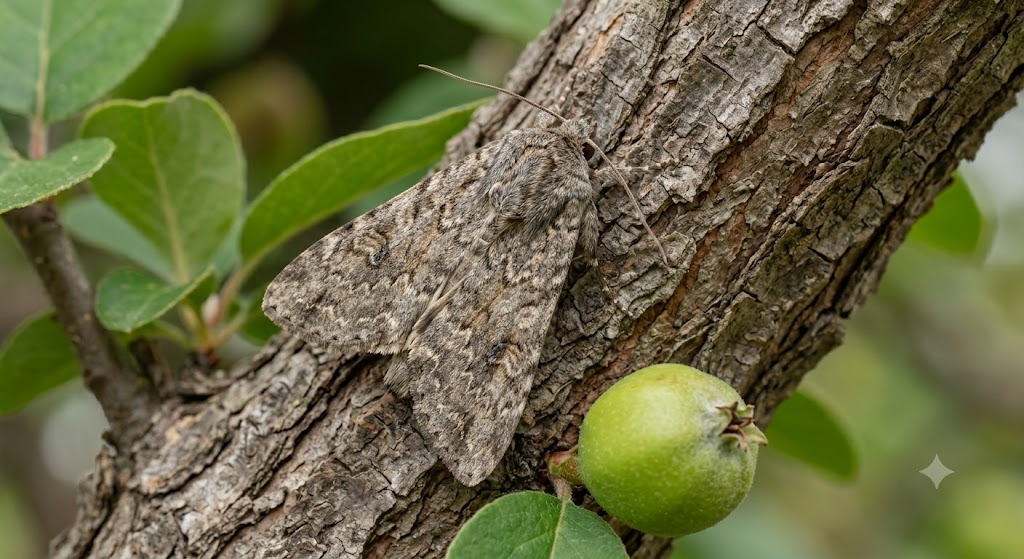
Quince Moths generally refers to moth species whose larvae infest quince fruit. In most orchard and home-garden situations, the main pest involved is the Codling Moth (Cydia pomonella), one of the most important fruit-boring pests of apples, pears, and quinces worldwide. The conflict is severe fruit contamination. Newly hatched larvae tunnel directly into developing fruit, feed near the core, and leave behind reddish-brown frass, or insect waste. Infested fruit may become rotten, distorted, inedible, and unsuitable for fresh market use.
For quince growers, Codling Moth damage is especially frustrating because the pest is often hidden until the fruit is cut open or begins to decline. A fruit may appear only lightly marked on the outside, while the inside contains tunnels, waste, and a feeding caterpillar. This concealed feeding habit makes timing essential. Once larvae enter the fruit, they are protected from many sprays and natural enemies.
Taxonomy and Classification
Codling Moths belong to the order Lepidoptera, the group that includes moths and butterflies. They are members of the family Tortricidae, a family that includes many leafroller and fruit-boring moths.
- Order: Lepidoptera
- Family: Tortricidae
- Genus: Cydia
- Species: Cydia pomonella
- Common Name: Codling Moth
- Associated Crop Name: Quince Moth damage
Codling Moths undergo complete metamorphosis with egg, larval, pupal, and adult stages. The larva is the damaging stage. Adults do not chew into fruit; instead, females lay eggs on leaves, fruit, or nearby surfaces, and the newly hatched caterpillars bore into the fruit shortly after emerging.
Physical Description
Adult Codling Moths are small and inconspicuous, which makes them difficult to notice without traps. They are mottled gray-brown moths that blend well with bark and tree surfaces.
- Adult Appearance: Small gray-brown moth with mottled wings
- Key Adult Mark: Coppery-brown patch near the tip of each forewing
- Larva: Creamy-white to pinkish caterpillar with a dark brown head
- Larval Size: About 1/2 to 3/4 inch when mature
- Pupa: Brown and hidden under bark, in litter, or in sheltered sites
The most useful identification clues are the feeding signs. Infested quince may show a small entry hole plugged with reddish-brown frass. When fruit is cut open, the larva may be found tunneling toward or around the core.
Distribution and Habitat
Codling Moths occur throughout many temperate fruit-growing regions of the world. They are strongly associated with orchards, home fruit trees, abandoned trees, and backyard plantings of apples, pears, quinces, and related pome fruits.
Common hosts include:
- Quince
- Apple
- Pear
- Crabapple
- Occasionally walnut and other secondary hosts
The pest uses different parts of the orchard during its life cycle. Larvae develop inside fruit, while mature larvae leave the fruit and seek sheltered places to spin cocoons. They may overwinter beneath loose bark, in pruning debris, in packing bins, in leaf litter, or in cracks near the tree.
Life Cycle
The Codling Moth life cycle begins when overwintered larvae pupate and adults emerge in spring. Mating occurs after emergence, and females lay eggs on or near young fruit. Once eggs hatch, the tiny larvae crawl across the fruit surface and bore inside.
Inside the quince, the larva feeds on flesh and seeds, often producing the classic “wormy fruit” condition. When mature, the larva exits the fruit and searches for a protected pupation site. Depending on climate, there may be one, two, or more generations per year.
In warm regions or long growing seasons, later generations can cause repeated waves of fruit injury. This is why monitoring must continue beyond the first spring flight.
Damage and Crop Impact
Quince Moth damage caused by Codling Moth larvae is primarily internal. The fruit may develop visible entry holes, stained skin, or frass deposits, but the most serious contamination is hidden inside.
- Small entry holes on the fruit surface
- Reddish-brown frass around entry or exit wounds
- Internal tunnels through the flesh
- Feeding damage near the core
- Rot around injured tissue
- Premature fruit drop
- Fruit unsuitable for fresh use or sale
Even a single larva can make a quince unmarketable. In commercial orchards, Codling Moth is often one of the main pests driving seasonal monitoring and spray schedules. In home orchards, unmanaged populations can build over time, especially if infested fruit is left under trees.
Behavior and Conflict
The main challenge with Codling Moths is timing. Larvae are vulnerable only for a short period after egg hatch and before they enter the fruit. Once inside, they are shielded from most contact treatments.
Several factors make this pest difficult to manage:
- Adults are nocturnal and easy to overlook
- Eggs are tiny and difficult to see
- Larvae quickly tunnel into fruit
- Multiple generations may occur in one season
- Abandoned trees can serve as reservoirs
- Infested fruit may look acceptable from the outside
Management and Prevention
Quince Moth control is best handled through integrated pest management (IPM). The goal is to monitor adult flights, prevent mating where possible, target larvae before they bore into fruit, and remove infested fruit that could produce the next generation.
| Management Strategy | Description | Purpose |
|---|---|---|
| Pheromone Monitoring | Use traps to detect adult male moth activity. | Helps time treatments to egg hatch and larval emergence. |
| Mating Disruption | Place synthetic pheromone dispensers throughout the orchard. | Confuses males and reduces successful mating. |
| Sanitation | Collect and destroy infested or fallen fruit. | Removes larvae before they pupate. |
| Timed Sprays | Apply registered products when eggs hatch and larvae are exposed. | Targets larvae before they enter fruit. |
| Bark and Debris Cleanup | Remove loose bark shelters and orchard debris where practical. | Reduces overwintering sites. |
Biological products such as Bacillus thuringiensis (Bt) may help when applied precisely against young larvae, but timing is critical. Other registered orchard insecticides may also be used according to label directions and local extension guidance. For larger orchards, pheromone mating disruption is one of the most important non-broad-spectrum tools available.
Home growers can reduce pressure by bagging individual fruit, thinning fruit clusters, removing drops promptly, and avoiding nearby unmanaged host trees when possible. Infested fruit should not be left beneath trees because mature larvae can exit and complete development.
Conservation and Research
Codling Moth remains a major research focus in pome fruit production. Current work includes improved pheromone lures, sterile insect techniques, degree-day timing models, biological insecticides, host-plant resistance, and conservation of natural enemies. Researchers also study ways to reduce broad-spectrum insecticide use while maintaining reliable fruit protection.
Conclusion
Quince Moths, most commonly represented by the Codling Moth, are serious fruit-boring pests of quince and other pome fruits. Their larvae tunnel into developing fruit, contaminate the flesh with frass, and cause the classic wormy fruit condition. Because larvae are protected once inside the fruit, successful control depends on early monitoring, pheromone traps, mating disruption, sanitation, and precisely timed treatments. For both home orchards and commercial growers, preventing larvae from entering fruit is the key to protecting quince crops.