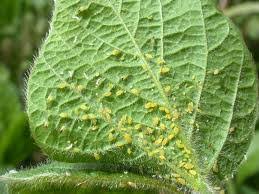
Quince aphids are sap-feeding insects that target quince trees and related fruit species. They can reduce fruit quality and tree vigor.
The Pear-to-Quince Wanderer: Quince Aphids
The Quince Aphid (Dysaphis pyri), also known as the Pear-Bedstraw Aphid, is a “host-alternating” pest prevalent in the United States, particularly in regions where pome fruits like Quince, Pear, and Apple are grown. It is considered “noxious” because of its destructive feeding during the critical spring budding phase and its role as a persistent vector for Pear Stony Pit virus. In the U.S. Pacific Northwest and Northeast, these aphids can cause severe “leaf-curl” that stunts the development of young fruit trees.
Identification: The “Powdery” Pink Inhabitant
Identifying Quince Aphids requires checking the undersides of tightly curled leaves in early spring. For Pestipedia.com users, look for these specific “Dysaphis” markers:
- Appearance: They are distinctively pink, purple, or slate-grey in color, rather than the bright green of common garden aphids.
- Waxy Coating: Their bodies are covered in a fine, white, mealy powder or “wax” that gives them a dusty appearance.
- Cornicles: They possess two short, dark-tipped cornicles (tailpipes) at the rear of the abdomen.
- Seasonal Migration: In the spring, they live on Quince or Pear trees. In the summer, the winged “migrants” fly away to spend the hot months on Bedstraw (Galium) weeds before returning to the fruit trees in autumn to lay eggs.
The “Tight Curl” Damage Pattern
The Quince Aphid is a “deforming” feeder. Unlike aphids that just sit on the stem, these insects inject potent saliva that alters the plant’s growth:
- Severe Leaf Distortion: Feeding causes the leaves to curl tightly downward or “roll” into a cigar shape. This creates a protected “micro-tent” for the aphid colony, shielding them from rain and many contact-based sprays.
- Shoot Stunting: New spring shoots may become twisted or “corkscrewed,” leading to a permanent “bonsai” effect on the branch structure of young trees.
- Fruit Deformation: If they feed near the developing fruitlets, the Quince fruit may grow lopsided, dimpled, or develop “stone cells” (hard, woody lumps) that make the fruit inedible.
- Honeydew Mess: Like all aphids, they excrete sticky honeydew that leads to black sooty mold and attracts nuisance ants.
U.S. Orchard and Garden Management
In the United States, managing Quince Aphids is a game of Early Prevention. Once the leaves have curled tightly, it is nearly impossible to reach the aphids with standard sprays.
- Dormant Oil (The Primary Defense): The #1 recommended U.S. control is an application of Dormant Horticultural Oil in late winter (February/March). This smothers the eggs tucked into the bark crevices before they hatch.
- The “Pre-Bloom” Strike: The “Green Tip” stage (when the buds first show green) is the critical window. A spray of Neem Oil or Insecticidal Soap at this stage kills the “Stem Mothers” before they can start a colony.
- Beneficial Habitat: Hoverflies and Lacewings are the most effective natural predators for these aphids. Planting “insectary strips” of dill, fennel, or alyssum near your orchard will recruit these “local air force” hunters.
- Summer Weed Control: Since the aphids spend their summers on Bedstraw/Cleavers (Galium), removing these weeds from around the base of your fruit trees can help break their migratory cycle.
Identification
Small green aphids on leaves and stems.
Damage
Leaf curling and reduced fruit production.
Control
Predators and insecticidal soaps.