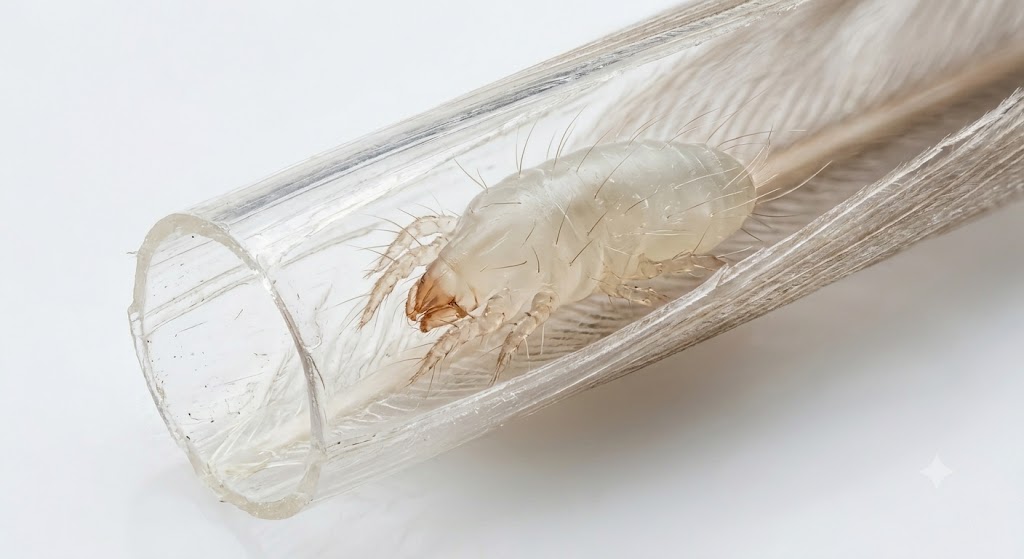
Quill Mites are microscopic parasitic mites that live inside the hollow feather shafts of birds. Most belong to the family Syringophilidae, with species such as Syringophilus bipectinatus known from domestic and wild birds. Unlike many external bird mites that crawl across the skin surface, Quill Mites spend most or all of their lives hidden within the feather quill. This concealed lifestyle makes them difficult to detect and challenging to manage. In poultry, cage birds, racing pigeons, and wild birds, heavy infestations may cause feather breakage, poor feather quality, bare patches, stress, reduced insulation, and decreased overall health.
Taxonomy and Classification
Quill Mites are arachnids, meaning they are more closely related to ticks and spiders than to insects. They belong to the subclass Acari, which includes mites and ticks.
- Class: Arachnida
- Subclass: Acari
- Family: Syringophilidae
- Example Species: Syringophilus bipectinatus
- Common Name: Quill Mites
The name “quill mite” refers to their unusual habitat inside the feather shaft, particularly the calamus and rachis. Many species are highly host-specific, meaning a mite species may be strongly associated with one bird species or a closely related group of birds.
Physical Description
Adult Quill Mites are extremely small, usually less than 0.5 millimeters long, and are not easily seen without magnification. Their bodies are elongated and narrow, an adaptation that allows them to move within the tight interior space of feather quills.
- Size: Usually less than 0.5 mm
- Body Shape: Slender and elongated
- Color: Pale, translucent, cream, or yellowish under magnification
- Legs: Eight legs as adults and nymphs
- Habitat: Inside hollow feather shafts
Because the mites themselves are so small, infestations are usually identified by feather symptoms rather than by direct observation of the mite. Affected feathers may contain dark, granular material inside the shaft. This material consists of mite bodies, shed skins, eggs, waste, and damaged quill tissue.
Common signs include:
- Flight or tail feathers that break easily
- Dark debris visible inside translucent quills
- Feather shafts that appear dirty or discolored
- Patchy feather loss
- Poor feather condition after molting
- Reduced feather strength and flexibility
- Excessive preening or irritation in some birds
Distribution and Habitat
Quill Mites occur worldwide wherever birds are present. They have been recorded from domestic poultry, pigeons, parrots, songbirds, raptors, waterfowl, and many wild bird species. Their distribution is tied to the movement and contact patterns of bird hosts rather than to buildings, soil, or stored products.
Common hosts may include:
- Chickens
- Turkeys
- Pigeons
- Parrots and cage birds
- Canaries and finches
- Wild songbirds
- Waterfowl
- Raptors
The mites live within feathers, especially larger wing and tail feathers where the hollow shaft provides suitable shelter. Since they are protected inside the quill, they are less exposed to environmental conditions than mites that live on skin or bedding.
Life Cycle
Quill Mites complete their development within the feather shaft. Their life cycle includes egg, larval, nymphal, and adult stages. Females deposit eggs inside the quill, and immature mites develop in the same protected environment.
This internal life cycle makes Quill Mites persistent. Since the mites are hidden inside the feather, routine surface treatments may fail to reach them. Infested feathers can remain a protected reservoir until they are naturally molted or removed.
Transmission usually occurs through direct contact between birds. Parent birds may pass mites to offspring, and flockmates can spread infestations through close roosting, mating, handling, transport, or shared housing.
Behavior and Damage
Quill Mites feed within the feather shaft, damaging the inner lining and contributing to weakness in the feather structure. Heavy mite activity can cause feathers to snap, split, discolor, or fail to develop properly after molt.
The most noticeable damage is often seen in larger feathers, including:
- Primary wing feathers
- Secondary wing feathers
- Tail feathers
- Large body contour feathers
For wild birds, damaged flight feathers may reduce flying ability and predator avoidance. For domestic poultry, poor feather quality may interfere with temperature regulation, increase stress, and reduce productivity. In ornamental or exhibition birds, feather damage can significantly reduce appearance and show value.
Poultry and Bird Health Concerns
Quill Mites are usually not a direct threat to humans, pets, or structures. Their importance is mainly related to bird health and flock management. Severe infestations can contribute to poor welfare, especially when birds are already stressed by overcrowding, poor nutrition, other parasites, or disease.
Possible impacts include:
- Reduced insulation during cold weather
- Lower flight performance in wild or aviary birds
- Greater stress from damaged plumage
- Reduced egg production in affected poultry
- Increased susceptibility to secondary problems
- Lower exhibition value in show birds
Because symptoms can resemble damage from feather lice, depluming mites, nutritional deficiencies, feather picking, or poor molt, accurate diagnosis is important before treatment.
Management and Prevention
Managing Quill Mites can be difficult because the mites are protected inside the feather shaft. Effective control usually requires a combination of inspection, flock hygiene, quarantine, and veterinary guidance.
| Management Strategy | Description | Purpose |
|---|---|---|
| Inspection | Hold suspect feathers to light and look for dark debris inside the shaft. | Helps detect hidden infestations. |
| Quarantine New Birds | Keep new birds separate before adding them to a flock or aviary. | Reduces spread to healthy birds. |
| Remove Severely Infested Feathers | Dispose of heavily damaged feathers safely when appropriate. | Removes mite reservoirs. |
| Veterinary Treatment | Use veterinarian-recommended systemic or topical antiparasitic treatments. | Targets mites that surface treatments may miss. |
| Improve Bird Health | Provide good nutrition, clean housing, and reduced crowding. | Supports feather recovery and reduces stress. |
For small infestations, some bird keepers use localized quill treatments such as careful application of mineral oil to affected feather bases. However, treatment should be used cautiously, especially with small birds, because improper handling or chemical exposure can cause harm.
Systemic antiparasitic drugs, including products used under veterinary supervision, may be recommended in some cases. Poultry keepers should always follow label requirements and veterinary advice, especially for birds producing eggs or meat for consumption.
Conservation and Research
Quill Mites are important in studies of host-parasite evolution because many species show close associations with particular bird hosts. Researchers examine how these mites spread, how they adapt to feather structure, and how bird behavior affects parasite transmission.
In poultry and aviculture, research focuses on safer treatments, better diagnostic methods, and improved flock management practices that reduce parasite pressure without unnecessary chemical use.
Conclusion
Quill Mites are specialized bird parasites that live hidden inside feather shafts, making them difficult to detect and manage. Although microscopic, they can cause noticeable feather damage, breakage, discoloration, and feather loss in poultry, cage birds, and wild birds. Their concealed life cycle means that ordinary surface sprays may not provide reliable control. Careful inspection, quarantine of new birds, removal of heavily infested feathers, improved flock conditions, and veterinary-guided treatment are the best strategies for protecting bird health and reducing the spread of these unusual feather-dwelling mites.