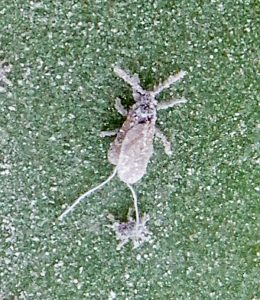
Quesnel scale insects are sap-feeding pests that infest a variety of plants, including ornamental and agricultural species. Like other scale insects, they are often overlooked until infestations become severe.
These pests attach themselves to plant surfaces and feed continuously, weakening the host over time.
The High-Altitude Specialist: Quesnel Scale
The Quesnel Scale (Stramenaspis quercus, formerly Lepidosaphes) is a “noxious” armored scale insect specifically adapted to temperate and high-altitude Oak forests. While it shares some characteristics with the common Oystershell Scale, this species is a specialist of the Quercus (Oak) genus. In the United States, it is a persistent pest in managed landscapes and urban forests from the Pacific Northwest to the Rocky Mountains. Because they blend perfectly with the greyish-brown bark of young oak twigs, they often go unnoticed until the tree begins to show significant “dieback” from the crown down.
Identification: The “Mussel-Shaped” Camouflage
Identifying Quesnel Scale requires a “bark-scraping” inspection of the newest growth. The shape and color are the primary diagnostic keys:
- Appearance: The protective cover (test) is elongated and narrow, resembling a miniature mussel shell or a curved comma. It measures about 2mm to 3mm in length.
- Color: They are a mottled greyish-brown to dark brown, matching the natural “lenticels” (pores) of oak bark. This camouflage makes them nearly invisible to the untrained eye.
- The “White Underbelly”: If you flip a female scale over with a needle, you will find a creamy-white, legless insect and dozens of tiny, pearl-like eggs protected beneath the shell.
- Layering: In heavy infestations, the scales will overlap like shingles on a roof, completely encrusting the twig and cutting off all light and air to the bark tissue.
The “Vascular Choking” Damage
Quesnel Scale is a “toxic” sap-feeder. Unlike soft scales, they do not produce sticky honeydew, making the damage purely physiological and structural:
- Bark Cracking: As the scales feed, they inject enzymes that cause the bark to become brittle. Over time, the bark may crack or peel, exposing the inner wood to Canker fungi.
- Crown Thinning: The first sign of a “noxious” infestation is a thinning of the leaves at the very top of the oak. This is because the scales “clog” the nutrient flow to the furthest extremities of the tree.
- Stunted Internodes: Infected twigs grow very slowly, leading to “tufted” leaves that are much smaller than normal, giving the tree a “bonsai” or stunted appearance.
U.S. Urban and Forest Management
In the United States, managing Quesnel Scale is a game of Patience and Suffocation. Because their “armor” is so tough, they are nearly immune to most contact sprays once the shell has hardened.
- The “Scrub” Method: For users with small, reachable ornamental oaks, the most effective organic control is physically scrubbing the branches with a soft nylon brush and a mild soap solution in early spring. This breaks the protective shells and kills the eggs.
- Dormant Oil (The “Golden Spray”): U.S. arborists recommend a 3% Horticultural Oil application in late February or March, just before the buds swell. The oil seeps under the edges of the scales and suffocates the overwintering females.
- The “Crawler” Window: Like all armored scales, they are only mobile for a short time (the “crawler” stage) in late spring. Using Double-Sided Sticky Tape around a branch can help you time your spray—once you see tiny yellow dots stuck to the tape, it’s time to apply an Insect Growth Regulator (IGR) like Pyriproxyfen.
- Distance Sanitation: Because these scales move slowly, they are often introduced to a yard via “hitchhiking” on nursery stock. Always inspect new Oak saplings for “mussel-shaped” bumps before planting them near your established trees.
Identification
Small, immobile bumps on stems or leaves.
Life Cycle
Includes crawler stage followed by immobile adult stage.
Damage
Yellowing leaves and reduced plant vigor.
Control
Horticultural oils and systemic insecticides.