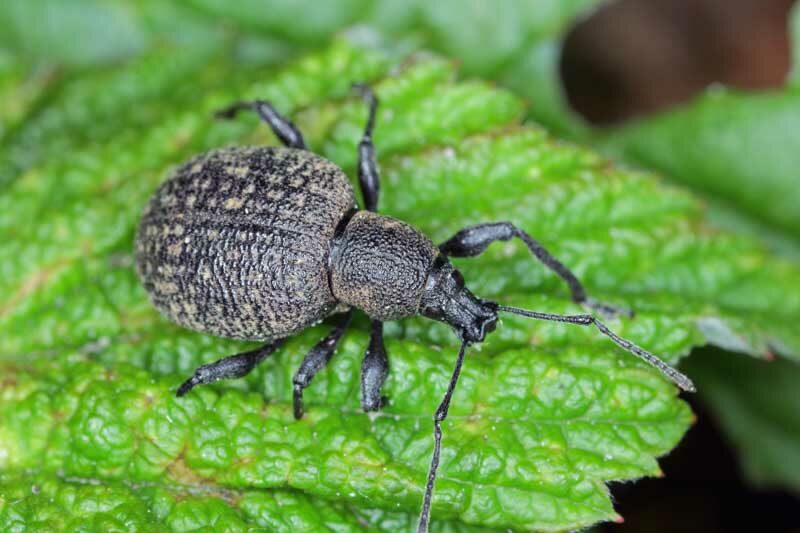
Queensland root weevils are destructive pests that target plant root systems, particularly in tropical and subtropical regions. Their larvae feed below ground, weakening plants and reducing productivity.
The Subtropical Subterranean: Queensland Root Weevils
The Queensland Root Weevil (Leptopius robustus) is a formidable wood-boring and root-feeding beetle native to Australia. While it is a primary pest in the orchards of Queensland and New South Wales, it is a high-priority “quarantine pest” for the United States. Biosecurity agencies in California and Florida monitor for this species closely because it poses a significant threat to Citrus, Avocado, and Grapes. Its ability to survive in both the larval stage (underground) and the adult stage (on foliage) makes it a difficult pest to eradicate once established.
Identification: The “Robust” Elephant Beetle
As the name robustus suggests, these weevils are significantly larger and hardier than the common garden weevils found in the U.S. Identifying an adult requires looking for “armored” characteristics:
- Size and Shape: Adults are large, often exceeding 20mm–25mm in length. They have a broad, “boxy” body and a short, thick snout typical of the Curculionidae family.
- Coloration: They are typically a dusty grey, light brown, or off-white. This color comes from a coating of microscopic scales that help the beetle blend in with the bark of fruit trees or sandy soil.
- Flightless Armor: Like many root weevils, their wing covers (elytra) are fused together. They cannot fly; instead, they are powerful walkers and “hitchhikers” on nursery stock and farm machinery.
The “Double-Decker” Damage Pattern
The Queensland Root Weevil is “noxious” because it attacks a tree from both ends simultaneously. This dual-feeding strategy can quickly decline the health of even mature citrus groves:
- Adult Foliar Notching: Adults feed on the margins of leaves, creating large, ragged “U-shaped” notches. While this looks like typical weevil damage, the size of the notches is much larger, often consuming half a leaf in a single night.
- Larval Root Girdling: The true “invisible” killer. After hatching on the leaves, the tiny larvae drop to the ground and burrow toward the roots. They chew deep grooves into the primary taproots and can “girdle” the crown of the tree, cutting off the flow of water and nutrients.
- Secondary Infection: The wounds left by the larvae in the root system are primary entry points for Phytophthora (root rot), which often finishes off the tree that the weevil started.
U.S. Biosecurity and Management
In the United States, there are currently no established populations of the Queensland Root Weevil, it is important to understand the “Exclusion” protocols used to keep them out of U.S. soil:
- Quarantine Inspections: The USDA-APHIS (Animal and Plant Health Inspection Service) inspects all Australian plant imports for the presence of “earth-filled” roots, which is where the C-shaped larvae typically hide.
- Trunk Banding: In their native range, the most effective control is the use of sticky bands or “mechanical skirts” around the trunks of fruit trees. Since the adults cannot fly, these barriers prevent them from climbing up to feed and lay eggs.
- Entomopathogenic Fungi: Researchers are increasingly looking at biological “soil denches” containing Metarhizium fungi. These spores attach to the weevil larvae in the soil and kill them naturally, reducing the need for harsh chemical soil sterilants.
Identification
Adult weevils have elongated snouts and dark coloration.
Damage
Root feeding leads to plant stress and reduced growth.
Control
Soil treatments and biological control agents are effective.