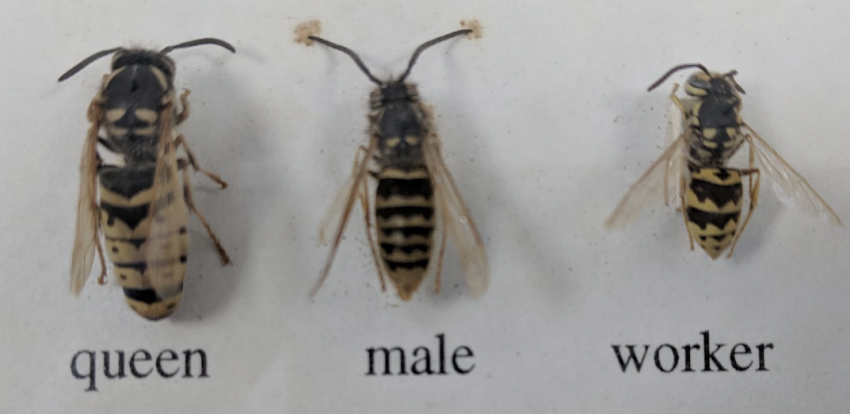
Queen Wasps are the reproductive female founders of social wasp colonies, including Yellowjackets, Paper Wasps, and Hornets. These queens survive the winter, emerge in spring, choose a nesting site, and begin building the first cells of a new nest. At first, a queen wasp works alone and is usually not aggressive unless handled or trapped. However, her survival can lead to a large summer or fall colony containing hundreds or thousands of workers, creating a serious stinging nuisance around homes, yards, parks, schools, farms, and commercial properties.
The conflict with Queen Wasps is seasonal. A single queen seen in spring may seem harmless, but that same queen can become the reproductive center of a large defensive colony by late summer. Once workers are present, the nest becomes much harder and more hazardous to control. This makes early identification, exclusion, and prevention especially valuable.
Taxonomy and Classification
Social wasps belong to the order Hymenoptera, the same order that includes ants, bees, and sawflies. Most common pest wasps belong to the family Vespidae.
- Order: Hymenoptera
- Family: Vespidae
- Common Groups: Yellowjackets, Paper Wasps, Hornets
- Colony Role: Reproductive female
- Life Cycle: Complete metamorphosis
Queen wasps are not a separate species. They are the reproductive caste within social wasp colonies. A queen begins life as a fertilized female produced late in the season. After mating, she shelters through winter in a protected place and emerges the following spring to begin a new colony.
Lifespan of a Queen Wasp
Most queen wasps live for about one year. They emerge as new queens in late summer or fall, mate, and then search for overwintering shelter. Common hibernation sites include bark crevices, wall voids, attics, sheds, leaf litter, hollow logs, and protected cracks around buildings.
In spring, the queen becomes active again and begins the difficult work of founding a nest. She must chew wood fibers to create paper pulp, build the first nest cells, lay eggs, forage for food, and feed the first larvae. Once the first workers mature, they take over foraging, nest expansion, and defense. The queen then remains mostly inside the nest and focuses on egg production.
By late summer or fall, the colony produces new queens and males. After mating, the old queen and most workers die as cold weather arrives, while fertilized young queens overwinter and continue the annual cycle.
Physical Description
Queen Wasps are usually larger than workers of the same species, although they share similar body colors and patterns. Size and markings vary depending on whether the insect is a yellowjacket, hornet, or paper wasp.
- Size: About 1/2 inch to 1 inch long, depending on species
- Body Shape: Narrow waist with strong wings and chewing mouthparts
- Color: Yellow and black, brown and yellow, or black and white
- Wings: Two pairs of wings folded over the body when resting
- Stinger: Functional stinger capable of repeated stings
In early spring, a queen may be seen flying slowly around eaves, soil holes, wall gaps, deck framing, sheds, wood piles, or dense shrubs while searching for a nest site. Seeing one large wasp repeatedly inspecting the same area can indicate that nest construction may soon begin.
Distribution and Habitat
Social wasps are found throughout much of the world and are especially common in temperate regions. Queen wasps choose nesting sites based on species behavior, shelter, temperature, and access to food.
- Yellowjacket Queens: Often choose ground burrows, wall voids, crawl spaces, attics, or landscape cavities.
- Paper Wasp Queens: Build open comb nests under eaves, porch ceilings, deck rails, shutters, and outdoor furniture.
- Hornet Queens: May build aerial paper nests in trees, shrubs, sheds, or structural overhangs.
- Bald-Faced Hornet Queens: Construct enclosed gray paper nests, often in trees or on buildings.
All social wasp nests begin small. A spring nest may contain only a few paper cells and one queen. By late summer, the same nest may contain a large worker population and become highly defensive.
Behavior and Conflict
Queen Wasps are most vulnerable in spring because they are alone. If the queen dies before workers mature, the colony fails. Once workers emerge, the queen no longer needs to leave the nest, and the colony becomes more difficult to eliminate.
Spring queens are often beneficial because they capture flies, caterpillars, and other insects to feed their larvae. The problem increases later in the season when worker wasps become numerous and may scavenge meat, sweets, fruit, soda, garbage, pet food, and picnic leftovers.
Major concerns include:
- Painful stings
- Multiple stings from defensive workers
- Allergic reactions in sensitive individuals
- Ground nest hazards in lawns and parks
- Nests inside wall voids or attics
- Aggressive late-season scavenging around food
- Risk to children, pets, workers, and outdoor customers
Queen Wasp vs. Queen Bee
Queen wasps and queen bees are both reproductive females, but their colony roles differ. A queen wasp usually founds a brand-new colony each spring. She builds the first nest cells, lays eggs, feeds the first larvae, and only later becomes a full-time egg layer once workers are available.
A queen honey bee typically lives inside an established hive and focuses almost entirely on egg laying. Honey bee colonies can survive winter as a group, while most temperate social wasp colonies die out each year except for newly mated queens.
Both queen bees and queen wasps have stingers, but they use them differently. Queen bees mainly use their stingers against rival queens. Queen wasps have functional stingers and can sting defensively, although spring queens are generally less aggressive than mature worker wasps guarding an established nest.
Management and Prevention
Queen Wasp management is most effective in spring before workers appear. Integrated pest management focuses on exclusion, early nest removal, sanitation, and careful treatment when nests create a safety hazard.
| Management Strategy | Description | Purpose |
|---|---|---|
| Spring Exclusion | Seal cracks, gaps, wall voids, and openings before queens begin nesting. | Prevents queens from establishing nests in structures. |
| Early Nest Removal | Remove small starter nests when safe and accessible. | Stops colonies before workers emerge. |
| Queen Traps | Use species-appropriate traps during spring where wasp pressure is high. | May reduce local nest establishment. |
| Sanitation | Keep garbage sealed and remove food attractants. | Reduces foraging activity near people. |
| Professional Control | Use trained pest professionals for large, hidden, or aggressive nests. | Reduces sting risk during treatment. |
Small exposed nests can sometimes be removed early in the season, but caution is important. Nests should not be disturbed if a person is allergic to stings, if the nest is in a wall void, or if many wasps are present. Large summer and fall nests are best handled by professionals.
Conservation and Research
Although social wasps are feared because of their stings, they are important predators of many pest insects. Queens and early workers help suppress flies, caterpillars, and other soft-bodied insects. Research focuses on improved species-specific traps, safer nest treatment methods, pheromone communication, and reducing conflicts between wasps and people in urban landscapes.
Conclusion
Queen Wasps are the reproductive founders of social wasp colonies. In spring, a single queen builds the first nest, lays eggs, and raises the first workers. If she survives, the colony may grow into a large, defensive nest by summer or fall. Early exclusion, monitoring, sanitation, and safe removal of small starter nests are the best ways to prevent later stinging problems. While wasps are beneficial predators in natural settings, colonies near homes, schools, businesses, and outdoor gathering areas may require careful management.