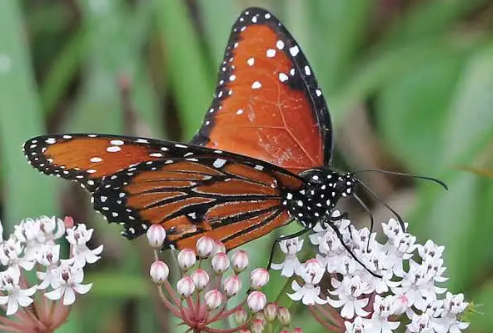
Queen Butterflies (Danaus gilippus) are striking orange-brown butterflies native to North America, Central America, South America, and the Caribbean. They are close relatives of the famous Monarch butterfly and share many of the same ecological traits, including a strong relationship with milkweed plants. Unlike many insects covered in pest guides, Queen Butterflies are not pests. They do not damage homes, contaminate food, sting people, or harm structures. Instead, they are beneficial pollinators and important members of native plant communities.
The larvae of Queen Butterflies feed on milkweed and related plants, while the adults visit flowers for nectar. Because the caterpillars consume plants containing defensive chemicals called cardiac glycosides, both the larvae and adults become distasteful or toxic to many predators. Their bold coloration acts as a warning signal, helping protect them from birds and other insect-eating animals.
Taxonomy and Classification
Queen Butterflies belong to the brush-footed butterfly family, Nymphalidae. They are members of the milkweed butterfly group, which includes Monarchs and Soldiers.
- Order: Lepidoptera
- Family: Nymphalidae
- Subfamily: Danainae
- Genus: Danaus
- Species: Danaus gilippus
- Common Name: Queen Butterfly
Queen Butterflies undergo complete metamorphosis with egg, larval, pupal, and adult stages. Each stage depends on suitable habitat, especially host plants for caterpillars and nectar sources for adults.
Physical Description
Adult Queen Butterflies are medium-sized butterflies with a wingspan of about 3 to 3.5 inches. They resemble Monarch butterflies but are generally darker, smaller, and lack the Monarch’s strong black wing veins.
- Wingspan: About 3 to 3.5 inches
- Wing Color: Deep orange-brown to chestnut
- Wing Margins: Black with white spots
- Body: Dark with white spotting
- Key Difference from Monarchs: Queen Butterflies lack bold black veins across the wings
The caterpillars are especially distinctive. Queen Butterfly larvae are banded with cream, black, and yellow and have three pairs of long, black, fleshy filaments. Monarch caterpillars have only two pairs of filaments, making this a useful identification feature.
- Larval Color: Cream, black, and yellow bands
- Larval Filaments: Three pairs of long black fleshy projections
- Host Plants: Milkweed and related plants
- Pupa: Smooth green chrysalis with metallic gold markings
Distribution and Habitat
Queen Butterflies are most common in warm regions. In the United States, they are frequently found in the South, Southwest, and parts of the Southeast, especially where milkweed is available.
Typical habitats include:
- Open fields
- Desert washes
- Meadows
- Roadsides
- Native plant gardens
- Pollinator gardens
- Riparian areas
- Pastures and grasslands
- Areas with milkweed host plants
Their range extends through Central America, South America, and the Caribbean. In dry regions, they are often concentrated near water sources, blooming plants, and milkweed patches.
Life Cycle
The Queen Butterfly life cycle begins when a female lays eggs on milkweed or related host plants. The eggs hatch into caterpillars that immediately begin feeding on leaves, flowers, and tender plant tissue.
As the caterpillar grows, it molts several times before forming a chrysalis. The chrysalis is usually green with metallic gold markings and may be attached to stems, leaves, fences, garden structures, or nearby vegetation. After development is complete, the adult butterfly emerges, expands its wings, and begins feeding on nectar.
In warm climates, Queen Butterflies may produce multiple generations each year. Their activity is closely tied to temperature, rainfall, host plant growth, and nectar availability.
Diet and Host Plants
Queen Butterfly caterpillars feed primarily on milkweed plants in the genus Asclepias and related genera. These plants contain milky sap and defensive chemicals that many insects cannot tolerate.
Common host plants include:
- Native milkweed species
- Antelope horn milkweed
- Desert milkweed
- Swamp milkweed
- Butterfly weed
- Other regionally appropriate milkweeds
Adult Queen Butterflies feed on flower nectar. They visit many blooming plants, including native wildflowers, lantana, mistflower, thistles, milkweed flowers, and other nectar-rich plants. In doing so, they help move pollen between flowers.
Behavior and Ecological Importance
Queen Butterflies are active during warm, sunny weather and are often seen gliding low over flowers. Males may patrol areas with host plants and nectar sources while searching for females.
Their bright coloration is a form of warning coloration known as aposematism. Predators that learn to avoid Queen Butterflies may also avoid other orange and black butterflies with similar warning patterns.
Queen Butterflies provide several ecological benefits:
- Pollination of native and ornamental flowers
- Support for milkweed-based ecosystems
- Food web value for specialized predators and parasitoids
- Educational value in butterfly gardens
- Indicator of healthy pollinator habitat
Their presence in a yard or landscape is generally a positive sign, especially when native milkweed and nectar plants are present.
Conflict and Pest Status
Queen Butterflies have no meaningful pest status. Their caterpillars may chew milkweed leaves, but this is a normal and beneficial part of their life cycle. Milkweed planted for butterflies is intended to support caterpillars, so feeding damage should be tolerated.
They do not:
- Damage buildings
- Infest stored food
- Bite or sting people
- Spread household disease
- Harm pets
- Cause structural damage
Management and Conservation
Management for Queen Butterflies should focus on conservation rather than control. The best way to support them is to provide host plants, nectar plants, and pesticide-free habitat.
| Conservation Strategy | Description | Benefit |
|---|---|---|
| Plant Native Milkweed | Use regionally appropriate milkweed species. | Provides host plants for caterpillars. |
| Add Nectar Flowers | Plant flowers that bloom across the season. | Supports adult butterflies. |
| Avoid Broad-Spectrum Insecticides | Do not spray butterfly habitat unnecessarily. | Protects eggs, larvae, pupae, and adults. |
| Preserve Open Habitat | Maintain sunny areas with native plants. | Creates breeding and feeding sites. |
| Reduce Weed-Free Sterility | Allow selected native host plants to remain where appropriate. | Improves habitat diversity. |
When planting milkweed, choose species suited to the local region. Native milkweeds are usually preferred because they support local butterfly populations and fit better into regional ecosystems.
Conservation and Research
Queen Butterflies are studied for their relationships with milkweed plants, chemical defenses, mimicry, migration, and responses to habitat change. They are part of a broader milkweed butterfly community that includes Monarchs and Soldiers.
Research also examines how climate, urbanization, pesticide exposure, and loss of native plants affect butterfly populations. Creating connected pollinator habitats can help support Queen Butterflies and many other beneficial insects.
Conclusion
Queen Butterflies are beautiful, beneficial pollinators closely related to Monarch butterflies. Their caterpillars feed on milkweed, while adults visit flowers for nectar and help support pollination in gardens, fields, deserts, and open habitats. They are not pests and should be protected rather than controlled. Planting native milkweed, providing nectar flowers, and avoiding unnecessary insecticides are the best ways to encourage Queen Butterflies in pollinator-friendly landscapes.