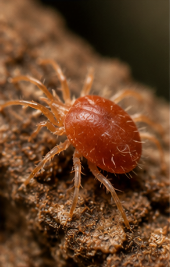
Poultry Mites are tiny parasitic mites that infest chickens, turkeys, ducks, game birds, and other domesticated fowl. They are external blood-feeding parasites that can cause severe irritation, feather damage, anemia, reduced egg production, poor weight gain, and even death in heavily infested birds. Poultry mites are a major concern in backyard coops, small farms, aviaries, and commercial poultry operations.
The term Poultry Mites usually refers to several mite species, but the two most important are the Northern Fowl Mite (Ornithonyssus sylviarum) and the Red Mite, also called the Chicken Mite (Dermanyssus gallinae). Both feed on blood, but they behave differently, which means control methods must be chosen carefully.
Overview
Poultry mites are not insects. They are arachnids, related to ticks and spiders. Their small size allows them to hide easily in feathers, cracks, nest boxes, roosts, and bedding. Infestations can build quickly, especially in crowded, warm, poorly cleaned, or poorly ventilated coops.
Birds affected by mites may appear restless, weak, pale, or irritated. Hens may stop using nesting boxes, lay fewer eggs, or produce smaller eggs. In severe cases, blood loss can cause anemia, especially in chicks, young birds, sick birds, or older hens.
Taxonomy and Classification
Poultry mites belong to the class Arachnida and the subclass Acari, which includes mites and ticks. They have piercing mouthparts designed to feed on blood and other body fluids.
- Northern Fowl Mite: Ornithonyssus sylviarum
- Red Mite or Chicken Mite: Dermanyssus gallinae
- Group: Parasitic mites
- Main Hosts: Chickens, turkeys, pigeons, wild birds, and other fowl
- Feeding Type: Blood-feeding external parasite
The biggest management difference is where the mites live. Northern Fowl Mites usually spend their entire life cycle on the bird. Red Mites feed on birds at night but hide in the coop during the day.
Identification
Poultry mites are very small, often around 1/32 inch long. They may be difficult to see without close inspection, but heavy infestations can appear as moving dark or reddish specks.
- Northern Fowl Mite: Usually dark gray, black, or red after feeding. These mites are commonly found around the vent, tail feathers, and lower body of the bird.
- Red Mite: Grayish or pale before feeding and red after taking a blood meal. These mites often hide in cracks, roost joints, nest boxes, and coop seams during the day.
- Eggs and Immature Stages: Tiny and difficult to see, often hidden on the bird or in protected coop areas.
- Infestation Signs: Dirty-looking feathers, crusting near the vent, scabs, feather loss, pale combs, reduced laying, and restless birds.
A simple way to check for red mites is to inspect the coop at night with a flashlight. Tiny red, brown, or black specks may be seen moving along roosts, walls, nest boxes, or eggs.
Distribution and Habitat
Poultry mites are found worldwide wherever birds are raised. They occur in backyard flocks, commercial poultry houses, barns, pigeon lofts, and aviaries. Wild birds may also carry mites and introduce them to domestic flocks.
The Northern Fowl Mite lives mainly on the host bird. It is often concentrated around the vent, tail, and lower abdomen. Because it remains on the bird, direct inspection of the flock is important.
The Red Mite is more closely tied to the coop environment. It hides during the day in cracks, crevices, roosting bars, nest boxes, wall joints, bedding, and equipment. At night, it crawls onto birds to feed.
Life Cycle
Poultry mites can reproduce quickly under favorable conditions. Their life cycle includes egg, larval, nymph, and adult stages. Warm temperatures, high host availability, and protected hiding places allow populations to increase rapidly.
Northern Fowl Mites complete most or all of their development on the bird. This allows infestations to spread directly between birds through contact, shared roosts, nests, or crowded housing.
Red Mites spend much of their life off the bird. They hide in the coop and feed mostly at night. Because they are not always on the bird, treating the bird alone often fails. The coop itself must be cleaned and treated.
Damage and Problems
Poultry mites harm birds through blood loss, irritation, stress, and disease risk. Even moderate infestations can affect flock health and productivity.
Irritation and Stress
Mite bites cause itching, discomfort, and restlessness. Birds may preen excessively, avoid roosting areas, or become agitated at night. Chronic irritation can reduce feeding, resting, and normal flock behavior.
Anemia
Heavy mite feeding removes blood from the bird. Signs of anemia include pale combs and wattles, weakness, lethargy, reduced activity, and poor condition. Young birds are especially vulnerable.
Reduced Egg Production
Infested hens may lay fewer eggs due to stress and blood loss. They may also avoid nesting boxes if mites are present. In commercial operations, this can create major economic losses.
Feather and Skin Damage
Mites can cause scabs, irritated skin, feather loss, and dirty or matted feathers around the vent and tail. Birds may look rough, thin, or unthrifty.
Human Exposure
Some poultry mites, especially Red Mites, may bite humans when they leave bird hosts or heavily infested coops. These bites can cause itching, irritation, and dermatitis, but the mites do not usually live permanently on humans.
Monitoring
Regular inspection is essential for early detection. Poultry mites are easier to manage when populations are still low.
- Check birds around the vent, tail, thighs, and under wings.
- Look for dark specks, scabs, crusting, feather loss, or dirty-looking feathers.
- Inspect roosts, nest boxes, cracks, and wall joints at night.
- Wipe roosts with a white cloth to check for red or brown mite streaks.
- Watch for reduced egg production, pale combs, or restless birds.
Management and Control
Control depends on correct identification. Treating only the coop may not control Northern Fowl Mites, while treating only the birds may not control Red Mites.
Northern Fowl Mite Control
Because Northern Fowl Mites live on the bird, treatment must focus directly on the flock. Approved poultry-safe dusts, sprays, or other mite treatments may be applied according to label directions. Special attention should be given to the vent, tail, and lower body where mites cluster.
All birds in the flock should be checked, not just visibly affected individuals. Repeated treatment may be needed because eggs and immature stages can continue developing.
Red Mite Control
Red Mite control must focus heavily on the coop environment. These mites hide in cracks and crevices during the day, so surface cleaning alone is rarely enough.
- Remove bedding, litter, and debris from the coop.
- Clean roosts, nest boxes, seams, and corners thoroughly.
- Disassemble removable roosting bars and nest components when possible.
- Treat cracks and crevices with an approved poultry-safe acaricide or residual product.
- Repeat treatments as needed according to label directions.
Sanitation
Good sanitation reduces mite hiding places and slows population growth. Replace bedding regularly, keep nest boxes clean, remove old feathers and debris, and avoid overcrowding. Clean coops are easier to inspect and treat.
Dust Bathing
Providing dry dust bathing areas helps birds maintain feather condition and may reduce some external parasites. Sand, dry soil, wood ash, and poultry-safe dusting materials may be used depending on flock needs and local recommendations.
Quarantine
New birds should be quarantined and inspected before joining the flock. Mites often spread when infested birds are introduced. Used cages, crates, nest boxes, and equipment should also be cleaned before use.
Prevention
Preventing poultry mites requires routine coop maintenance and flock inspection. Keep wild birds away from feed and housing areas when possible, repair cracks and gaps in coops, avoid overcrowding, and maintain dry bedding. Regularly inspect birds and roosting areas, especially during warm weather when mite populations can increase quickly.
In backyard flocks, early detection is the most practical prevention tool. A few mites can become a large infestation if they remain unnoticed for several weeks.
Conservation and Research
Poultry mites are important research subjects because they affect animal welfare, egg production, and poultry economics. Research focuses on acaricide resistance, safer control products, biological control, heat treatments, improved monitoring systems, and non-chemical management options.
As resistance to some chemical treatments becomes more common, integrated management is increasingly important. Combining sanitation, monitoring, physical cleaning, targeted treatments, and flock health management gives better long-term results than relying on one method alone.
Conclusion
Poultry Mites are serious blood-feeding parasites of chickens, turkeys, and other domestic birds. The two most important types are the Northern Fowl Mite, which lives mainly on the bird, and the Red Mite, which hides in the coop and feeds at night.
Infestations can cause irritation, anemia, stress, feather loss, reduced egg production, and death in severe cases. Successful control depends on proper identification, direct bird treatment when needed, thorough coop cleaning, crack-and-crevice treatment, sanitation, quarantine, and regular monitoring.