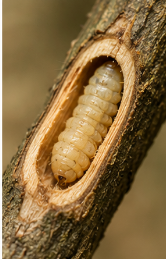
Peach Twig Borers (Anarsia lineatella) are small moths whose larvae damage peaches, nectarines, apricots, plums, almonds, and other stone fruit trees. The caterpillars attack both the vegetative growth and the fruit, making this species an important orchard pest throughout many warm and temperate fruit-growing regions.
Early in the season, Peach Twig Borer larvae tunnel into tender terminal shoots, causing them to wilt and die. This damage is commonly called flagging because the injured shoot hangs downward like a small flag. Later generations may enter developing fruit, where they feed beneath the skin or inside the flesh. Infested fruit may leak gum, rot prematurely, or become unsuitable for sale or consumption.
Overview
The Peach Twig Borer is a direct pest of stone fruits because the larvae damage the parts of the tree that determine both growth and crop value. Feeding in young shoots can reduce tree vigor, interfere with training and pruning, and cause excessive side branching. Feeding in fruit creates wounds, contamination, and decay that lower marketability.
The insect may complete several generations in one growing season. In warmer climates, three or four generations may occur, creating nearly continuous pressure from bloom through harvest. This makes regular monitoring essential. A treatment aimed only at the first generation may not protect fruit from later larval activity.
Although the adult moths are small and rarely noticed, their larvae can cause obvious damage. Wilted shoots, gum mixed with frass, and shallow or deep feeding wounds in fruit are important signs of infestation.
Taxonomy and Classification
Peach Twig Borers belong to the order Lepidoptera, which includes moths and butterflies, and the family Gelechiidae. This family contains many small moths whose larvae feed as leaf miners, seed feeders, stem borers, or fruit pests.
- Order: Lepidoptera
- Family: Gelechiidae
- Genus: Anarsia
- Species: Anarsia lineatella
- Common Name: Peach Twig Borer
Peach Twig Borers undergo complete metamorphosis. Their life cycle includes the egg, larval, pupal, and adult stages. The caterpillar is the destructive stage, while adult moths are responsible for mating and laying eggs.
Identification
Adult Peach Twig Borer moths are small and inconspicuous. Their wingspan is approximately 1/2 inch, and their grayish-brown coloration allows them to blend into tree bark.
- Adult Moth: Gray to brown with irregular darker scales and mottled markings.
- Body Shape: Slender, with narrow wings folded closely over the body when resting.
- Larvae: Dark brown to blackish caterpillars with alternating lighter and darker bands around the body segments.
- Larval Head: Dark brown or black and clearly defined.
- Larval Length: Mature larvae may reach approximately 1/2 inch long.
- Eggs: Small, oval, pale yellow to orange, and difficult to detect without close inspection.
- Pupae: Brown and commonly found in protected bark areas, leaves, or other sheltered locations.
The banded appearance of the larvae is one of their most useful identification features. However, because the caterpillars often remain concealed inside shoots or fruit, their feeding damage is usually easier to find than the insects themselves.
Distribution and Habitat
Peach Twig Borers occur in many major stone fruit-growing regions around the world. They are found in North America, Europe, Asia, North Africa, and other locations where suitable host trees are cultivated.
Their primary habitat includes commercial orchards, backyard fruit trees, nurseries, and ornamental landscapes containing peaches, nectarines, plums, apricots, almonds, or related trees. The insect is especially troublesome in warm regions where a long growing season permits several generations.
Larvae use bark cracks, pruning wounds, branch crotches, fruit spurs, and other protected tree structures as shelter. Young larvae overwinter in tiny silk-lined chambers called hibernacula, commonly located beneath thin bark or around branch crotches.
Host Plants
Peach Twig Borers are associated primarily with trees in the genus Prunus. Important hosts include:
- Peach trees
- Nectarine trees
- Apricot trees
- Plum trees
- Almond trees
- Prune trees
- Cherry trees in some areas
- Wild and ornamental stone fruit species
Peaches and nectarines are especially vulnerable because the larvae readily attack both tender shoots and developing fruit. Almonds may also experience significant twig and nut damage in heavily infested orchards.
Life Cycle
Peach Twig Borers usually overwinter as small larvae inside silk-lined hibernacula beneath bark scales, in branch crotches, or around pruning wounds. These larvae remain inactive during cold weather and begin feeding when temperatures rise.
In spring, overwintering larvae emerge around the bloom or petal-fall period. They move into tender shoots and bore directly into the growing tips. After completing their development, the larvae leave the damaged shoots and pupate in protected locations.
Adult moths emerge from the pupae, mate, and lay eggs on leaves, shoots, bark, or fruit. Newly hatched larvae from later generations may feed on shoots or enter developing fruit.
The number of generations varies by climate. Cooler regions may have two generations per year, while warmer orchard areas may support three or four. Generations may overlap, making it possible to find eggs, larvae, pupae, and adults at the same time.
Behavior and Feeding
Adult moths are mostly active after sunset and during the night. They rest on bark or foliage during daylight hours and are easily overlooked because of their small size and mottled coloration.
Larvae are active feeders but remain concealed for much of their development. Young larvae enter soft shoots, flower structures, or fruit by chewing small openings. They push frass and plant material from the entrance as they tunnel.
Early-season larvae typically attack terminal shoots. Later generations are more likely to feed on fruit, especially as shoots become tougher and fruit becomes more suitable.
Damage and Problems
Peach Twig Borer damage varies according to the generation, host plant, and crop stage. Both young trees and mature fruit-bearing trees may be affected.
Shoot Flagging
The most characteristic early-season injury is flagging. A larva enters a tender terminal shoot and tunnels downward through the center. The damaged shoot wilts, darkens, and bends over.
Close inspection may reveal an entry hole surrounded by gum or sawdust-like frass. The larva may leave one shoot and enter another, causing several wilted tips during its development.
Loss of Terminal Growth
Repeated destruction of growing tips can interfere with tree training and canopy development. Young trees may develop excessive side branches, crooked growth, or multiple leaders. This is particularly damaging in nurseries and newly established orchards.
Fruit Injury
Later-generation larvae may enter fruit near the stem, suture, calyx, or a point where two fruits touch. They may also enter through existing wounds or protected contact areas.
Feeding creates shallow grooves beneath the skin or deeper tunnels into the flesh. The entrance may release clear or amber-colored gum mixed with dark frass. Even limited feeding can make the fruit unmarketable.
Premature Fruit Drop
Heavily damaged fruit may stop developing and fall before harvest. Fruit that remains on the tree may soften, rot, or become contaminated with fungal and bacterial organisms entering through the feeding wound.
Harvest Contamination
Larvae may remain hidden inside harvested fruit. Their presence, along with frass and damaged flesh, creates serious quality concerns for fresh-market and processing fruit.
Monitoring
Monitoring should begin before overwintering larvae become active and continue through the entire growing season. Because several generations may occur, orchard managers should not assume that early control eliminates later risk.
Pheromone Traps
Pheromone traps attract and capture male Peach Twig Borer moths. The traps help determine when adult flights begin and how activity changes through the season.
The first consistent trap captures are often used as a biological starting point for degree-day calculations. These calculations help predict egg hatch and identify the best timing for treatments directed at young larvae.
Visual Inspection
- Look for wilted or flagged terminal shoots.
- Inspect shoots for gum and frass near entry holes.
- Check branch crotches and bark cracks for overwintering shelters.
- Examine fruit near stems and contact points.
- Open suspicious fruit to look for larvae and internal feeding.
Regular visual inspection is especially useful in backyard trees and small orchards where damaged shoots can be removed by hand.
Management and Control
Peach Twig Borer control is most effective when it follows an integrated pest management program. Monitoring, sanitation, dormant treatments, mating disruption, and carefully timed insecticides can work together to reduce damage.
Dormant and Delayed-Dormant Treatments
Overwintering larvae are vulnerable before they enter spring shoots. Horticultural oil or other labeled dormant treatments may be applied during the late dormant or delayed-dormant period to target larvae in their hibernacula.
Coverage must reach branch crotches, spurs, rough bark, and other protected locations. Applications should follow product labels and local extension recommendations to avoid injury to developing buds.
Pheromone Monitoring
Trap information should be used to time controls rather than relying only on calendar dates. Treatment is most effective when eggs are hatching and young larvae are exposed before entering shoots or fruit.
Mating Disruption
Mating disruption uses pheromone dispensers placed throughout an orchard. These dispensers release synthetic sex pheromone that interferes with the ability of male moths to locate females.
This method can reduce mating and egg production, especially in large, regularly shaped orchards with low to moderate pest populations. It is generally less effective in small isolated blocks surrounded by untreated host trees.
Pruning and Sanitation
- Prune out flagged shoots when larvae are still inside.
- Destroy removed shoots rather than leaving them beneath the tree.
- Remove mummified or damaged fruit.
- Clean up fallen fruit that may contain larvae.
- Maintain an open canopy to improve spray coverage and inspection.
Pruning is particularly useful in home orchards and young trees. It can directly remove larvae and reduce the number that survive to become adults.
Biological Control
Several parasitic wasps and predators attack Peach Twig Borer eggs or larvae. Birds, spiders, and generalist predatory insects may also consume exposed stages.
Microbial insecticides containing appropriate strains of Bacillus thuringiensis may help control young larvae before they enter plant tissue. These products must be consumed, so timing and thorough coverage are essential.
Chemical Control
Insecticides may be required in commercial orchards or where monitoring shows high moth activity. Treatments should target newly hatched larvae before they bore into shoots or fruit, where they become protected from sprays.
Degree-day models and pheromone trap counts can help determine the correct treatment window. Insecticides should be rotated among different modes of action to reduce the risk of resistance.
All applications must follow label instructions, including rates, harvest intervals, worker safety requirements, and protections for bees and other beneficial insects.
Prevention
Prevention begins with regular orchard sanitation and early-season inspection. Remove infested shoots, maintain healthy trees, monitor moth flights, and avoid leaving damaged fruit on or beneath trees.
Backyard growers should inspect new stone fruit trees before planting and avoid placing them next to heavily infested, unmanaged trees. Proper pruning and tree spacing make it easier to detect flagging and improve treatment coverage.
In commercial orchards, consistent records of trap captures, degree-day development, crop stage, treatment timing, and fruit damage can improve management from year to year.
Conservation and Research
Peach Twig Borers remain an important subject of orchard pest research. Scientists study pheromone-based monitoring, mating disruption, biological insecticides, resistant cultivars, and improved degree-day models.
Research also focuses on reducing broad-spectrum pesticide use while maintaining fruit quality. More selective treatments can protect parasitic wasps, predatory insects, pollinators, and other beneficial organisms that contribute to orchard health.
Conclusion
Peach Twig Borers (Anarsia lineatella) are destructive pests of peaches, nectarines, plums, apricots, almonds, and other stone fruits. Overwintering larvae attack tender shoots in spring, causing flagging and loss of terminal growth. Later generations may enter developing fruit, producing gum, frass, internal feeding, decay, and crop loss.
Because several generations may occur each year, management requires season-long attention. Pheromone traps, degree-day models, dormant treatments, pruning, sanitation, mating disruption, biological controls, and accurately timed insecticides provide the most effective long-term approach. Early action is important because larvae become difficult to reach once they enter shoots or fruit.