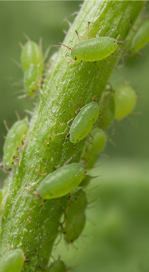
Pea Aphids (Acyrthosiphon pisum) are large, soft-bodied, sap-feeding insects that attack peas, alfalfa, clover, vetch, lentils, and other legume crops. They are among the most important aphid pests of legumes worldwide because they weaken plants directly and spread serious plant viruses that can reduce yield and crop quality.
Like other aphids, Pea Aphids feed with piercing-sucking mouthparts. These needle-like structures are inserted into plant tissue so the insect can remove sap from the phloem. Heavy infestations can cause yellowing, wilting, stunted growth, reduced pod production, and sticky honeydew buildup on leaves and stems.
Overview
Pea Aphids are especially important in cool-season legume crops. They are often most active during spring and early summer, when tender new growth is abundant and temperatures are favorable. Because they reproduce quickly, small colonies can become heavy infestations in a short period of time.
These aphids are not just a problem because they remove plant sap. They are also efficient vectors of plant viruses, including diseases such as Pea Enation Mosaic Virus and Bean Yellow Mosaic Virus. Virus-infected plants may become distorted, mottled, stunted, and unproductive. Once a plant is infected, it generally cannot be cured, making prevention and early management essential.
Taxonomy and Classification
Pea Aphids belong to the order Hemiptera, the group that includes true bugs and many other piercing-sucking insects. They are members of the family Aphididae, which includes thousands of aphid species that feed on plants.
- Order: Hemiptera
- Family: Aphididae
- Genus: Acyrthosiphon
- Species: Acyrthosiphon pisum
- Common Name: Pea Aphid
Pea Aphids undergo incomplete metamorphosis. Their young, called nymphs, resemble smaller versions of adults. They molt several times before becoming mature aphids. Unlike insects with complete metamorphosis, aphids do not pass through a caterpillar-like larval stage or a pupal stage.
Identification
Pea Aphids are relatively large compared with many other aphid species. Adults are usually about 1/8 inch long, with slender, pear-shaped bodies. Their color is most often bright green, but pink or reddish forms may also occur.
- Body Shape: Soft-bodied, pear-shaped, and somewhat elongated.
- Color: Usually light green to bright green, though some individuals may be pink, red, or pale yellow-green.
- Cornicles: Two tube-like projections extend from the rear of the abdomen. These structures are called cornicles and are common aphid identification features.
- Legs and Antennae: Pea Aphids have long legs and long antennae, giving them a more delicate appearance than many smaller aphids.
- Winged Forms: Winged adults develop when colonies become crowded, host plants decline, or migration is needed.
Colonies are often found on tender stems, growing tips, flower buds, and the undersides of leaves. Infested plants may appear sticky from honeydew, and ants may be present feeding on the sugary waste.
Distribution and Habitat
Pea Aphids are widely distributed and occur in many regions where legumes are grown. They are common in agricultural fields, forage systems, home gardens, pasture plantings, and weedy areas that contain suitable host plants.
Their main hosts are plants in the family Fabaceae, also known as the legume family. Important hosts include peas, alfalfa, clover, vetch, lentils, fava beans, and related plants. They prefer tender, actively growing plant tissue where sap is easy to access.
In crop fields, Pea Aphids are often found on upper stems and terminal growth. In alfalfa and clover, they may gather on stems, new shoots, and developing flower structures. In garden peas, they may cluster near the tips of vines and around developing pods.
Life Cycle
The Pea Aphid has a complex life cycle that allows it to increase rapidly under favorable conditions. During much of the growing season, females reproduce without mating through a process called parthenogenesis. Instead of laying eggs, they give birth to live female nymphs that are already capable of developing quickly.
This reproductive strategy allows populations to build explosively. A single aphid can produce many offspring, and those offspring may begin reproducing soon after reaching maturity. Under cool to moderate temperatures and abundant plant growth, populations can multiply quickly.
Wingless females dominate when food is plentiful and colonies are stable. Winged forms appear when colonies become crowded, plant quality declines, or environmental conditions encourage dispersal. These winged aphids fly to new host plants and establish additional colonies.
In some climates, Pea Aphids overwinter as eggs on perennial legumes or related host plants. In milder areas, some populations may survive as active aphids on suitable hosts.
Damage and Problems
Pea Aphids damage plants in several ways. The seriousness of the infestation depends on aphid density, plant growth stage, weather, natural enemy activity, and whether plant viruses are present.
Sap Removal
Pea Aphids feed from the phloem, removing nutrient-rich sap from the plant. Low numbers may cause little visible injury, but heavy feeding can reduce vigor, slow growth, and weaken plants. Seedlings and young plants are especially vulnerable.
Stunting and Wilting
Large aphid colonies can cause leaves and stems to wilt or appear distorted. Infested plants may remain smaller than healthy plants and may produce fewer flowers, pods, or seeds.
Reduced Yield
In peas and other legume crops, aphid feeding can reduce pod set, seed fill, and overall yield. In forage crops such as alfalfa and clover, heavy infestations can reduce plant growth and forage quality.
Honeydew and Sooty Mold
Because phloem sap contains more sugar than aphids can use, Pea Aphids excrete excess sugars as honeydew. This sticky material coats leaves and stems and can encourage the growth of black sooty mold. Sooty mold can reduce photosynthesis and lower the market quality of produce or forage.
Virus Transmission
The most serious damage often comes from virus transmission. Pea Aphids can spread plant viruses during brief feeding probes. A winged aphid may move from an infected plant to a healthy plant and transmit disease before a grower notices a major aphid population.
Virus-infected plants may show mottling, leaf distortion, yellowing, enations, stunting, poor pod development, and reduced productivity. Since many plant viruses cannot be cured after infection, reducing aphid pressure early is important.
Monitoring
Regular monitoring is essential because Pea Aphid populations can grow quickly. In field crops, sweep-net sampling is commonly used to estimate aphid numbers. In gardens and small plantings, visual inspection is usually sufficient.
- Inspect tender shoots, growing tips, and undersides of leaves.
- Look for clusters of green or pink aphids on stems and buds.
- Check for sticky honeydew, ants, cast skins, and sooty mold.
- Watch for winged aphids, which may indicate dispersal from nearby hosts.
- Record aphid numbers and compare them with local action thresholds when available.
Management and Control
Pea Aphid management works best when it combines monitoring, natural enemy conservation, resistant varieties, and selective treatments when needed. Broad, unnecessary insecticide use can kill beneficial insects and sometimes allow aphid populations to rebound.
Biological Control
Natural enemies are often the most important defense against Pea Aphids. Lady beetles, lacewing larvae, hover fly larvae, damsel bugs, minute pirate bugs, and spiders feed on aphids. Parasitic wasps, especially species such as Aphidius ervi, lay eggs inside aphids. The parasitized aphids become swollen, tan-colored “mummies” before the adult wasps emerge.
Protecting these beneficial insects is critical. Avoid unnecessary broad-spectrum sprays, maintain flowering plants that provide nectar and pollen, and tolerate low aphid populations when natural enemies are active.
Cultural Control
- Remove volunteer legumes and weeds that may host aphids or viruses.
- Avoid excessive nitrogen fertilization, which encourages tender growth attractive to aphids.
- Plant at recommended times to avoid peak aphid pressure when possible.
- Use healthy seed and disease-free transplants.
- Rotate crops to reduce pest and disease buildup.
Host Plant Resistance
Resistant or tolerant varieties can help reduce aphid injury and virus-related losses. In forage and field systems, selecting adapted cultivars with pest resistance is one of the most practical long-term management tools.
Mechanical and Low-Impact Control
In small gardens, aphids can often be knocked from plants with a strong stream of water. Heavily infested shoots may be pruned and destroyed. Insecticidal soaps and horticultural oils may help suppress colonies when coverage is thorough, especially on leaf undersides and tender growth.
Chemical Control
When aphid numbers exceed local action thresholds or virus risk is high, insecticides may be needed. Selective products are preferred because they are less disruptive to beneficial insects. Always follow label directions, observe pre-harvest intervals, and consider pollinator safety when treating blooming crops.
Prevention
Prevention begins before aphids become abundant. Inspect young crops frequently, control weeds, encourage beneficial insects, and plant resistant varieties when available. In gardens, separate new legume plantings from older, infested plants when possible. Removing virus-infected plants early may help reduce disease spread.
Because winged aphids can arrive from nearby fields, pastures, or weedy areas, complete prevention is difficult. However, healthy plants, regular scouting, and early intervention can greatly reduce damage.
Conservation and Research
Pea Aphids are important in agricultural research because of their rapid reproduction, virus-vector role, and interactions with host plants and natural enemies. Scientists study their genetics, symbiotic bacteria, insecticide resistance, virus transmission, and biological control.
Research on parasitic wasps, predator conservation, resistant legume varieties, and landscape-level pest movement continues to improve Pea Aphid management. Because these aphids are both crop pests and useful research organisms, they remain one of the best-studied aphid species.
Conclusion
Pea Aphids (Acyrthosiphon pisum) are major pests of peas, alfalfa, clover, vetch, and other legumes. Their sap-feeding weakens plants, reduces yield, produces sticky honeydew, and encourages sooty mold. Their greatest threat, however, is their ability to spread destructive plant viruses.
Effective management depends on regular monitoring, conservation of natural enemies, weed control, resistant varieties, and carefully timed treatments when necessary. Because Pea Aphids reproduce rapidly, early detection is the key to preventing small colonies from becoming damaging infestations.