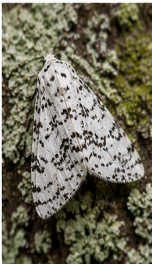
Packard’s lichen moth (Crambidia packardii) is a species of moth in the family Erebidae, subfamily Arctiinae. It is a small, inconspicuous species native to North America and is closely associated with lichens, which serve as the primary food source for its larvae. The species is named in honor of American entomologist Alpheus Spring Packard.
Unlike many moths that feed on higher plants, Packard’s lichen moth plays a specialized ecological role by consuming lichen growth on trees and rocks. It is harmless to humans, pets, crops, and structures and is not considered a household or agricultural pest.
Taxonomy and Classification
Packard’s lichen moth belongs to the order Lepidoptera, which includes moths and butterflies. Within this order, it is classified in the family Erebidae, a large group that includes tiger moths, tussock moths, and other lichen-feeding species.
The genus Crambidia contains several visually similar lichen moths. Species identification often relies on wing pattern, coloration, and geographic range rather than behavior alone.
Physical Description
Adult Packard’s lichen moths are small, with a wingspan typically ranging from 20 to 28 millimeters. The forewings are pale gray to off-white with faint darker mottling, allowing the moth to blend into lichen-covered bark and stone surfaces.
The hindwings are lighter in color and lack strong markings. The slender body and muted coloration provide camouflage when the moth is at rest. Antennae are thin and thread-like, a common feature among many nocturnal moths.
The larvae are small caterpillars with elongated bodies and subdued coloring that closely matches the lichens they feed on. This cryptic appearance helps protect them from predators.
Distribution
Packard’s lichen moth is found throughout much of eastern and central North America. Its range extends from southern Canada through the eastern United States and into parts of the Midwest, where suitable lichen-rich environments are present.
The species is uncommon or absent in regions with poor air quality or limited lichen growth, as its survival depends on the availability of its specialized food source.
Habitat
This species inhabits forests, woodlands, and shaded natural areas where lichens grow on tree trunks, branches, rocks, and fallen logs. Both deciduous and mixed forests may support populations, provided moisture levels and air quality are sufficient for lichen development.
Because lichens are sensitive to pollution, Packard’s lichen moth is more commonly found in undisturbed or rural habitats and is less frequent in heavily urbanized environments.
Life Cycle and Behavior
The life cycle follows the typical moth stages of egg, larva, pupa, and adult. Eggs are laid on or near lichen-covered surfaces, ensuring larvae have immediate access to food upon hatching.
Larvae feed by scraping lichens from bark and rock surfaces. After completing development, they pupate in sheltered locations such as bark crevices or leaf litter.
Adults are nocturnal and are occasionally attracted to outdoor lighting, similar to many other nocturnal insects. Adults focus primarily on reproduction and do not damage plants or structures.
Ecological Importance
Packard’s lichen moth contributes to forest ecosystems by helping regulate lichen growth and recycling nutrients. Its larvae and adults serve as prey for birds, spiders, and other beneficial insects and predators.
The presence of lichen moths may also indicate relatively clean air, as both lichens and their specialist feeders are sensitive to environmental pollution.
Relationship to Humans
Packard’s lichen moth does not infest homes, damage wood, or contaminate stored products. It is sometimes mistaken for a household pest due to its attraction to lights, but it poses no risk and does not require pest control services.