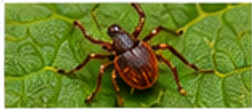
Nymphal Ticks are ticks in the second active stage of their life cycle, occurring between the six-legged larval stage and the adult stage. Although a nymph is not a separate species of tick, this developmental stage is especially important from a public health perspective. Nymphs of several tick species can transmit disease-causing organisms to people and animals, and their extremely small size makes them particularly difficult to detect while attached to the skin.
In the United States, the nymphal stage of the Blacklegged Tick (Ixodes scapularis) is particularly important because it can transmit the bacterium associated with Lyme disease. Nymphs of other species, including the Lone Star Tick (Amblyomma americanum), may also transmit pathogens. Preventing bites, detecting attached ticks quickly, and properly removing them are therefore important parts of reducing tick-related health risks.
Taxonomy and Classification
Ticks are arachnids belonging to the subclass Acari, which also contains mites. Hard ticks belong to the family Ixodidae and include many of the species responsible for transmitting pathogens to humans, pets, livestock, and wildlife.
The typical hard tick life cycle consists of four stages: egg, larva, nymph, and adult. After hatching, the six-legged larva obtains a blood meal and eventually molts into an eight-legged nymph. After another blood meal, the nymph molts into an adult.
This life cycle is important to disease transmission because a larval tick may acquire certain pathogens while feeding on an infected host. After molting, the resulting nymph may then be capable of transmitting those pathogens during its next blood meal.
Physical Description
Nymphal ticks are extremely small. Depending on species and whether they have begun feeding, they may measure approximately 0.5 to 2 millimeters. An unfed blacklegged tick nymph is frequently compared in size to a poppy seed.
- Size: Considerably smaller than most adult ticks and easily overlooked during a casual inspection.
- Legs: Nymphs have eight legs, while newly hatched tick larvae have only six.
- Color: Depending on species, they may appear reddish-brown, dark brown, or nearly black.
- Body: Unfed nymphs are relatively flat but become larger and more rounded as they consume blood.
- Key Identification Issue: Their tiny size makes accurate species identification difficult without magnification.
Distribution and Habitat
Nymphal ticks occur wherever the corresponding adult tick species are established. Suitable environments commonly include woodlands, forest edges, brushy vegetation, tall grasses, leaf litter, shaded yards, and areas frequented by wildlife.
Residential risk can be particularly noticeable where maintained lawns border wooded or brush-covered areas. Leaf litter and shaded vegetation provide humid microhabitats that help ticks avoid dehydration, while mice, deer, birds, and other wildlife provide potential hosts.
Seasonal Activity
Seasonal activity varies by tick species and geographic region. In many parts of the northeastern and upper midwestern United States, blacklegged tick nymphs are particularly active during late spring and summer. This period also coincides with increased hiking, gardening, camping, yard work, and other outdoor activities.
Ticks do not jump or fly onto people. Instead, nymphs commonly use a behavior known as questing. A tick positions itself on vegetation or other surfaces with its front legs extended and attaches when a suitable host brushes past.
Nymphal Ticks and Disease Transmission
The major concern associated with nymphal ticks is their ability to transmit tick-borne pathogens. Their small size increases the possibility that an attached tick will remain unnoticed while feeding.
- Blacklegged Ticks: Nymphs may transmit pathogens responsible for Lyme disease, anaplasmosis, babesiosis, and other infections.
- Lone Star Ticks: Nymphs may bite humans and are associated with pathogens responsible for diseases such as ehrlichiosis.
- Other Species: Disease risk depends heavily on tick species, geographic location, pathogen prevalence, and host exposure.
Transmission time is not identical for every tick-borne pathogen. Although the risk of Lyme disease transmission generally increases the longer an infected blacklegged tick remains attached, other pathogens can have different transmission dynamics. For this reason, every attached tick should be removed as soon as it is discovered rather than waiting for a particular attachment-time threshold.
Where to Check for Nymphal Ticks
After outdoor activity in tick habitat, carefully inspect the entire body. Because nymphs are so small, they can resemble a freckle, speck of dirt, or tiny scab.
- Around and behind the ears
- Along the hairline and scalp
- Under the arms
- Around the waist
- Behind the knees
- Between the legs and around the groin
- Inside and around the belly button
Children and pets should also be inspected after spending time in wooded, grassy, or brushy areas.
Removing an Attached Tick
If a nymphal tick is attached, remove it promptly using fine-tipped tweezers. Grasp the tick as close to the skin’s surface as possible and pull upward using steady, even pressure. Avoid twisting, crushing, or squeezing the tick’s body unnecessarily.
After removal, clean the bite area and hands. Methods such as burning the tick, coating it with petroleum jelly, or attempting to make it detach using household chemicals are not recommended. Anyone who develops concerning symptoms following a tick bite should contact an appropriate healthcare professional.
Management and Prevention
Reducing encounters with nymphal ticks requires a combination of personal protection, regular inspections, and habitat management.
- Repellents: Use an appropriate EPA-registered insect repellent according to label directions when entering tick habitat.
- Permethrin: Permethrin-treated clothing and gear can provide additional protection. Permethrin products intended for clothing should be used according to their labels and should not be applied directly to skin unless specifically labeled for that purpose.
- Protective Clothing: Long pants, closed shoes, and light-colored clothing can make crawling ticks easier to notice.
- Tick Checks: Conduct a detailed inspection after returning indoors.
- Clothing: Check clothing and use appropriate heat-drying procedures to kill ticks that may have been carried indoors.
- Pets: Use veterinarian-recommended tick prevention and regularly inspect pets that spend time outdoors.
Reducing Nymphal Ticks Around the Yard
Landscape modification can make residential areas less favorable to ticks. Remove excessive leaf litter, brush, weeds, and dense vegetation around frequently used areas. Keep grass maintained and discourage unnecessary wildlife activity immediately around patios, playgrounds, and other outdoor living spaces.
A dry barrier of gravel, wood chips, or similar landscaping material between recreational lawn areas and adjacent woodland can help create separation from favorable tick habitat. Play equipment and seating areas can also be positioned away from dense vegetation and forest edges.
Conservation and Research
Nymphal ticks are an important focus of public health and vector research. Scientists monitor changes in tick distribution, seasonal activity, pathogen prevalence, wildlife hosts, and environmental conditions that influence human exposure. Research also examines vaccines, host-targeted control methods, biological controls, repellents, and landscape strategies designed to reduce encounters with infected ticks.
Because nymphal ticks can be extremely difficult to see, prevention and prompt detection remain especially important. Repellent use, protective clothing, careful tick checks, appropriate pet protection, and thoughtful landscape management can substantially reduce the chances of an unnoticed nymph remaining attached long enough to create a significant health concern.