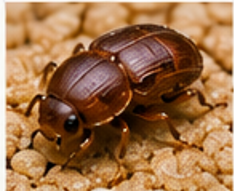
Nutmeg Beetles is an informal name sometimes applied to small beetles associated with stored spices, grains, animal feed, and other dried products. The term may also be used for darkling beetles in the genus Alphitobius, particularly species associated with stored feed and poultry facilities. One of the best-known members of this group is the Lesser Mealworm (Alphitobius diaperinus), also called the darkling beetle or litter beetle. These insects can become important stored product, agricultural, and sanitation pests when large populations develop in warm, humid environments containing grain, spilled feed, manure, or decomposing organic material.
Although the name suggests an association specifically with nutmeg, infestations are not necessarily restricted to the spice. Beetles encountered in stored nutmeg or other spices should be identified carefully because several different stored-product beetles can attack dried plant materials. When Alphitobius species are involved, the greatest problems generally occur in poultry houses, livestock facilities, feed storage areas, and similar agricultural environments.
Taxonomy and Classification
Alphitobius beetles belong to the order Coleoptera and family Tenebrionidae, commonly known as darkling beetles. They undergo complete metamorphosis through four stages: egg, larva, pupa, and adult.
The Lesser Mealworm is particularly well adapted to animal-production environments. Adults and larvae can survive among poultry litter, manure, spilled grain, feathers, dead insects, moldy feed, and other organic material. Warm temperatures generated inside commercial poultry houses can allow populations to remain active for extended periods.
Physical Description
Adult Nutmeg Beetles associated with Alphitobius are generally small, measuring approximately 1/4 to 3/8 inch long.
- Adults: Usually shiny dark brown to nearly black, with an oval, elongated, and somewhat flattened body.
- Larvae: Slender, cylindrical, yellowish-brown to dark brown and resembling miniature mealworms. Older larvae become tougher and darker before pupation.
- Pupae: Initially pale or whitish and usually concealed in protected locations.
- Infestation Signs: Live beetles, larvae, shed skins, dead insects, and frass may accumulate in feed, bedding, manure, cracks, and other protected areas.
Life Cycle
Female beetles deposit eggs in suitable organic material, including poultry litter, manure, spoiled grain, and feed residues. After hatching, the larvae feed and pass through multiple developmental stages before seeking a protected location in which to pupate.
This movement before pupation creates one of the most expensive problems associated with Lesser Mealworms. Mature larvae may leave the litter and tunnel into insulation or other relatively soft building materials. After pupation, adults emerge and return to areas containing food and organic debris.
Development is strongly influenced by temperature, moisture, and food availability. Warm poultry houses containing deep litter can provide exceptionally favorable conditions, allowing several generations and extremely large populations to develop.
Distribution and Habitat
Darkling beetles associated with stored products and animal facilities have a broad distribution and can occur in many parts of the world. Modern agricultural environments have helped some species spread far beyond their original geographic ranges.
Common infestation sites include poultry houses, livestock barns, feed mills, grain storage facilities, warehouses, food-processing areas, and feed storage rooms. Within poultry buildings, beetles frequently concentrate beneath feeders and watering equipment, along walls, under litter, and around areas where moisture and organic debris accumulate.
Stored Product and Feed Damage
Nutmeg Beetles can contaminate stored materials rather than simply consuming them. Adults and larvae introduce frass, shed skins, dead insects, and other debris into feed and stored products. Large populations can therefore reduce product quality even when the actual amount consumed is relatively small.
In household situations, finding small beetles in spices, grain, cereal, flour, pet food, or other dry products warrants an inspection of nearby packages. However, because many stored-product beetles look similar, identification should not automatically be based on the product in which the insect was discovered.
Structural Damage
Structural damage is especially important in poultry operations. Mature larvae searching for protected pupation sites can tunnel into foam insulation and other vulnerable building materials. Repeated infestations may produce extensive galleries and reduce the insulating performance of walls and ceilings.
Damaged insulation can increase heating and cooling expenses, while repairs may require substantial labor and replacement costs. Preventing larvae from reaching vulnerable insulation is therefore an important component of long-term management.
Disease and Biosecurity Concerns
Lesser Mealworms are also important because they can act as mechanical carriers or reservoirs of poultry pathogens. Beetles moving through manure, litter, carcasses, contaminated feed, and other materials may contribute to the persistence or movement of microorganisms within poultry facilities.
Salmonella and other poultry-associated pathogens have been investigated in connection with darkling beetle populations. Chickens may also consume beetles and larvae from litter, potentially providing another route by which contaminated insects interact with the flock. Consequently, heavy beetle infestations should be considered a biosecurity issue as well as a conventional insect problem.
Management and Prevention
Successful Nutmeg Beetle management requires an Integrated Pest Management (IPM) program addressing sanitation, moisture, building maintenance, monitoring, and appropriately timed treatments.
- Remove Spilled Feed: Regularly clean areas beneath feeders and around feed storage equipment.
- Manage Litter: Prevent excessive accumulation of manure and wet organic material where larvae can develop.
- Control Moisture: Repair leaking drinkers, pipes, and other water sources that create favorable beetle habitat.
- Store Feed Securely: Keep grain and animal feed in tightly sealed, pest-resistant containers or storage systems.
- Protect Insulation: Seal exposed insulation and repair damaged areas that provide pupation sites.
- Clean Between Flocks: When practical, remove accumulated organic debris and target protected beetle harborages during periods when poultry are absent.
Chemical and Biological Control
Commercial livestock facilities may use appropriately registered residual insecticides or insect growth regulators (IGRs) as part of a broader management program. Treatments are often most effective when applied strategically between production cycles and directed toward cracks, floor-wall junctions, structural harborages, and other areas where beetles accumulate.
Repeated reliance on the same insecticide can encourage resistance, making rotation of approved control strategies and continued sanitation particularly important. Chemical treatment alone rarely provides permanent control when large quantities of suitable food, litter, and moisture remain available.
Home Pantry Infestations
If beetles are discovered in nutmeg, spices, flour, grain, or another household product, the affected package should be isolated and discarded if clearly infested. Nearby dry foods should also be inspected. Shelves can then be vacuumed thoroughly, paying particular attention to corners, cracks, and spilled food.
Susceptible foods should be stored in airtight glass, metal, or durable plastic containers. Routine insecticide spraying inside food-storage cabinets is generally unnecessary when the infestation source has been located and removed.
Conservation and Research
Research involving Alphitobius species focuses heavily on poultry biosecurity, insecticide resistance, structural protection, biological control, and improved IPM programs. Researchers continue to investigate how beetles persist between poultry flocks and how their populations influence pathogen survival within animal-production environments.
For agricultural operations, successful Nutmeg Beetle management ultimately depends on treating the entire environment rather than simply killing visible adults. Reducing food, moisture, breeding material, and protected pupation sites provides the strongest foundation for preventing recurring populations.