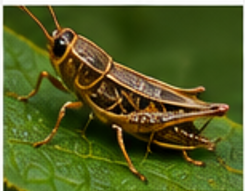
Noxious grasshoppers refer to species that cause significant agricultural damage during outbreaks. These insects can consume large amounts of vegetation, impacting crops and natural ecosystems.
Th3e Swarming Scourge: Noxious Grasshoppers
In the United States, “Noxious Grasshopper” typically refers to several species of the Melanoplus genus, most notably the Differential Grasshopper (Melanoplus differentialis) and the Migratory Grasshopper (Melanoplus sanguinipes). Unlike common field grasshoppers, these “noxious” species are characterized by their ability to reach explosive population densities, leading to the devastating “locust-like” swarms that have plagued American agriculture since the pioneer era.
Identification: The “Chevron” Marker
While there are hundreds of grasshopper species in the U.S., the truly noxious ones share a few key physical traits that signal a potential outbreak. For the Differential Grasshopper—one of the largest and most destructive in the Midwest and West—identification is quite specific:
- The Chevron Pattern: The large hind “jumping” legs feature a distinct series of black, V-shaped marks (chevrons) resembling a military rank insignia.
- Size and Color: Adults are robust, typically 1.5 to 2 inches long, and range in color from brownish-yellow to olive green.
- The Migratory Spur: Many noxious species possess a small “spur” or spine between their front legs (the prosternal spine), a feature used by entomologists to categorize the most damaging groups.
The “Outbreak” Cycle
Noxious grasshoppers are highly dependent on weather patterns. In the U.S. Great Plains and Southwest, a specific sequence of years often triggers a plague:
- The Drought Connection: Multiple years of drought followed by a warm, dry spring allow for maximum egg survival. Grasshoppers lay their eggs in “pods” 1–2 inches below the soil surface in late summer.
- Nymphal Competition: As the ground warms, thousands of “nymphs” (wingless juveniles) emerge. If local weed sources dry up, they move en masse into irrigated crops and gardens.
- The Gregarious Shift: While North America’s true “Rocky Mountain Locust” is extinct, these noxious species still exhibit “gregarious” behavior, where high density triggers increased activity and a relentless drive to find new food sources.
U.S. Agricultural and Garden Impact
From a Pestipedia.com perspective, these insects are “generalist shredders.” They don’t just eat leaves; they have “mandibles of steel” that can destroy virtually any plant material:
- Crop Stripping: They are primary pests of corn, soybeans, and small grains. They often start at the edge of a field and “mow” their way inward.
- Garden Havoc: In residential areas, they are famous for eating the “un-eatable,” including iris leaves, onion tops, and even the bark off young fruit trees when green foliage is scarce.
- Defoliation Speed: A heavy infestation can completely defoliate a mature vegetable garden in less than 48 hours.
Damage
Rapid defoliation and crop loss.
Control
Early monitoring and biological controls.
Related Articles