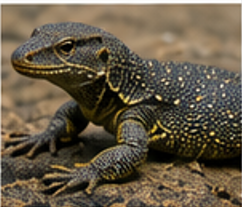
Nile monitor lizards are large, powerful reptiles native to Africa that have become invasive in some regions, particularly in parts of the United States. These lizards are opportunistic predators and can pose a threat to native wildlife, including birds, mammals, and reptiles.
While not traditional “pests” in the insect sense, their ecological impact places them in pest classifications in areas where they are invasive.
The African Invader: Nile Monitor Lizards
The Nile Monitor (Varanus niloticus) is Africa’s largest lizard and has become a formidable invasive species in the United States, particularly in Florida. Originally introduced through the exotic pet trade, these highly intelligent, semi-aquatic reptiles have established breeding populations in several counties. Reaching lengths of up to 7 feet, they are apex predators that threaten native wildlife, including burrowing owls, gopher tortoises, and the eggs of American alligators.
Identification: The “Yellow-Ringed” Giant
Nile Monitors are often confused with the native (but much smaller) iguanas or the invasive Argentine Black and White Tegu. Key physical characteristics include:
- Coloration: They are grayish-brown to black with prominent yellowish bands or “ocelli” (eye-like spots) running down their backs and tails.
- The Forked Tongue: Like snakes, they have a deeply forked, blue-flickering tongue used to “sniff” the air for prey or predators.
- Structural Weapons: They possess incredibly sharp, curved claws for climbing and digging, along with a powerful, laterally compressed tail used for swimming and as a whip-like defense.
A Generalist Predator
In the U.S. ecosystem, the Nile Monitor is a biological “vacuum.” They are opportunistic feeders with a diet that shifts as they grow:
- Aquatic Foraging: They are excellent swimmers and frequently hunt for fish, frogs, and crustaceans in canals and mangroves.
- Nest Raiding: They have a specialized “nose” for finding buried eggs. In Florida, they are a primary threat to the nests of sea turtles and crocodiles.
- Urban Scavenging: They are not shy around residential areas and will readily consume pet food left outdoors, small domestic cats, or poultry.
U.S. Management and Reporting
Because Nile Monitors are listed as Prohibited Species in states like Florida, it is illegal to own them as pets without a permit. Management focuses on rapid response and removal:
- Live Trapping: Wildlife officials use large Havahart-style traps baited with fish or eggs to capture individuals in infested canals.
- Early Detection: Public reporting is the most effective tool for stopping the spread into new watersheds. Residents are encouraged to take a photo from a safe distance and note the exact location.
- Safe Distance: These lizards are defensive and can deliver a painful bite or a powerful tail-swipe. They should never be approached or handled by untrained individuals.
Identification
Large lizards with muscular bodies, long tails, and patterned scales.
Impact
Predation on native species and disruption of ecosystems.
Control
Professional wildlife management is required for removal.