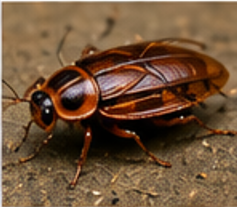
Night-stalking cockroaches are a general term for cockroach species that are primarily active after dark. These pests are notorious for invading homes in search of food, water, and shelter. While often unseen during the day, their nighttime activity can quickly lead to infestations if left unchecked.
These cockroaches are not only a nuisance but also a health concern, as they can contaminate food and surfaces with bacteria and allergens.
The Shadow Scavenger: Night-Stalking Cockroaches
The term “Night-Stalking Cockroach” is a common descriptive name for several species of peridomestic cockroaches found across the United States, most notably the Oriental Cockroach (Blatta orientalis) and the Smokybrown Cockroach. Unlike the German Cockroach, which lives almost exclusively indoors, these “stalkers” inhabit the dark, damp transition zones between the yard and the home, emerging at night to scavenge for decaying organic matter.
The “Water Bug” Identification
In many parts of the U.S., these are colloquially called “Water Bugs” because of their extreme dependence on high humidity. Identification is critical because their treatment differs significantly from smaller indoor roaches:
- Appearance: They are typically large (1 to 1.5 inches) and dark. The Oriental cockroach is a glossy, deep “greasy” black, while the Smokybrown is a uniform mahogany or dark brown.
- Flight Capability: Oriental cockroaches are flightless (females have mere wing pads), while Smokybrowns are strong night-fliers often attracted to porch lights.
- Movement: They are slower than other roach species and are often found on the “stalk” in crawl spaces, basements, and around floor drains.
The Perimeter Invasion
Because these cockroaches prefer the outdoors but require moisture to survive, they “stalk” the perimeter of U.S. homes looking for entry points. Their presence indoors usually signals an environmental issue:
- Entry Points: They travel through weep holes in brick, gaps under sliding glass doors, and along utility pipes.
- The “Musty” Odor: Large populations produce a distinct, unpleasant “starchy” or musty smell caused by their aggregation pheromones.
- Health Risks: As they move from sewers or mulch piles into kitchens, they mechanically transmit bacteria like E. coli and Salmonella on their legs and bodies.
U.S. Integrated Pest Management (IPM)
Managing night-stalking cockroaches in the U.S. relies more on exclusion than indoor spraying. If you are seeing them in your home, the battle is actually won outside:
- Moisture Control: Fixing leaky outdoor spigots and ensuring gutters drain at least five feet away from the foundation is the single most effective control method.
- Granular Baits: Applying weather-resistant granular baits to mulch beds and “dead zones” around the foundation targets the roaches where they live before they enter the structure.
- Debris Removal: Removing “harborage” like stacks of firewood, piles of stones, or heavy ivy growth against the house removes the dark, damp staging areas they use for their nightly stalks.
Identification
Typically brown or black, cockroaches have flattened bodies and long antennae. They are fast-moving and prefer dark, hidden areas.
Damage
Contamination of food, unpleasant odors, and allergic reactions.
Control
Sanitation, sealing entry points, and baiting systems are key control strategies.