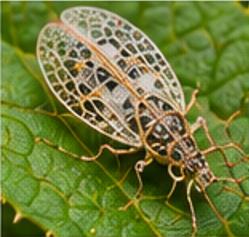
Net-Winged Beetles (family Lycidae) are distinctive, soft-bodied beetles recognized by the raised ridges covering their wing cases, creating the characteristic net-like pattern that gives the family its common name. Most species are brightly colored in combinations of orange, red, yellow, and black. Although their unusual appearance sometimes causes homeowners to mistake them for harmful plant or wood-boring beetles, Net-Winged Beetles are not considered pests. They do not normally damage homes, lumber, crops, or ornamental plants and are important members of woodland ecosystems.
Net-Winged Beetles are particularly interesting because many species possess chemical defenses that make them unpleasant or toxic to predators. Their conspicuous coloration advertises these defenses, and numerous other insects have evolved similar appearances. As a result, Lycidae are important examples in studies of warning coloration and insect mimicry.
Taxonomy and Classification
Net-Winged Beetles belong to the order Coleoptera and family Lycidae. The family contains thousands of species worldwide, with numerous representatives occurring throughout North America. One recognizable North American species is the End-Banded Net-Winged Beetle (Calopteron reticulatum), which displays conspicuous orange and black coloration.
Like other beetles, Net-Winged Beetles undergo complete metamorphosis, progressing through egg, larval, pupal, and adult stages. However, their soft adult bodies and flexible wing covers make them look considerably different from the hard-shelled beetles people commonly encounter around homes and gardens.
Physical Description and Identification
Adult Net-Winged Beetles vary considerably in size, but many North American species measure approximately 1/4 to 3/4 inch long. Their combination of soft bodies, prominent antennae, bright coloration, and sculptured wing covers provides several useful identification features.
- Wing Covers: The elytra contain prominent longitudinal and crosswise ridges that produce a distinctive netted or reticulated appearance.
- Color: Many species display orange, red, yellow, or black patterns that function as warning coloration.
- Body Shape: Adults are generally elongated and somewhat flattened rather than heavily rounded.
- Antennae: Antennae are conspicuous and may appear serrated or saw-toothed.
- Body Texture: Unlike many beetles, their bodies and wing covers are comparatively soft and flexible.
The distinctive wing texture is particularly useful for separating Net-Winged Beetles from superficially similar beetles. When viewed closely, the raised network of ridges across the elytra resembles a miniature lattice or net.
Warning Coloration and Chemical Defense
One of the most fascinating characteristics of Net-Winged Beetles is their aposematic coloration. Bright orange, red, and black patterns advertise to potential predators that the beetles are undesirable prey. Many lycid beetles contain defensive chemicals that make them distasteful or potentially toxic when consumed.
This defense is so effective that other insects have evolved appearances resembling Lycidae. Various beetles, moths, and other insects may share similar orange-and-black coloration, allowing them to participate in complex mimicry systems. Predators that learn to avoid one chemically defended insect may consequently avoid other insects displaying the same warning pattern.
Larvae and the “Trilobite” Appearance
The larvae of Net-Winged Beetles look dramatically different from the adults. Many are flattened, segmented, and covered by hardened plates that can give them an appearance reminiscent of ancient trilobites. They are commonly discovered underneath bark, inside decomposing logs, beneath leaf litter, and in other damp environments containing decaying plant material.
Importantly, finding these larvae in rotting wood does not necessarily mean they are damaging the wood. Net-Winged Beetle larvae are not comparable to termites, powderpost beetles, or destructive wood-boring beetles. Depending on the species, larvae are associated with fungi, slime molds, microorganisms, and decomposing organic material.
Distribution and Habitat
Net-Winged Beetles occur throughout much of the world and are widespread in the United States. They are especially associated with moist forests and wooded landscapes containing abundant dead wood and organic debris.
Adults may be encountered along forest edges, trails, gardens, meadows, and woodland clearings. They are frequently observed resting or feeding on flowers and vegetation. Larvae generally occupy considerably more protected environments, including underneath loose bark, within decomposing logs, and among damp leaf litter.
Feeding and Ecological Role
Adult feeding behavior varies among species. Some adults consume nectar, pollen, or other plant-derived materials, while others apparently feed very little during their relatively short adult lives. Adults visiting flowers may provide a minor contribution to pollination.
The larvae are closely associated with decomposing environments. Their presence underneath logs and within decaying vegetation places them within the complex community of organisms involved in woodland decomposition and nutrient cycling.
For homeowners, the important distinction is that Net-Winged Beetles are not structural wood pests. Finding them around old logs, mulch, dead trees, or rotting wood outdoors should not automatically be interpreted as evidence that sound structural lumber is being attacked.
Behavior and Seasonal Activity
Adults are commonly noticed during the warmer months when they emerge to mate and disperse. Multiple beetles may occasionally gather on vegetation, tree trunks, flowers, fences, or other surfaces. These aggregations can create the appearance of an infestation even though the insects are causing no damage.
Their bright coloration and relatively slow movement also make them conspicuous. Rather than depending entirely on rapid escape from predators, Net-Winged Beetles benefit from chemical defenses and warning coloration that discourage many animals from attempting to eat them.
Are Net-Winged Beetles Harmful?
Net-Winged Beetles present little or no conflict with people. They do not normally infest stored food, damage fabrics, destroy crops, attack healthy landscape plants, or establish destructive colonies inside buildings.
- Structural Damage: None under normal circumstances.
- Plant Damage: Adults are not considered significant plant pests.
- Stored Food: They do not normally infest pantry products.
- Human Health: They are not regarded as significant biting or stinging pests.
- Ecological Role: Generally beneficial or neutral insects associated with healthy outdoor ecosystems.
Management and Control
No chemical control is normally necessary for Net-Winged Beetles. Outdoor populations should generally be left undisturbed because they pose no meaningful threat to buildings, people, gardens, or landscapes.
If adults occasionally enter a home, they can simply be captured and released outdoors or removed with a vacuum. Screens should be repaired and gaps around windows and doors sealed if beetles repeatedly enter from surrounding woodland.
Homeowners should avoid spraying outdoor aggregations simply because the beetles resemble unfamiliar pests. Unnecessary insecticide applications may kill Net-Winged Beetles along with pollinators, predatory insects, and other beneficial organisms occupying the same habitat.
Conservation and Research
Net-Winged Beetles are valuable subjects for research involving chemical defenses, warning coloration, mimicry, evolution, and decomposition ecology. Their unusual relationships with visually similar insects provide scientists with excellent opportunities to study how predators influence the evolution of color patterns and defensive strategies.
Maintaining natural woodland habitat, leaf litter, fallen branches, and some decomposing logs can help support Net-Winged Beetles and many other organisms involved in decomposition. Unless they are accidentally entering buildings in large numbers, their presence should generally be viewed as a sign of a diverse and functioning ecosystem rather than a pest problem.