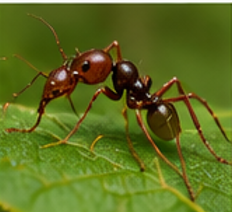
Needle Ants (Brachyponera chinensis), formerly commonly classified as Pachycondyla chinensis, are invasive, stinging ants native to parts of Asia. Often called Asian Needle Ants, they have become established in portions of the United States, where they can create both public health and ecological concerns. Unlike many nuisance ants that primarily invade kitchens or contaminate food, Needle Ants are especially concerning because workers possess a functional venomous stinger capable of producing a painful reaction.
Needle Ants are also important invasive pests because they can compete with native ants and other ground-dwelling insects. Colonies commonly occur beneath logs, stones, landscape materials, leaf litter, and other objects that provide moist, protected nesting conditions. People may encounter them while gardening, landscaping, moving firewood, or disturbing debris around homes and wooded properties.
Taxonomy and Classification
Needle Ants belong to the order Hymenoptera, family Formicidae, and subfamily Ponerinae. The Asian Needle Ant was historically known as Pachycondyla chinensis, although Brachyponera chinensis is now widely used as its scientific name.
Like other ants, Needle Ants are social insects that live in colonies containing reproductive individuals and workers. Workers forage for food, maintain the nest, care for developing young, and defend the colony. Unlike some familiar household ants, ponerine ants possess powerful stingers that are useful for both capturing prey and defending themselves.
Physical Description
Needle Ant workers are medium-sized ants, generally measuring approximately 1/5 to 1/4 inch long. Their relatively plain coloration can make them difficult for homeowners to distinguish from other dark-colored ants.
- Color: Workers are typically dark brown to nearly black.
- Body: The body is elongated compared with many common nuisance ants.
- Waist: A distinct node separates the thorax from the abdomen.
- Stinger: Workers possess a functional stinger at the end of the abdomen.
- Nests: Colonies are frequently concealed beneath stones, logs, landscape timbers, leaf litter, mulch, and other protected materials.
Unlike fire ants, Needle Ants generally do not construct conspicuous soil mounds. This can make colonies difficult to notice until a nesting site is accidentally disturbed.
Distribution and Habitat
Asian Needle Ants originated in Asia but have become established in parts of the United States. Populations are particularly associated with portions of the Southeastern and Mid-Atlantic states, although their distribution can change as colonies spread into new areas.
They are frequently associated with moist, shaded environments. Forest edges, parks, gardens, landscaped properties, residential yards, and wooded urban areas can all provide suitable habitat. Colonies may occur beneath logs, rocks, fallen branches, mulch, railroad ties, landscape edging, and other objects that retain moisture.
Needle Ants generally nest outdoors, but workers may occasionally forage around buildings. Properties bordering wooded areas may be particularly suitable because they provide abundant shelter, moisture, and insect prey.
Behavior and Diet
Needle Ants are active predators and scavengers. Workers hunt small arthropods and may also feed on other available sources of protein and carbohydrates. Their predatory behavior is beneficial within their native ecosystems, but introduced populations can interfere with native insect communities.
Workers usually forage along the ground, beneath leaf litter, and around decaying wood. Because colonies are often hidden, people may unknowingly place their hands or feet close to a nest while gardening or moving outdoor objects.
Needle Ant Stings
The painful sting is the most important concern for homeowners. Needle Ants do not normally seek out humans, but workers can sting when trapped against the skin, handled, stepped on, or disturbed around their nesting area.
A typical sting may produce immediate sharp or burning pain followed by redness, itching, and localized swelling. Reactions vary considerably between individuals. People who are sensitive to insect venom may experience a much more serious allergic response.
Symptoms such as difficulty breathing, widespread hives, dizziness, swelling of the face or throat, or other signs of a severe allergic reaction require immediate emergency medical attention.
Ecological Impact
The Asian Needle Ant is more than a household nuisance. In areas where it becomes abundant, it can compete with native ant communities for food, nesting locations, and territory. This can alter the composition of ground-dwelling insect communities in invaded habitats.
Native ants perform numerous ecological functions, including soil aeration, decomposition, predation, and seed dispersal. Consequently, displacement of native ants by an invasive species can potentially produce effects that extend beyond the ants themselves.
Signs of a Needle Ant Infestation
Because colonies do not usually produce obvious mounds, infestations can be difficult to identify. Possible signs include repeated sightings of dark ants beneath landscape materials, workers emerging when rocks or logs are moved, and unusual numbers of ants foraging through shaded areas.
Homeowners should avoid repeatedly disturbing a suspected nest because doing so increases the chance of being stung.
Management and Prevention
Needle Ant management should use an Integrated Pest Management (IPM) approach that combines habitat modification, monitoring, baiting, and targeted treatments when necessary.
- Reduce Harborage: Remove unnecessary boards, logs, stones, landscape debris, and other objects that provide protected nesting sites near structures.
- Manage Moisture: Correct drainage problems, leaking irrigation systems, and excessively damp areas around foundations.
- Store Firewood Properly: Keep firewood elevated and away from the house rather than allowing it to remain directly against exterior walls.
- Food Management: Avoid leaving pet food, food scraps, or other attractive materials outdoors for extended periods.
- Exclusion: Seal cracks and gaps around foundations, doors, windows, pipes, and utility penetrations to reduce occasional indoor entry.
Baiting and Professional Control
Ant baits can be useful because foraging workers carry attractive food back toward the colony. However, bait acceptance varies according to species, season, available natural foods, and bait formulation. Products should be specifically labeled for the intended location and ant control use.
Accessible colonies may also be treated directly with an appropriately labeled product. Broad, indiscriminate pesticide applications should be avoided whenever possible because they can kill beneficial insects and native ants without necessarily eliminating the invasive colony.
Where Needle Ants are widespread, nests are difficult to locate, or people with known insect-sting allergies live on the property, a licensed pest control professional may be the safest option. Professionals can identify the ant correctly, determine the extent of activity, locate likely nesting areas, and select an appropriate control program.
Conservation and Research
Asian Needle Ants are an important subject of invasive-species research because they combine a human stinging hazard with ecological impacts. Researchers continue to study their distribution, colony biology, venom, competition with native ants, and responses to different bait formulations.
Early detection is particularly important. Preventing colonies from becoming firmly established can reduce both the risk of painful encounters around homes and the long-term effects these invasive ants may have on native insect communities.