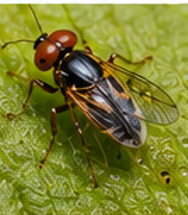
Narcissus Bulb Flies (Merodon equestris) are distinctive hoverflies whose larvae are destructive pests of daffodils and other ornamental bulbs. The adults resemble small bumblebees and are harmless flower visitors, but their larvae develop inside bulbs, where they consume the fleshy tissues needed for future growth. Narcissus and daffodil bulbs are the primary hosts, although related ornamental bulbs may occasionally be attacked.
An infestation can destroy an otherwise healthy bulb from the inside. Affected plants may produce weak or distorted leaves, fail to flower, or never emerge from the soil. Because the larva remains concealed inside the bulb for much of its development, damage is frequently discovered only after the plant begins showing symptoms.
Taxonomy and Classification
Narcissus Bulb Flies belong to the order Diptera and family Syrphidae, commonly known as hoverflies or flower flies. Their scientific name is Merodon equestris. Like other true flies, they have one functional pair of wings and undergo complete metamorphosis through egg, larval, pupal, and adult stages.
The adult and larval stages have dramatically different lifestyles. Adults visit flowers and feed on nectar and pollen, while the larvae are specialized feeders that develop inside bulbs. This means the adult fly itself does not chew leaves or damage flowers.
Physical Description
Adult Narcissus Bulb Flies are relatively large hoverflies, generally around 1/2 inch long. Their dense covering of yellowish, brown, orange, or black hairs gives them a convincing bumblebee-like appearance.
- Adult Fly: Large, fuzzy hoverfly with coloration that closely resembles a bumblebee.
- Wings: Like other flies, adults possess one functional pair of wings rather than the two pairs found on bees.
- Larva: Thick, legless, cream to grayish-yellow maggot that may reach approximately 3/4 inch when mature.
- Location: Larvae are normally discovered inside damaged bulbs, frequently near the basal plate or central growing tissues.
The bumblebee appearance of the adult is an example of protective mimicry. Although the fly cannot sting, its resemblance to a stinging insect may discourage predators.
Distribution and Habitat
Narcissus Bulb Flies occur in Europe, North America, and other regions where ornamental bulbs are cultivated. They are most likely to occur in gardens, landscaped properties, nurseries, parks, and commercial bulb-growing operations containing susceptible host plants.
The adult stage occurs above ground around flowering vegetation, while the destructive larval stage remains protected inside the host bulb. This concealed habitat makes the pest considerably more difficult to detect and control than caterpillars or beetles feeding openly on foliage.
Life Cycle
Adult Narcissus Bulb Flies become active during the warmer months. Females search for suitable bulb-growing areas and lay eggs close to the base of susceptible plants, particularly as foliage begins declining after flowering.
After hatching, the young larva moves toward the bulb and enters the fleshy tissue. Once inside, it feeds on the bulb’s internal tissues and gradually moves toward important growing areas. Frequently, one large larva occupies a bulb.
The larva may remain inside the bulb for an extended period and commonly overwinters there. Development resumes as conditions become favorable, eventually followed by pupation and emergence of the adult fly. This prolonged concealed development explains why an apparently normal bulb can deteriorate before the infestation is recognized.
Signs of Narcissus Bulb Fly Damage
Damage can initially resemble bulb rot, poor soil conditions, or other plant problems. Digging up and inspecting suspicious bulbs is often necessary for confirmation.
- Failure to Emerge: Previously healthy bulbs may produce little or no growth the following season.
- Weak Foliage: Leaves may appear stunted, distorted, yellow, or unusually weak.
- Failure to Flower: Infested bulbs may produce foliage without developing normal flowers.
- Soft Bulbs: Damaged bulbs can become soft, hollowed, or spongy.
- Internal Feeding: Cutting open an affected bulb may reveal destroyed tissue and a large pale maggot.
- Rot: Secondary microorganisms may enter damaged tissue and accelerate decomposition.
Damage to Daffodils and Other Bulbs
The most serious damage occurs when the larva feeds around the basal plate and central growing point. These structures are essential for producing roots, leaves, and flowers. Destruction of this tissue can permanently weaken or kill the bulb.
Daffodils and other Narcissus varieties are particularly vulnerable. Valuable ornamental plantings can therefore suffer significant losses when infestations become established. Commercial growers face additional concerns because infested bulbs can potentially be moved with nursery stock.
Management and Prevention
Management should emphasize inspection, sanitation, healthy bulb culture, and prevention of egg laying. Once a large larva is established deep inside a bulb, treatment becomes considerably more difficult.
Inspect Bulbs Carefully
Examine bulbs before planting and during lifting or division. Healthy bulbs should generally feel firm. Bulbs that are unusually soft, hollow, damaged, or decomposing should be investigated. If a bulb contains a large maggot and extensive internal destruction, remove and dispose of it rather than returning it to the planting bed.
Cultural Control
- Plant at an Appropriate Depth: Properly planted bulbs are less exposed than bulbs sitting close to the soil surface.
- Maintain Healthy Plants: Adequate nutrition, drainage, and growing conditions help bulbs tolerate environmental stress.
- Remove Infested Bulbs: Destroy heavily damaged bulbs containing larvae before the insects can complete development.
- Keep Beds Clean: Remove unnecessary plant debris and maintain good garden sanitation around susceptible bulb beds.
Hot-Water Treatment
Hot-water treatment has historically been used against bulb pests because carefully controlled heat can kill larvae concealed within bulbs. However, treatment temperature and exposure time are critical. Excessive heat can damage or kill the bulb, while insufficient treatment may fail to eliminate the pest.
For valuable collections or commercial quantities of bulbs, growers should follow current recommendations for the specific bulb variety rather than experimenting with uncontrolled temperatures.
Chemical Control
Chemical control is difficult once larvae have entered the bulb because the surrounding plant tissue protects them from ordinary surface treatments. Historically, insecticides have been used to target adults or newly hatched larvae before they penetrate bulbs, but available products and permitted uses vary considerably.
Home gardeners should concentrate primarily on sanitation, inspection, removal of infested bulbs, and good cultural practices. If chemical treatment is considered, use only a product specifically labeled for the pest, plant, and intended application site.
Are Adult Narcissus Bulb Flies Harmful?
Despite their bee-like appearance, adult Narcissus Bulb Flies do not sting people. Adults are flower visitors and can contribute to pollination while feeding on nectar and pollen. The pest problem is restricted primarily to the larval stage developing inside ornamental bulbs.
Conservation and Research
Narcissus Bulb Flies are primarily managed as ornamental horticultural pests. Research and commercial management focus on detecting infested nursery stock, determining effective hot-water treatment schedules, improving cultural controls, and protecting bulbs without unnecessary pesticide applications.
For gardeners, early detection remains one of the best defenses. Inspecting suspicious bulbs, removing infested material, and maintaining healthy planting beds can prevent a small Narcissus Bulb Fly problem from causing repeated losses in established daffodil and ornamental bulb collections.