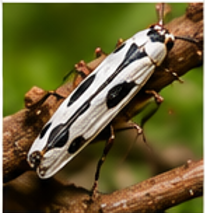
Nantucket Pine Tip Moths (Rhyacionia frustrana) are small moths whose larvae are important pests of young pine trees throughout much of the eastern United States. The caterpillars attack tender buds and developing shoots, boring directly into the new growth where they remain protected while feeding. Although established mature pines can usually tolerate some injury, repeated attacks on young trees can cause severe stunting, crooked trunks, multiple leaders, and poor tree form.
The Nantucket Pine Tip Moth is particularly important in pine plantations, Christmas tree operations, nurseries, and landscapes. Damage to the main terminal leader is especially serious because it interferes with normal vertical growth. Repeated infestations can transform a straight young pine into a short, bushy, or forked tree, reducing both its ornamental appearance and potential timber value.
Taxonomy and Classification
The Nantucket Pine Tip Moth belongs to the order Lepidoptera and family Tortricidae. Its scientific name is Rhyacionia frustrana. Like other moths, it undergoes complete metamorphosis, progressing through egg, larval, pupal, and adult stages.
The larval stage is responsible for plant damage. Caterpillars specialize in feeding on tender pine buds and shoots rather than older woody tissue. Important hosts include loblolly pine, shortleaf pine, Virginia pine, pitch pine, and several other pine species. Young trees are generally much more vulnerable than large, established pines.
Identification and Physical Description
Adult Nantucket Pine Tip Moths are small and inconspicuous. At rest, their coloration blends effectively with pine bark and surrounding vegetation, so adults are often overlooked.
- Adult Moth: Small moth with a wingspan of approximately 1/2 inch. The forewings contain irregular combinations of rusty-red, brown, gray, and silvery markings.
- Eggs: Tiny eggs are deposited on needles, buds, or tender shoots and can be difficult to detect without close inspection.
- Larvae: Young caterpillars are small and light-colored, becoming yellowish, orange-brown, or reddish-brown as they develop.
- Pupae: Pupation commonly occurs within damaged shoots or buds, providing protection during development.
Signs of Nantucket Pine Tip Moth Damage
Visible shoot damage is usually much easier to recognize than the insect itself. Larvae initially feed around needles and buds before tunneling into the developing shoot.
- Brown or Dead Tips: Recently attacked shoots turn yellow, reddish-brown, and eventually die.
- Flagging: Damaged terminal shoots may wilt, bend, or curl downward.
- Resin: Hardened pitch or resin frequently develops around damaged buds and shoots.
- Frass: Caterpillar waste may become mixed with resin around feeding sites.
- Multiple Leaders: Destruction of the primary leader causes lateral branches to compete for dominance.
- Stunted Growth: Repeated attacks can substantially reduce annual height growth.
Distribution and Habitat
Nantucket Pine Tip Moths occur throughout much of the eastern United States and are particularly important in the Southeast. Warm conditions allow several generations to develop during a single growing season.
The moth commonly occurs in young pine plantations, nurseries, Christmas tree farms, recently planted landscapes, and naturally regenerating pine stands. Trees less than approximately 10 to 15 feet tall tend to experience the greatest economic damage because their rapidly developing terminal shoots provide abundant feeding sites.
Life Cycle and Behavior
Adults emerge and mate before females deposit eggs on suitable pine growth. After hatching, young caterpillars begin feeding externally before entering buds and shoots. Once inside, they tunnel through the developing tissue, where they are protected from weather, predators, and many contact insecticides.
The number of generations varies according to climate. Northern populations may have relatively few generations, while populations in the warm Southeast can produce several generations each year. This means susceptible pines may experience repeated attacks throughout the growing season.
The insect generally overwinters as a pupa within previously damaged pine tissue. Adults emerge as temperatures rise, beginning another cycle of mating and egg laying.
Damage to Pine Trees
The most economically important injury occurs when larvae destroy the main terminal leader. Pines normally depend on this central leader to produce straight vertical growth. When it dies, several lateral shoots may begin growing upward to replace it.
The result can be a forked, crooked, or multi-topped tree. In commercial timber plantations, repeated attacks may reduce growth and contribute to poor stem quality and excessive branching. In Christmas tree production and ornamental landscapes, deformation can destroy the symmetrical appearance that gives the tree much of its value.
Tip moth damage rarely kills otherwise healthy established trees. The greatest concern is therefore loss of growth and permanent deformation rather than direct tree mortality.
Monitoring and Detection
Proper timing is critical because larvae become much harder to control after entering pine tissue. Pheromone traps can be used to detect adult male moth flights and determine when a new generation is beginning.
Growers should also inspect young shoots for eggs, fresh resin, discoloration, and early feeding injury. Monitoring is particularly important in plantations with a history of repeated Nantucket Pine Tip Moth damage.
Management and Prevention
Management is best approached through Integrated Pest Management (IPM), combining monitoring, appropriate cultural practices, preservation of natural enemies, and carefully timed treatments when economically justified.
Cultural Control
- Maintain healthy trees through appropriate planting, watering, and site selection.
- Avoid unnecessary stress that can reduce a young pine’s ability to recover from shoot damage.
- In small ornamental plantings, prune and destroy obviously infested shoots when practical.
- Choose pine species suited to the local environment and intended landscape or forestry use.
Chemical Control
When insecticides are necessary, timing is more important than repeated spraying. Treatments should target eggs or newly hatched larvae before the caterpillars penetrate the buds and shoots. Once larvae are protected inside plant tissue, ordinary contact sprays become substantially less effective.
Pheromone trap information and local pest-development models can help determine appropriate treatment periods. Commercial growers should follow current extension recommendations and use only insecticides specifically labeled for pine tip moth management.
Natural Enemies
Nantucket Pine Tip Moths have numerous natural enemies, including parasitoid wasps, predatory insects, spiders, and birds. These organisms can contribute to natural population suppression. Avoiding unnecessary broad-spectrum insecticide applications can help preserve beneficial species and support long-term biological control.
Conservation and Research
Research on Nantucket Pine Tip Moths focuses on improving pheromone monitoring, treatment timing, biological control, host resistance, and plantation management. Scientists also study how climate and regional growing conditions influence the number and timing of generations.
For homeowners, foresters, and commercial growers, early detection is the key to reducing damage. Protecting the terminal leader during the vulnerable early years of pine growth can prevent repeated tip destruction and help trees develop the straight, healthy structure required for landscape, Christmas tree, and timber production.