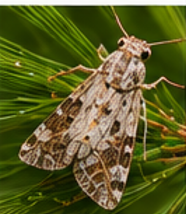
The Nantucket pine moth (Rhyacionia frustrana) is a significant pest of pine trees, particularly in the southeastern United States. This insect primarily targets young pine plantations and ornamental trees, where it feeds on new shoots and disrupts normal growth patterns. While mature trees are less affected, repeated infestations can severely impact tree form, timber value, and overall forest productivity.
This pest is especially problematic in commercial forestry, where uniform tree growth is critical. By attacking terminal shoots, the Nantucket pine moth causes deformation, branching abnormalities, and stunted height growth. Over time, this leads to reduced timber quality and economic loss.
The Terminal Terminator: Nantucket Pine Tip Moth
The Nantucket Pine Tip Moth (Rhyacionia frustrana) is one of the most pervasive and economically damaging pests of young pine plantations and ornamental conifers in the Eastern and Southern United States. While it rarely kills mature trees, its larval feeding habit targets the growing tips (terminal buds), which can permanently stunt a tree’s height, cause unsightly branching “brooming,” and ruin the aesthetic value of Christmas trees and timber stock.
The “Hollowed Tip” Symptom
The damage caused by the Nantucket Pine Tip Moth is highly specific. After the adult moths lay eggs on needles or buds, the larvae hatch and begin a two-stage feeding process that effectively “tops” the tree:
- Needle Mining: Newly hatched larvae begin by mining the interior of needles at the base. This initial stage often goes unnoticed, appearing only as tiny brown spots.
- Bud Boring: As they grow, the larvae migrate to the succulent growing tips and bore directly into the buds and shoots. They construct a protective silken web covered in resin at the entry point.
- Shoot Dieback: The internal feeding severs the vascular tissue, causing the top 2–4 inches of the shoot to turn brown, wither, and die. This is often mistaken for frost damage or drought stress.
Identification and Multiple Generations
The adult moth is small (9–15mm wingspan) and mottled with copper, silver, and gray patches, allowing it to blend perfectly with pine bark. In the United States, the number of generations per year varies drastically by climate:
- Northeast: Typically 2 generations per year.
- Southeast/Gulf Coast: Can reach 4 to 5 generations per year, leading to nearly continuous pressure on young trees.
U.S. Management: Timing is Everything
Since the larvae are protected inside the shoot for most of their lives, contact insecticides are only effective during the brief window when the “crawlers” are moving from needles to buds. Management in the U.S. includes:
- Pheromone Monitoring: Growers use traps to track the peak flight of adult moths. Sprays are timed to occur 10–14 days after the peak flight to catch the hatching larvae.
- Systemic Insecticides: For high-value ornamental pines or Christmas tree farms, systemic products (like Imidacloprid) applied as a soil drench can provide longer-term protection from the inside out.
- Vigor Management: While the moth doesn’t prefer stressed trees, a healthy tree can more quickly produce a “lateral” leader to replace a killed terminal bud, though this often results in a crooked trunk.
Identification
Adult moths are small, grayish insects with reddish-brown markings. The larvae are small caterpillars, typically cream-colored with dark heads, and are found inside pine shoots.
Life Cycle
This pest produces multiple generations per year. Females lay eggs on pine needles or shoots. After hatching, larvae bore into shoots and feed internally. Pupation occurs within damaged shoots or nearby debris.
Damage
Damage includes dead or wilted shoots (“flagging”), multiple stems, and reduced height growth. Severe infestations can significantly alter tree structure.
Control
Management includes monitoring with pheromone traps, pruning infested shoots, and applying insecticides at key larval stages.