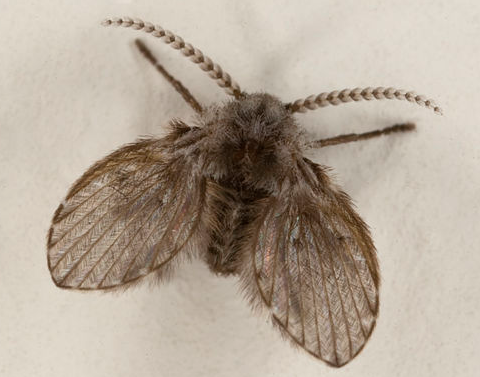
Moth Flies, commonly known as Drain Flies, Sink Flies, or Filter Flies, are tiny, fuzzy flies belonging to the family Psychodidae. They are common nuisance pests in homes, restaurants, hotels, hospitals, commercial kitchens, and other buildings where moisture and decomposing organic material accumulate. Although they do not normally bite or damage structures, persistent populations often indicate an overlooked drain, sanitation, moisture, or plumbing problem.
Moth Flies are particularly associated with the gelatinous biofilm that develops inside drains and pipes. Their larvae live within this organic slime, feeding on microorganisms and decomposing material. Eliminating the adult flies without removing this breeding material usually provides only temporary relief.
Taxonomy and Classification
Moth Flies belong to the order Diptera, which includes mosquitoes, house flies, fruit flies, and numerous other true flies. They are members of the family Psychodidae, a diverse group containing species associated with moist habitats and decaying organic matter.
They undergo complete metamorphosis, progressing through egg, larva, pupa, and adult stages. Their ability to complete development rapidly in continuously wet organic material allows a small drain infestation to develop into a noticeable population within a relatively short period.
Physical Description and Identification
Adult Moth Flies are extremely small, generally measuring about 2 to 5 millimeters long. Their most distinctive characteristic is their fuzzy, almost miniature moth-like appearance. Dense hairs cover both the body and wings, while the broad wings are normally held roof-like over the body when the insect is resting.
- Color: Usually gray, brown, tan, or dark gray.
- Wings: Broad, rounded, hairy, and often giving the insect a heart-shaped appearance when viewed from above.
- Flight: Weak and erratic. Adults usually make short hops or fluttering flights rather than flying continuously across a room.
- Larvae: Slender, worm-like, pale to grayish larvae that live within moist organic material.
- Typical Location: Adults commonly rest on bathroom, kitchen, basement, or utility-room walls close to the breeding source.
The combination of their fuzzy wings, tiny size, and weak hopping flight usually separates Moth Flies from Fruit Flies, Fungus Gnats, and Phorid Flies.
Life Cycle
Female Moth Flies deposit their eggs in wet organic material. Inside buildings, the slime coating the interior surfaces of neglected drains provides an ideal environment. Once the eggs hatch, larvae remain within this material and feed on bacteria, fungi, microorganisms, and decomposing organic debris.
Larval development commonly takes approximately one to three weeks, although temperature, food availability, and moisture influence development. Pupation occurs within or close to the same breeding material, after which adults emerge. Under favorable conditions, the entire life cycle may be completed in approximately 7 to 21 days.
Where Do Moth Flies Breed?
Moth Flies require persistent moisture combined with organic material. A frequently used drain can still become a breeding site when a thick layer of slime develops along its interior walls.
- Bathroom and kitchen sink drains
- Shower and bathtub drains
- Floor drains
- Garbage disposals
- Septic systems and sewage lines
- Clogged gutters
- Condensate lines and drain pans
- Leaking plumbing
- Wet areas beneath appliances
- Standing water containing decomposing organic matter
Sink drains, shower drains, garbage disposals, septic systems, clogged gutters, and leaking plumbing are among the commonly reported breeding environments.
Signs of an Infestation
The most obvious sign is the appearance of numerous tiny, fuzzy flies resting near plumbing fixtures. Adults may be especially noticeable during evening hours or after a bathroom, kitchen, or utility room has remained undisturbed.
- Flies Near Drains: Adults repeatedly appear around the same sink, shower, or floor drain.
- Wall Resting: Small fuzzy flies remain stationary on nearby walls and cabinets.
- Drain Emergence: Flies appear to emerge directly from a plumbing fixture.
- Larvae: Small worm-like larvae may be visible within heavy drain slime.
- Persistent Populations: Adults continue appearing despite repeated surface cleaning.
A simple monitoring method is to partially cover a suspected drain overnight with clear tape or another suitable trap while still allowing airflow. Finding Moth Flies associated with the covered drain can help identify the breeding source.
Damage and Health Concerns
Moth Flies are primarily considered nuisance and sanitation pests. They do not normally bite people, damage buildings, infest stored foods, or attack household materials. Their greatest importance comes from the conditions that allow them to reproduce.
Large populations can create serious sanitation concerns in commercial environments such as restaurants, hospitals, hotels, food-processing facilities, and commercial kitchens. Their presence around sinks and food preparation areas can also create an appearance of poor sanitation even when the breeding source is hidden elsewhere in the plumbing system.
Management and Control
Successful Moth Fly control depends on eliminating the larval breeding habitat. Killing visible adults may temporarily reduce numbers, but new flies will continue emerging as long as larvae remain inside contaminated drains or other wet organic material.
Identify the Breeding Source
Inspect drains and other moisture sources in rooms where adults are appearing. When several drains are present, monitoring individual drains can help determine which one supports the infestation.
Physically Clean Drains
Use an appropriate drain brush to scrub organic material from the interior surfaces of the drain and accessible plumbing. Simply pouring liquid into the drain may not remove the thick biofilm attached to pipe walls.
Enzymatic Drain Treatments
Enzyme or microbial drain-cleaning products may help break down accumulated organic material when used according to their labels. These treatments are most useful as part of a sanitation program rather than as a substitute for correcting serious plumbing problems.
Moisture Control
Repair leaking pipes, faucets, drain lines, and plumbing fixtures. Eliminate standing water and investigate persistent damp areas beneath sinks, appliances, floors, or cabinets.
Inspection, drain cleaning, moisture correction, sanitation, and mechanical removal of adults form the foundation of an effective Integrated Pest Management (IPM) program for Moth Flies.
Persistent Moth Fly Problems
If Moth Flies continue appearing after all accessible drains have been thoroughly cleaned, investigate hidden moisture or organic buildup. Broken drainpipes, leaking sewer connections, wet crawlspaces, damaged septic components, or inaccessible plumbing voids may provide breeding environments.
Large infestations that cannot be traced to an obvious drain may justify inspection by a plumber or pest management professional. Finding and correcting the underlying source is considerably more effective than repeatedly treating adult flies.
Ecological Importance
Although undesirable indoors, Moth Flies are not inherently harmful insects. In natural wet environments, their larvae contribute to the decomposition of organic material and nutrient recycling. Problems arise when suitable breeding environments develop inside or immediately around human structures.
Prevention
Preventing Moth Flies primarily means preventing the accumulation of wet organic material. Regularly clean drains, maintain garbage disposals, repair plumbing leaks, eliminate standing water, and inspect infrequently used floor drains. Buildings with commercial kitchens or extensive drainage systems may benefit from scheduled drain-maintenance programs.
Moth Flies are therefore best considered an indicator pest. Their appearance often provides an early warning that moisture and organic material have accumulated somewhere in the drainage or sanitation system. Removing that habitat breaks the breeding cycle and usually provides lasting control.