Overview
Lesser cornstalk borers are agricultural pests that attack young plants by feeding on stems near the soil line. Their larvae bore into plant tissue, disrupting water and nutrient flow and often causing plants to wilt or die.
These pests thrive in warm, dry conditions and are particularly damaging in sandy soils. Their ability to attack multiple crop types makes them a widespread concern.
The Subterranean Specialist: Lesser Cornstalk Borers
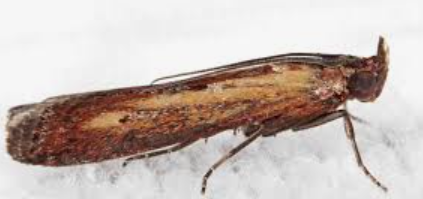
The Lesser Cornstalk Borer (Elasmopalpus lignosellus) is a highly adaptive pest that thrives in the sandy, well-drained soils of the southern United States, Central America, and South America. While its name suggests a preference for corn, this moth larva is a generalist, frequently attacking peanuts, soybeans, sorghum, and beans. It is particularly notorious for its “hit-and-run” style of damage during hot, dry periods.
Life Cycle and Unique Shelter
The adult moth is small and inconspicuous, but the larva is easily identified by its bluish-green body and dark brown stripes. What sets the Lesser Cornstalk Borer apart from other borers is its architectural ingenuity. The larva constructs a silk-and-soil tube that is attached to the host plant at the soil line. This tube provides a moist, protected environment, allowing the borer to move between the soil and the plant stem while remaining shielded from predators and extreme heat.
Agricultural Impact
The damage caused by these borers is often terminal for young plants. Because they feed at or just below the soil surface, their impact is immediate and structural:
- Stem Girdling: The larvae chew around the outer circumference of the stem, effectively cutting off the plant’s nutrient and water supply.
- Internal Boring: Once they breach the outer layer, they bore upward into the heart of the plant, causing it to wilt, “deadheart,” and eventually collapse.
- Stand Loss: In seedling crops, an infestation can move rapidly down a row, leading to significant gaps in the field and the need for costly replanting.
Management Strategies
Management is heavily dependent on soil moisture. Because these pests prefer dry conditions, irrigation can be a powerful tool to deter egg-laying and larval survival. For commercial growers, granular insecticides applied at planting or “at-pegging” for peanuts are common. For the home gardener, maintaining consistent soil moisture and using reflective mulches can help keep these silk-tube-weaving invaders at bay.
Damage
- Wilting and plant death
- Stem tunneling
- Reduced crop yield
- Seedling loss
Management
- Maintain soil moisture
- Use crop rotation
- Monitor early growth stages
- Remove infested plants