Overview
Lac insects are small scale-like pests best known for producing a natural resin known as lac, which is harvested and processed into shellac and other products. While they are commercially valuable in controlled settings, lac insects can also behave as plant pests when populations become unregulated. These insects attach themselves to twigs and branches, feeding on sap and secreting resin that forms hardened encrustations over the plant surface.
In managed production systems, lac insects are cultivated carefully on host plants such as certain trees and shrubs. However, outside of controlled environments, their feeding activity can stress host plants, reduce growth, and interfere with normal plant function. Heavy infestations may lead to weakened branches, reduced flowering, and lower overall vigor.
Lac insects are an important example of how a species can be both economically beneficial and agriculturally problematic depending on context. For broader pest comparisons, see our Directory of Pests by Alphabetical Listing.
Identification
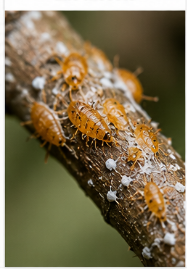
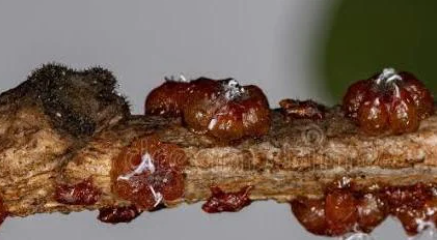
Lac insects are extremely small and often not recognized as individual insects. Instead, they are identified by the resinous coating they produce on branches. The encrustations appear as reddish or brownish hardened deposits along stems and twigs.
- Tiny, scale-like insects attached to plant surfaces
- Covered in resinous secretion
- Appear as crusty or encrusted patches on branches
- Colonies often form dense clusters
Feeding Behavior and Damage
Lac insects feed by inserting specialized mouthparts into plant tissue and extracting sap. This reduces the plant’s available nutrients and energy. While a small number of insects may not cause noticeable harm, large populations can weaken the plant over time.
The resin they produce can also interfere with plant processes. Thick coatings may block sunlight from reaching leaf surfaces or restrict normal gas exchange. Additionally, encrusted branches may become brittle and more prone to breakage.
- Sap loss reduces plant vigor
- Resin buildup interferes with normal growth
- Heavy infestations may stunt development
- Branches may weaken or decline
Signs of Infestation
- Reddish or brown resin encrustations on branches
- Sticky or hardened deposits along stems
- Reduced plant growth or vigor
- Clusters of scale-like insects beneath resin
Management and Control
Management depends on whether the insects are being cultivated or considered a pest. In non-production environments, reducing infestations may involve pruning heavily affected branches and improving plant health. Natural predators can also help regulate populations.
- Prune heavily infested branches
- Encourage beneficial insects
- Maintain proper plant health and irrigation
- Monitor regularly for population buildup
Balanced ecosystems often keep lac insect populations in check, but intervention may be necessary when infestations become severe.