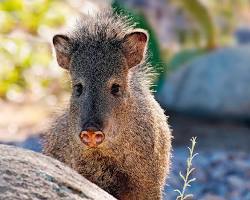
Javelinas (Pecari tajacu), also known as Collared Peccaries, are medium-sized, hoofed mammals native to the Americas. Although they resemble wild pigs, they belong to their own unique family, Tayassuidae, and are more closely related to peccaries than true swine. These highly social desert animals are common throughout the southwestern United States, especially in Arizona, New Mexico, and Texas.
Javelinas are increasingly associated with suburban and urban conflicts as expanding development overlaps with desert habitat. They commonly invade neighborhoods in search of food and water, rooting through lawns, destroying gardens, consuming ornamental plants, and occasionally acting aggressively toward pets when startled or cornered. Despite their intimidating appearance and sharp tusks, Javelinas are generally shy animals that prefer to avoid confrontation.
Quick Facts
- Common Name: Javelina
- Other Names: Collared Peccary
- Scientific Name: Pecari tajacu
- Order: Artiodactyla
- Family: Tayassuidae
- Size: 35–60 pounds
- Primary Diet: Succulents, roots, fruits, insects
- Main Conflict: Lawn and garden destruction
- Habitat: Desert scrub and suburban landscapes
- Status: Native wildlife species
Taxonomy and Classification
Javelinas belong to the order Artiodactyla, the even-toed ungulates, which also includes deer, camels, and cattle.
Despite their pig-like appearance, Javelinas differ from true pigs in several important ways:
- They belong to the family Tayassuidae, not Suidae.
- They possess only three functional toes on the hind feet.
- Their canine tusks point downward instead of curving upward.
- They communicate heavily through scent rather than vocalization.
Javelinas are highly social mammals that live in small herds called squadrons, typically consisting of:
- 6 to 15 individuals
- Related adults
- Juveniles and offspring
These animals rely heavily on scent communication using a strong musky gland located on their back near the rump.
Physical Description
Javelinas are compact, muscular mammals with coarse fur and pig-like features.
Adult Appearance
- 20–24 inches tall at the shoulder
- 35–60 pounds in weight
- Coarse gray-black fur
- Distinct pale collar around the neck
- Short legs and compact body
- Small tail that is barely visible
The pale collar of lighter hair around the shoulders gives the Collared Peccary its common name.
Tusks and Teeth
Javelinas possess sharp canine tusks used for:
- Defense
- Foraging
- Territorial disputes
- Protection of young
Their teeth continually sharpen against one another as the jaws move.
Scent Gland
A strong dorsal scent gland produces a musky odor used for:
- Group identification
- Territory marking
- Communication between herd members
This odor is often noticeable near active herds.
Distribution and Habitat
Javelinas are widespread across the Americas.
Range
- Arizona
- New Mexico
- Texas
- Mexico
- Central America
- South America to Argentina
Preferred Habitat
- Desert scrubland
- Canyons
- Chaparral
- Dry forests
- Rocky hillsides
- Suburban desert communities
They are especially common in the Sonoran Desert, where prickly pear cactus is abundant.
Urban Adaptation
Javelinas increasingly occupy suburban environments because they provide:
- Reliable irrigation
- Landscape plants
- Fruit trees
- Pet food
- Accessible water sources
- Shelter beneath decks and vegetation
Diet and Feeding Behavior
Javelinas are opportunistic omnivores, though most of their diet consists of plant material.
Natural Foods
- Prickly pear cactus pads and fruit
- Mesquite beans
- Roots and tubers
- Agave
- Seeds
- Insects
- Small reptiles
- Carrion
Prickly pear cactus is one of their most important food sources.
Suburban Feeding
In residential areas, Javelinas commonly consume:
- Flower beds
- Vegetable gardens
- Lawn grass
- Bulbs
- Succulent landscaping
- Pet food
- Garbage
Behavior and Conflict
Most conflicts arise from their destructive feeding habits and defensive behavior around pets.
Rooting and Digging Damage
Javelinas commonly root through lawns and gardens searching for food.
- Shallow digging in turf
- Destroyed flower beds
- Damaged irrigation systems
- Uprooted succulents
- Chewed cactus pads
Damage is often worst during dry periods when natural forage is scarce.
Pet Conflicts
Dogs frequently trigger defensive attacks.
- Javelinas may charge cornered pets
- Tusks can cause serious injuries
- Herd members defend each other collectively
Most aggressive encounters occur when dogs bark at or chase the animals.
Human Encounters
Javelinas are usually shy around humans but can become bold when:
- Fed intentionally
- Accustomed to neighborhoods
- Protecting young
- Cornered without escape routes
They have poor eyesight but excellent hearing and smell.
Activity Patterns
Javelinas are typically:
- Diurnal during cooler months
- Crepuscular during warm weather
- Nocturnal during extreme summer heat
Signs of Javelina Activity
- Rooted lawns and soil
- Chewed cactus pads
- Tracks with hoof prints
- Musky odor
- Knocked-over trash cans
- Droppings near feeding sites
- Damaged irrigation tubing
Their feeding damage often resembles wild pig activity but is usually shallower and smaller in scale.
Management and Prevention
Successful management relies on exclusion, habitat modification, and eliminating attractants.
Exclusion Fencing
Strong fencing is the most effective long-term solution.
- Use chain-link or heavy wire fencing
- Secure fencing tightly to the ground
- Prevent gaps underneath
- Protect gardens with mesh enclosures
Javelinas are poor jumpers but persistent pushers.
Food and Water Control
- Never feed Javelinas
- Secure garbage cans
- Remove fallen fruit
- Avoid outdoor pet food
- Reduce unnecessary irrigation
- Eliminate standing water
Neighborhood feeding quickly causes animals to lose fear of humans.
Plant Protection
- Use cages around young plants
- Protect succulents with mesh barriers
- Use raised beds where practical
- Apply repellents to vulnerable vegetation
Repellents and Deterrents
Commercial repellents may help discourage feeding.
- Capsaicin-based sprays
- Odor repellents
- Motion-activated lights
- Motion sprinklers
- Loud noises and hazing
Never corner or physically confront a Javelina.
Pet Safety
- Keep dogs leashed during walks
- Do not allow pets to chase herds
- Supervise pets at night
- Use caution near desert washes
Interesting Facts About Javelinas
- They are not pigs despite their appearance.
- Javelinas communicate heavily through scent.
- They often sleep huddled together for warmth.
- Newborn young are called “reds” because of their coloration.
- They can survive on moisture obtained from cactus.
- Their sense of smell is far stronger than their eyesight.
- Herd members defend one another cooperatively.
Conservation and Research
Javelinas are protected native wildlife in many parts of the southwestern United States.
Research Areas
- Urban wildlife adaptation
- Human-wildlife conflict reduction
- Desert ecosystem interactions
- Movement and migration studies
- Non-lethal deterrent development
- Population management
Wildlife agencies increasingly focus on educating residents about coexistence strategies that reduce neighborhood conflicts while protecting these important native desert mammals.